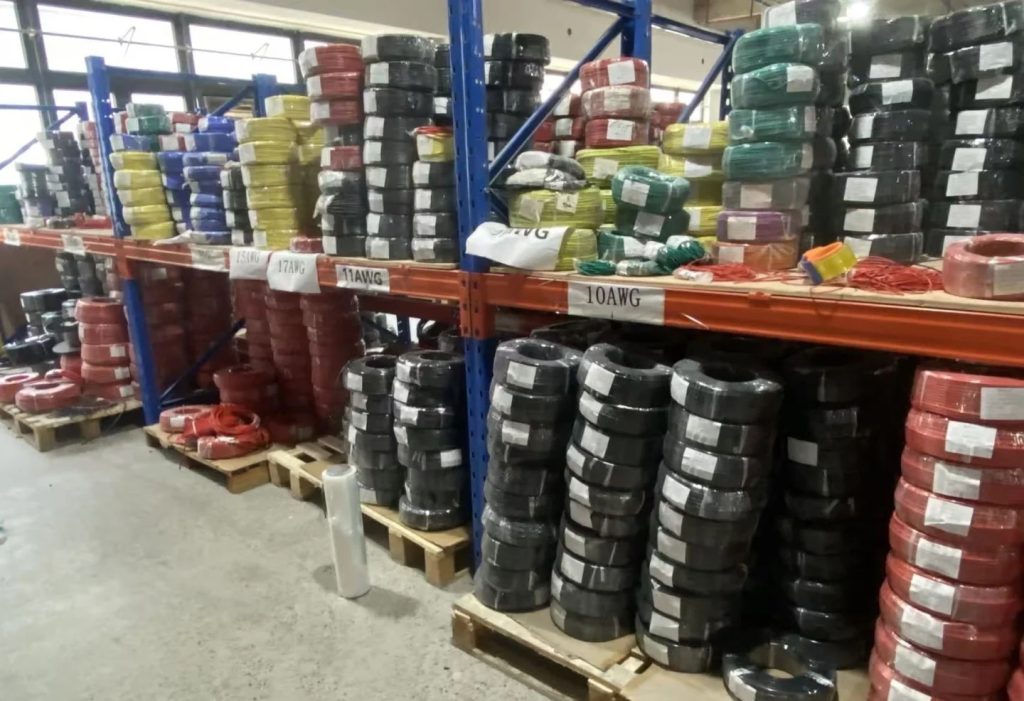
Choosing an electrical wire supplier is not simply a matter of asking for the lowest price.
For importers, electrical wholesalers, distributors, contractors, and project buyers, a supplier quotation is only useful when the product specifications, quality requirements, packaging, certification, production schedule, and commercial terms are clearly understood.
Two suppliers may offer what appears to be the same copper electrical wire, but the actual products can differ in conductor construction, resistance, insulation thickness, applicable standards, packaging, testing, and production tolerances.
That is why buyers should prepare a clear list of questions before placing an order.
If you are sourcing BV wire, 60227 IEC 01, H07V-U, or other PVC-insulated building wires from China, the following questions can help you evaluate suppliers more systematically and reduce misunderstandings before production begins.
1. Are You the Manufacturer or a Trading Company?
This should be one of the first questions.
A company selling electrical wire does not necessarily manufacture the products itself. It may be a factory, trading company, distributor, or sourcing intermediary.
For buyers planning repeated purchases, knowing the supplier’s actual role can make communication and quality control easier.
Ask:
- Do you manufacture the wire in your own factory?
- Which products are produced in-house?
- Which production processes are handled internally?
- Where is the production facility located?
- Can you provide factory production information?
- Can you support a factory visit or inspection?
Being a manufacturer does not automatically mean that a supplier is better. However, understanding the supply chain helps buyers know who is responsible for specifications, production, testing, and quality consistency.
For buyers comparing Chinese electrical wire suppliers, it is also useful to review the supplier profile for China Electrical Cable and Wire Manufacturing Co., Ltd. and compare its listed products and technical content with other suppliers.
2. What Exact Electrical Wire Are You Quoting?
Never rely only on a general product name.
For example, “PVC copper wire” is not a complete purchasing specification.
Ask the supplier to confirm:
- Product type
- Conductor material
- Conductor construction
- Cross-sectional area
- Insulation material
- Voltage rating
- Applicable standard
- Color
- Conductor class
- Packaging
- Required length
- Certification requirements
A quotation for 2.5mm² PVC-insulated copper wire should identify the exact construction being offered.
If you are purchasing BV or 60227 IEC 01, you can also review the existing guide on What Is 60227 IEC 01 Cable? Specifications, Applications and Buying Guide before sending your RFQ.
3. Which Standard Does the Product Follow?
This is one of the most important technical questions.
Electrical wire may be manufactured according to different standards and designation systems depending on the target market.
Ask:
Which exact standard is this product manufactured and tested against?
You should request the complete standard reference rather than accepting a general answer such as “IEC standard.”
For example, buyers may encounter specifications related to:
- IEC standards
- 60227 series
- EN requirements
- H07V-U designations
- National standards
- Project-specific specifications
If your purchasing team is comparing BV and H07V-U, do not assume that the two names are interchangeable.
The existing guide BV Wire vs H07V-U: What Is the Difference and Which One Should You Buy? can be used as a technical reference before making the final specification.
4. What Is the Conductor Material?
The conductor is one of the most important parts of an electrical wire.
Ask the supplier:
- Is the conductor copper?
- What type of copper is used?
- Is the conductor solid or stranded?
- What is the conductor class?
- What is the nominal cross-sectional area?
- What is the conductor diameter?
- What is the maximum DC resistance?
Do not judge the conductor only by appearance.
A wire can look acceptable while still requiring further technical verification.
For large-volume purchasing, conductor specifications should be included in the quotation and purchase documentation rather than discussed only through informal messages.
5. What Is the Maximum DC Resistance?
This is a much more useful question than simply asking whether the wire is “high quality.”
DC resistance provides an important technical reference for evaluating the conductor.
Ask the supplier to provide the maximum resistance value according to the applicable standard and product construction.
For example, if you are comparing several suppliers offering the same nominal size, you can place their resistance specifications side by side.
Your purchasing comparison should include:
| Specification | Supplier A | Supplier B | Supplier C |
|---|---|---|---|
| Conductor | |||
| Cross-sectional area | |||
| Conductor class | |||
| DC resistance | |||
| Insulation thickness | |||
| Voltage rating | |||
| Standard |
This makes the comparison much more meaningful than comparing price per meter alone.
6. What Is the Insulation Material and Thickness?
For PVC-insulated building wire, ask the supplier to confirm:
- Insulation material
- Nominal insulation thickness
- Minimum insulation thickness
- Overall diameter
- Color
- Temperature rating where applicable
- Applicable testing requirements
The insulation should be evaluated together with the conductor.
A supplier offering a lower price may not necessarily be quoting exactly the same construction as another supplier.
For buyers looking for PVC building wire, the existing PVC Insulated Building Wire Supplier China | BV, H07V-U, 450/750V page provides a useful product-level reference.
7. What Sizes Can You Produce?
Do not assume that a supplier can manufacture every size simply because several sizes are shown in its catalog.
Ask:
- What sizes are currently produced?
- Which sizes are standard production?
- Which sizes require special production?
- What is the MOQ for each size?
- Can different sizes be combined in one order?
- Can different colors be combined?
For example, a distributor may want:
- 1.5mm²
- 2.5mm²
- 4mm²
- 6mm²
- 10mm²
The supplier should explain the production and MOQ requirements for each size.
For a more focused product reference, buyers can also review PVC Building Wire for House Wiring | 10mm² BV Cable Supply.
8. Can You Provide Samples Before Mass Production?
A sample is especially important for a first order.
Ask:
Can you provide a sample manufactured according to the final production specification?
Do not request a random sample if you intend to place a customized order.
The sample should represent the product you expect to receive.
Check:
- Conductor appearance
- Wire diameter
- Insulation quality
- Color
- Printing
- Flexibility
- Surface finish
- Packaging
- Label information
- Documentation
For a large project, the buyer may also arrange independent inspection or laboratory testing.
A sample does not guarantee the quality of every future production batch, but it gives both parties a physical reference.
9. What Testing Do You Perform During Production?
Ask the supplier to explain its quality-control process.
Depending on the product and standard, relevant controls may include:
- Conductor inspection
- Conductor diameter measurement
- DC resistance testing
- Insulation thickness measurement
- Insulation eccentricity inspection
- Spark testing
- Finished-length inspection
- Appearance inspection
- Marking inspection
- Final electrical testing
Instead of asking only:
Is your quality good?
ask:
What parameters do you test during production, and can you provide the relevant test records?
The second question produces much more useful information.
10. Can You Provide a Test Report?
Before placing a large order, ask what documentation is available.
Depending on the product and destination market, buyers may request:
- Product specification sheet
- Factory test report
- Batch test report
- Certificate
- Inspection report
- Technical data
- Packing specification
However, documentation should always be checked against the actual product.
A document for one product or one specification does not automatically prove that every product manufactured by the company is covered.
11. Which Certifications Apply to My Market?
Do not simply ask:
Do you have CE?
Instead, provide the destination market and ask:
Which certification or compliance documentation applies to this exact product and specification for my market?
The supplier should be able to explain what documentation corresponds to the requested product.
Depending on the market and project, buyers may encounter requirements related to:
- IEC
- EN
- CE-related documentation
- RoHS
- VDE
- CCC
- National electrical requirements
- Project-specific testing
The important point is that the certificate, product construction, standard, size range, and manufacturing site should correspond to the actual product being purchased.
12. What Is the MOQ?
MOQ can have a significant effect on the final purchasing decision.
Ask for the MOQ for:
- Each wire size
- Each color
- Custom printing
- Custom packaging
- Special specifications
- Special certification
- Mixed-size orders
You should also ask whether the MOQ changes according to order quantity.
For example:
What is your price and MOQ for 1,000m, 5,000m, 10,000m, and one-container quantities?
This gives you a better understanding of the supplier’s pricing structure.
13. Can Different Sizes Be Mixed in One Order?
This question is particularly important for wholesalers and distributors.
You may not want a full container of only one wire size.
Instead, your order could contain:
- 1.5mm²
- 2.5mm²
- 4mm²
- 6mm²
- 10mm²
Ask whether the supplier accepts mixed-size orders and whether each size has a separate MOQ.
Also confirm whether mixed colors are permitted.
The answer can significantly affect your inventory planning and landed cost.
14. What Packaging Options Are Available?
Electrical wire can be supplied in different packaging formats.
Ask:
- How many meters per coil?
- Can you provide 100m coils?
- Can you provide longer coils?
- Are plastic reels available?
- Are wooden reels available?
- Are cartons included?
- Can labels be customized?
- Can barcodes be printed?
- Can private-label packaging be produced?
The best packaging depends on how you sell the product.
A retail distributor may prefer individually labeled coils, while a large construction project may prefer longer reels or drums.
15. Can You Provide OEM or Private-Label Printing?
If you intend to sell the electrical wire under your own brand, ask about OEM requirements before placing the order.
Confirm:
- Minimum quantity
- Printing requirements
- Logo artwork
- Printing color
- Meter marking
- Product designation
- Packaging design
- Label requirements
- Artwork approval process
- Additional cost
Most importantly, never ask a supplier to print a certification mark that the actual product is not legitimately covered by.
The printed information should match the approved product documentation.
16. What Is the Production Lead Time?
“Fast delivery” is not a useful production schedule.
Ask for a specific timeline.
For example:
- Sample preparation: ___ days
- Production: ___ days
- Inspection: ___ days
- Packaging: ___ days
- Ready date: ___
Also ask what could cause a delay.
Custom colors, OEM printing, special packaging, special materials, and certification requirements may require additional production time.
For a project order, the agreed delivery schedule should be written into the purchase documentation.
17. How Is the Price Calculated?
Electrical wire prices are affected by raw-material costs, especially copper.
Instead of asking only:
What is your lowest price?
ask:
What factors are included in this quotation, and how long is the price valid?
You should understand whether the quotation includes:
- Copper
- PVC
- Processing
- Printing
- Testing
- Packaging
- Certification
- Factory charges
- Local delivery
- Export-related costs
For larger recurring orders, it may also be useful to discuss how copper-price changes affect future quotations.
18. What Incoterm Are You Quoting?
A price per meter is incomplete without the commercial term.
Ask whether the quotation is:
- EXW
- FOB
- CFR
- CIF
- Another agreed Incoterm
Do not compare a supplier’s EXW price directly with another supplier’s CIF price.
The final purchasing calculation should consider the total landed cost.
For international buyers, the real cost may include:
Product cost + export charges + freight + insurance + destination charges + duties/taxes + inland transportation
This can completely change which supplier is actually the most competitive.
19. What Payment Terms Do You Offer?
Before placing an order, confirm:
- Deposit percentage
- Balance payment
- Payment method
- Payment timing
- Whether payment is linked to inspection
- Whether different terms are available for repeat orders
For a first transaction, the buyer should ensure that the payment terms are clearly documented together with the product specification.
Never separate commercial terms from technical requirements.
20. What Happens If the Product Does Not Match the Approved Specification?
This is an important question that many buyers forget.
Ask the supplier in advance:
What is the procedure if the delivered product does not match the approved specification?
Discuss:
- Inspection procedure
- Non-conformity handling
- Replacement
- Rework
- Refund
- Compensation
- Shipping responsibility
- Evidence required
The purpose is not to assume that something will go wrong.
The purpose is to make both sides understand what happens if there is a quality dispute.
21. Can You Maintain the Same Specification for Repeat Orders?
A supplier may produce a satisfactory first order but still need to demonstrate consistency over time.
Ask how the manufacturer controls:
- Raw materials
- Conductor dimensions
- Insulation thickness
- Color
- Printing
- Packaging
- Production parameters
- Batch records
For distributors, consistency is often more important than obtaining the cheapest first quotation.
Your customers expect the second shipment to behave like the first shipment.
22. Can You Support Factory or Third-Party Inspection?
For larger orders, inspection can provide another layer of protection.
Ask whether the supplier accepts:
- Factory inspection
- Pre-production inspection
- During-production inspection
- Pre-shipment inspection
- Third-party testing
The exact inspection scope should be agreed before production.
For example, an inspection may check:
- Product quantity
- Wire size
- Conductor specification
- Insulation
- Printing
- Packaging
- Labels
- Test documents
23. What Should You Put Into the Purchase Order?
The purchase order should not simply say:
BV Wire — 10,000 meters
That description is too general.
A stronger purchase order can specify:
- Product type
- Cross-sectional area
- Conductor material
- Conductor class
- Voltage rating
- Standard
- Insulation material
- Insulation requirements
- Color
- Length per coil
- Printing
- Packaging
- Certification
- Quantity
- MOQ
- Inspection requirements
- Production deadline
- Incoterm
- Payment terms
- Destination
The technical specification should become part of the commercial documentation.
24. A Simple Supplier Question List
If you are contacting several Chinese electrical wire manufacturers, you can copy the following questions into your RFQ:
- Are you the manufacturer or a trading company?
- Which electrical wires do you manufacture in-house?
- What standard does the quoted product follow?
- What is the conductor material?
- Is the conductor solid or stranded?
- What is the conductor class?
- What is the nominal cross-sectional area?
- What is the maximum DC resistance?
- What is the insulation material?
- What is the insulation thickness?
- What sizes are available?
- What colors are available?
- What is the MOQ per size?
- Can different sizes be mixed?
- Can you provide samples?
- Can you provide test reports?
- Which certifications apply to my destination market?
- What packaging options are available?
- Can you provide OEM printing?
- What is the production lead time?
- What are your payment terms?
- Which Incoterms can you quote?
- How long is the quotation valid?
- Can you arrange pre-shipment inspection?
- What is your procedure for handling non-conforming products?
A supplier’s answers to these questions can reveal much more than a product catalog or a low initial quotation.
25. Use Existing Product Information to Narrow Your Shortlist
Buyers should not start every supplier conversation from zero.
If you already know the type of wire you need, review product-level information first and then ask suppliers questions based on the actual specification.
For example, buyers researching standard single-core building wire can review:
PVC Insulated Building Wire Supplier China | BV, H07V-U, 450/750V
For wholesale single-core copper wire, see:
Wholesale Single Core Copper Wire Factory | BV H07V-U China
For buyers specifically evaluating H07V-U:
H07V-U Solid Copper Cable: Complete Technical and Pricing Guide from a China Manufacturer
For a BV and 60227 IEC 01 product reference:
BV Wire 60227 IEC 01 Manufacturer China | 450/750V Single Core
These pages can help buyers understand the product terminology before requesting a formal quotation.
26. Why Asking Better Questions Matters
A professional electrical wire purchasing process is not about asking the supplier hundreds of random questions.
It is about asking the right questions in the right order.
Start with the product.
Then confirm the technical specification.
Next verify the manufacturer, quality-control process, testing, certification, sample, MOQ, packaging, production time, and commercial terms.
Only after these factors are clear should the buyer compare the final price.
This approach can prevent a common purchasing problem: choosing a supplier because its quotation is cheap, only to discover later that the specification, packaging, certification, or delivery conditions are different.
Frequently Asked Questions
What should I ask an electrical wire supplier first?
Start with the exact product specification, including wire type, conductor material, cross-sectional area, voltage rating, applicable standard, insulation material, color, quantity, and destination market.
Should I ask whether the supplier is a factory?
Yes. Determine whether the company is a manufacturer, trading company, distributor, or sourcing intermediary. Then verify what products it actually manufactures.
Should I request an electrical wire sample?
Yes, especially for a first order or customized product. The sample can establish a physical reference before mass production.
What documents should I request from an electrical wire supplier?
Depending on the product and market, you may request technical specifications, test reports, certificates, packaging specifications, and other relevant compliance documentation.
How do I compare two electrical wire suppliers?
Give both suppliers exactly the same specification and compare conductor construction, resistance, insulation, standard, certification, packaging, MOQ, lead time, Incoterm, and total landed cost—not just the unit price.
Can I negotiate the MOQ?
Often, yes. MOQ may vary depending on wire size, color, packaging, OEM printing, certification, and order quantity.
Is the cheapest electrical wire supplier the best choice?
Not necessarily. A lower quotation may reflect differences in product construction, copper specification, packaging, certification, or commercial terms. The best supplier is the one that can meet your required specification consistently at an acceptable total cost.
Should the technical specification be included in the purchase order?
Yes. Important technical requirements should be documented clearly rather than relying on verbal conversations or informal messages.
Final Thoughts
Before placing an electrical wire order, the most important question is not simply:
“How much is the wire?”
The better question is:
“Exactly what product am I buying, how will it be tested, and can the supplier consistently manufacture it according to the agreed specification?”
A strong purchasing process should connect the technical specification with the quotation, sample, testing, certification, packaging, inspection, delivery schedule, and purchase order.
For buyers sourcing electrical cable and wire from China, asking detailed questions before production can make supplier comparison much easier and reduce the risk of specification misunderstandings.
The goal is not to find the supplier with the lowest first quotation.
The goal is to find a supplier that can provide the right product, at the right specification, with consistent quality and commercially workable terms.


No reply content