
Finding a reliable copper wire manufacturer in China requires more than comparing prices. International buyers need to evaluate conductor specifications, insulation materials, applicable standards, product consistency, packaging requirements, and the supplier’s ability to meet their purchasing needs.
For electrical wholesalers, importers, distributors, contractors, and project procurement teams, choosing the right supplier can help reduce purchasing risks and improve supply chain efficiency.
China offers a broad sourcing market for electrical wires and cables. However, not every manufacturer produces the same product types or follows the same technical specifications. Buyers should therefore prepare clear requirements before requesting quotations.
This guide explains how to source copper wire from China, compare manufacturers, understand important product specifications, evaluate wholesale quotations, and prepare an effective request for quotation (RFQ).
1. What Types of Copper Wire Can You Source from China?
Copper wire is used in many electrical applications, but the term covers different products with different constructions and performance requirements.
Before contacting a manufacturer, buyers should identify the specific wire type required for their project or distribution business.
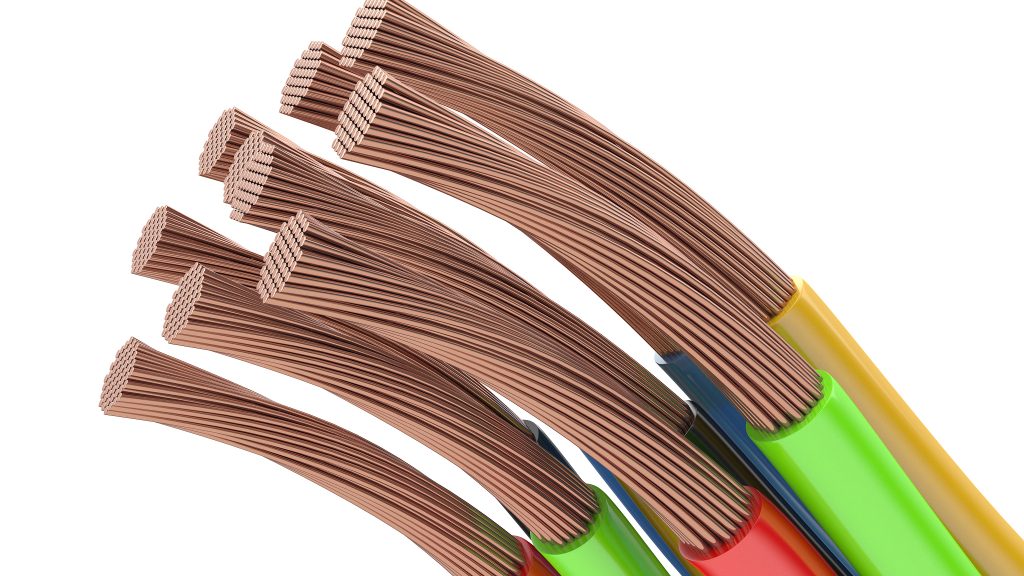
PVC Insulated Copper Building Wire
PVC insulated copper building wire is used in various fixed electrical installation applications when the product is suitable for the installation conditions and applicable electrical regulations.
Depending on the manufacturer’s product range, buyers may encounter BV, H07V-U, H07V-R, and other single-core wire designations.
These products can differ in conductor construction, applicable standards, rated voltage, and marking requirements.
When sourcing PVC insulated building wire, buyers should confirm:
- Conductor material and construction
- Nominal conductor cross-sectional area
- Insulation material and thickness
- Rated voltage
- Applicable product standard
- Conductor resistance requirements
- Required insulation colours
- Packaging and product marking
For example, a buyer requesting 2.5 mm² copper building wire should specify the required conductor construction and standard instead of assuming that every product labelled 2.5 mm² is identical.
For more information about PVC insulation and its characteristics, read PVC Insulation vs. Other Cable Insulation Materials: What Buyers Should Know.
BV and H07V-U Copper Wire
BV and H07V-U are two designations that buyers may encounter when sourcing PVC insulated single-core copper building wire.
BV is commonly used as a Chinese product designation, while H07V-U is associated with a European harmonised wire designation.
Although products may have similar applications, buyers should not assume that the designations are automatically interchangeable. The applicable standard, conductor construction, rated voltage, marking, and required documentation must be checked.
A typical BV / 60227 IEC 01 configuration uses a copper conductor with PVC insulation and a 450/750 V rating. The exact construction and compliance requirements should be confirmed against the relevant product standard and supplier documentation.
Buyers can also review Wholesale Single Core Copper Wire Factory | BV H07V-U China to understand the differences between common single-core wire configurations.
Solid and Stranded Copper Wire
Copper conductors can be solid or stranded, depending on the product design and intended application.
A solid conductor consists of a single wire. Stranded conductors consist of multiple individual wires assembled together.
Solid conductors are commonly used in specified fixed wiring applications. Stranded conductors can provide greater flexibility, depending on their construction and conductor class.
Neither construction is automatically better for every application. The correct selection depends on the installation method, terminal requirements, applicable regulations, and project specifications.
For a more detailed comparison, see Solid vs. Stranded Copper Wire: Which Is Better for Electrical Installation?.
2. How to Choose a Reliable Copper Wire Manufacturer in China
Selecting a manufacturer is an important step in international procurement. A competitive quotation is useful, but it should not be the only factor in the purchasing decision.
Check the Manufacturer’s Product Range
Start by confirming whether the supplier produces the type of copper wire you need.
For example, a buyer sourcing PVC insulated building wire should confirm that the supplier can provide the required conductor construction, cross-sectional sizes, insulation specifications, voltage rating, and product marking.
Ask for a product catalogue and technical datasheets covering the specific items in your inquiry.
If your business purchases several wire types, check whether the supplier can quote each item separately and clearly identify its specification.
This makes it easier to compare products and prevents confusion between similar-looking wires.
Review Technical Specifications
Technical specifications help buyers determine whether a product is suitable for the intended application.
Depending on the product, important information may include:
- Conductor material
- Conductor class and construction
- Nominal cross-sectional area
- Maximum conductor resistance
- Insulation material and thickness
- Rated voltage
- Applicable standard
- Temperature requirements
- Required marking and colour
Buyers should request the specifications for the actual product being quoted rather than relying only on a general company catalogue.
Where a project requires compliance with a particular standard, state that requirement in the inquiry and ask the supplier to provide relevant supporting documentation.
Verify Certificates and Test Documents
Certification requirements depend on the destination market, product type, and intended application.
Do not assume that a manufacturer’s entire product range is covered by the same certificate. A document may apply only to a particular product, factory, standard, or model.
Before placing an order, check:
- Whether the document relates to the exact product being purchased.
- Whether the manufacturer and production facility match the proposed supplier.
- Whether the document covers the required standard and market.
- Whether the document is valid and can be independently verified where applicable.
- Whether additional testing or approval is required by the buyer’s market.
If the project requires test reports or third-party inspection, confirm these requirements before production.
Evaluate Quality Control
Copper wire quality should not be judged by appearance alone.
Depending on the agreed specification, buyers may need to evaluate conductor dimensions, electrical resistance, insulation thickness, product marking, packaging, and other relevant characteristics.
Before mass production, consider agreeing on measurable acceptance criteria with the supplier.
For larger orders, buyers may also arrange sample evaluation or independent pre-shipment inspection. The inspection scope should match the product specification and the risks associated with the purchase.
Confirm Communication and Order Management
Clear communication helps prevent errors during production and delivery.
The supplier should understand the requested specifications, quantities, packaging, delivery terms, and documentation requirements.
For complex orders, record the approved product specifications in the purchase order or technical agreement. Avoid relying entirely on informal messages or verbal descriptions.
3. What Information Should You Include in a Copper Wire Inquiry?
An effective inquiry gives the manufacturer enough information to prepare a relevant quotation.
Sending only the message “Please quote copper wire” may result in repeated questions or an offer for a product that does not match your requirements.
Use the following checklist when preparing your request for quotation.
| Inquiry Item | Details to Provide |
|---|---|
| Product type | BV, H07V-U, H07V-R, or another specified product |
| Conductor material | Copper or another required material |
| Cross-sectional area | Required sizes in mm² |
| Conductor construction | Solid or stranded, as applicable |
| Insulation | PVC or another specified material |
| Rated voltage | Required voltage rating |
| Product standard | Standard required for the destination market |
| Quantity | Required length for each size |
| Colour | Required insulation colours |
| Packaging | Coils, reels, drums, or other requirements |
| Destination | Country and delivery location |
| Documentation | Required certificates and test reports |
| Branding | Standard marking or requested OEM branding |
| Trade terms | EXW, FOB, CIF, or another agreed term |
Not every inquiry requires all these details. However, the more clearly you define the product, the easier it becomes to obtain a comparable quotation.
If you are unsure which product is appropriate, explain the intended application and ask the supplier to clarify the available options.
Important: Wire selection for electrical installations should follow the project’s design, applicable regulations, and qualified technical advice. A supplier quotation alone does not establish that a product is suitable for a particular installation.
4. What Affects Wholesale Copper Wire Prices?
Copper wire prices vary according to product specifications, raw-material costs, order quantities, packaging, and commercial terms.
Buyers should compare quotations for equivalent products rather than selecting a supplier based only on the lowest quoted price.
Copper Raw Material Costs
Copper is a major component of many copper wire products. Changes in copper prices can therefore affect manufacturers’ costs and quotations.
For larger purchases, ask whether the quotation is fixed for a specified period or subject to adjustment under an agreed raw-material pricing mechanism.
If the quotation is linked to a copper-price reference, clarify the reference, pricing date, adjustment method, and period of validity.
This can help both parties understand how the price will be calculated if raw-material costs change before production.
Conductor Size and Construction
The conductor’s nominal cross-sectional area and construction affect the product specification and material requirements.
A quotation for 1.5 mm² wire should not be compared directly with one for 2.5 mm² wire. Similarly, products with the same nominal size may still differ in conductor class, insulation, standard, and other technical details.
When comparing suppliers, ensure that all quotations refer to the same product requirements.
Insulation and Product Requirements
Insulation material, thickness, rated voltage, applicable standard, and any additional performance requirements can affect production costs.
Special requirements should be stated before the supplier prepares its final quotation.
For example, a buyer requiring specific flame-performance characteristics or additional product documentation should identify those requirements clearly rather than assuming they are included in a standard product.
Order Quantity and Packaging
Order quantities can affect production planning, packaging, handling, and logistics.
Buyers should specify the quantity required for each product size and colour.
Packaging requirements should also be clear. Standard coils, reels, drums, labels, and customized packaging may involve different arrangements.
If you require mixed sizes or private-label packaging, ask the supplier to confirm what can be accommodated for your order.
Shipping Terms and Additional Costs
A product quotation does not necessarily represent the total cost of importing the goods.
Depending on the agreed trade terms, additional costs may include inland transportation, export handling, international freight, insurance, destination charges, import duties, taxes, and customs clearance.
Ask the supplier to specify the quotation currency, unit of measurement, validity period, included services, and excluded costs.
For example, prices quoted per metre, per 100 metres, per kilometre, per coil, or per drum should be converted to a consistent unit before comparison.
Buyers can also review How Much Does BV Wire Cost in China? A Buyer’s Guide to Pricing for more information about quotation comparisons.
5. OEM and Private-Label Copper Wire Sourcing
Some importers and electrical-material distributors want to sell copper wire under their own brand.
Depending on the manufacturer’s capabilities and the product requirements, an OEM or private-label arrangement may involve customized product marking, labels, reels, cartons, or other packaging details.
Buyers should confirm which customization options are actually available before making commercial commitments.
Define the Product Specification
Begin with a complete technical specification.
Identify the conductor material, conductor construction, cross-sectional area, insulation, voltage rating, applicable standard, colour, and other required characteristics.
Branding should not replace the technical specification. The purchase documents should identify the product itself as well as the requested brand presentation.
Confirm Logo and Packaging Requirements
If you need customized packaging, provide the proposed logo, label text, packaging dimensions where relevant, and any required language or regulatory information.
Ask the supplier to confirm the artwork approval process and whether customization affects cost or minimum order requirements.
Do not assume that a standard quotation includes customized printing or packaging.
Approve Samples and Marking
Before mass production, review the relevant product and packaging details.
Where appropriate, request a sample and confirm that product marking, labels, and packaging meet the agreed requirements.
For regulated markets, verify that the proposed branding and product documentation meet the applicable rules.
Confirm the Commercial Arrangement
Before confirming an OEM order, agree on:
- Product specifications
- Branding and packaging
- Order quantity
- Price and currency
- Payment terms
- Production schedule
- Inspection requirements
- Shipping terms
- Required documentation
Record the agreed details in the purchase order or contract so that both parties have a clear reference throughout the order process.
6. Common Mistakes When Buying Copper Wire from China
International buyers can reduce purchasing risks by avoiding several common mistakes.
Mistake 1: Comparing Prices Without Comparing Specifications
Two suppliers may quote the same nominal wire size but offer products with different conductor constructions, insulation specifications, standards, or packaging.
A low price is meaningful only when the quoted products meet the same requirements.
Better approach: Prepare a technical comparison sheet and ask each supplier to quote against the same specification.
Mistake 2: Assuming Similar Product Names Mean Identical Products
BV, H07V-U, H07V-R, and other designations should not be treated as interchangeable simply because they describe related categories of insulated wire.
Better approach: Confirm the conductor construction, applicable standard, rated voltage, and required documentation for each item.
Mistake 3: Ignoring the Destination Market
A product available from a Chinese supplier may not automatically meet the requirements of every destination country.
Better approach: Identify the destination market and confirm applicable technical, certification, labelling, and import requirements before ordering.
Mistake 4: Focusing Only on the Factory Price
International purchasing involves more than the quoted product cost.
Freight, insurance, import charges, customs clearance, inspection, and other expenses may affect the total landed cost.
Better approach: Compare the total expected cost using clearly defined trade terms and destination information.
Mistake 5: Leaving Important Details Until After Production
Late changes to packaging, marking, colour, or product specifications can cause delays and additional costs.
Better approach: Confirm the specifications, labels, packaging, inspection requirements, and shipping arrangements before production begins.
7. How to Compare Copper Wire Manufacturers
When evaluating several suppliers, use a consistent checklist rather than relying on general impressions.
| Evaluation Factor | What Buyers Should Check |
|---|---|
| Product range | Does the supplier offer the required wire type and sizes? |
| Technical information | Are complete product specifications available? |
| Standards | Does the product match the required standard? |
| Documentation | Can the supplier provide relevant and verifiable documents? |
| Quality control | Are inspection and testing arrangements clearly explained? |
| Quotation clarity | Are units, quantities, prices, and trade terms specified? |
| Packaging | Can the supplier meet the required packaging specifications? |
| Communication | Are technical and commercial questions answered clearly? |
| Order planning | Are production and delivery arrangements confirmed? |
| Commercial terms | Are payment terms and other conditions documented? |
Buyers can use this checklist to compare suppliers more objectively and identify questions that need to be resolved before placing an order.
A supplier that provides clear technical information and transparent commercial terms may be easier to evaluate than one that offers only a brief quotation.
However, no checklist can replace appropriate product verification, contract review, and inspection where these are required.
8. How to Import Copper Wire from China
A structured purchasing process can help international buyers manage an order from initial inquiry through delivery.
Step 1: Define your requirements. Identify the product type, sizes, conductor construction, insulation, standard, quantity, and destination.
Step 2: Request quotations. Send the same technical specification to the suppliers you want to compare.
Step 3: Review the technical details. Check that the quoted products match your requirements and that the relevant documents are available.
Step 4: Compare the commercial terms. Review unit prices, quotation validity, payment terms, packaging, shipping terms, and excluded costs.
Step 5: Confirm samples or inspection arrangements. Where appropriate, agree on product evaluation and quality acceptance criteria.
Step 6: Finalize the purchase order. Document the product specifications, quantity, price, packaging, delivery terms, and required documents.
Step 7: Monitor production and shipping. Confirm the production schedule, inspection arrangements, shipping documents, and delivery plan with the supplier.
Step 8: Check the delivered goods. Verify that the received products and quantities match the agreed order and supporting documentation.
The exact process will depend on the product, order size, destination market, and contractual arrangements.
9. Frequently Asked Questions
What should I look for in a copper wire manufacturer in China?
Check the manufacturer’s product range, technical specifications, applicable standards, available documentation, quality-control arrangements, quotation clarity, and ability to meet your packaging and delivery requirements.
Do not choose a supplier based on price alone.
Can I buy copper wire in bulk from China?
Bulk purchasing is possible, but the available products, order quantities, packaging arrangements, and commercial terms depend on the individual supplier.
Provide your required wire types, sizes, quantities, and destination so the supplier can confirm what it can offer.
What is the difference between BV and H07V-U wire?
BV is commonly used as a Chinese designation for PVC insulated copper building wire, while H07V-U is associated with a European harmonised designation. Their technical requirements and marking systems should be checked against the applicable standards.
Buyers should not assume that the products are interchangeable without verifying their specifications and intended use.
How can I compare quotations from different copper wire suppliers?
Compare equivalent products using the same conductor material, cross-sectional area, conductor construction, insulation requirements, rated voltage, applicable standard, packaging, quantity, and trade terms.
Then compare the complete commercial offer, including relevant shipping and other costs.
Can I request OEM or private-label copper wire?
Some manufacturers may offer customized product marking or packaging. Availability depends on the supplier, product, and order requirements.
Ask the supplier to confirm the available options, costs, order quantities, artwork requirements, and documentation before placing an order.
What information should I send to get an accurate quotation?
Include the wire type, conductor size, construction, insulation, rated voltage, applicable standard, quantity per size, colours, packaging, destination country, required documents, and preferred trade terms.
If you do not know the exact specification, explain the intended application and request technical clarification.
10. Request a Copper Wire Wholesale Quotation
If you are sourcing copper wire from China for distribution, electrical projects, or wholesale purchasing, start by preparing a clear product specification and order requirement.
Buyers looking for PVC insulated copper building wire should identify the required product designation, conductor construction, cross-sectional area, insulation, rated voltage, and applicable standard before comparing quotations.
For further product information, you can review these related VLEFOOENA guides:
- Wholesale Single Core Copper Wire Factory | BV H07V-U China
- What Is the Difference Between BV, BVR, H07V-U and H07V-K Wire?
- How to Choose the Right Copper Wire Size for Building Electrical Projects
- How Much Does BV Wire Cost in China? A Buyer’s Guide to Pricing
When contacting a supplier, include the product specification, quantity, destination, packaging requirements, and requested delivery terms.
A clear inquiry makes it easier for the supplier to assess your requirements and prepare a relevant quotation.
Whether you are an importer, electrical wholesaler, distributor, contractor, or project buyer, careful specification matching and supplier evaluation are essential steps toward a successful copper wire purchase.


No reply content