
H07V-U Wire Supplier in China: A Guide for Electrical Wholesalers
Finding a reliable H07V-U wire supplier in China is an important step for electrical wholesalers, importers, distributors, contractors, and electrical project buyers.
H07V-U is a harmonised wire designation commonly used for single-core copper wire with PVC insulation and a solid conductor. It is generally associated with a rated voltage of 450/750 V and applications involving fixed electrical wiring, subject to the applicable product standard and installation requirements.
For international buyers, sourcing H07V-U wire involves more than comparing prices per meter. Buyers need to check conductor specifications, insulation requirements, product markings, technical documentation, packaging, and destination-market requirements.
This guide explains what H07V-U wire is, which specifications wholesalers should confirm, how to evaluate suppliers in China, and how to prepare a professional request for quotation.
1. What Is H07V-U Wire?
H07V-U is a harmonised designation used for a type of single-core insulated electrical wire.
The designation provides information about the product category. However, buyers should still check the manufacturer’s technical datasheet and the applicable standard before purchasing.
H07V-U wire is commonly associated with the following characteristics:
- Single-core construction
- Solid copper conductor
- PVC insulation
- A nominal rated voltage of 450/750 V
- Use in specified fixed electrical wiring applications
- Product identification according to the applicable standard
The exact requirements must be verified against the relevant product specification and conformity documentation.
H07V-U is commonly used in building wiring systems where the wire is installed in suitable conduits, trunking, enclosures, or other permitted wiring arrangements.
It is generally not intended to be used as an unprotected cable for direct burial or exposed outdoor installation. Buyers planning outdoor, underground, or mechanically demanding applications should specify an appropriate cable construction designed for those conditions.
Before ordering, confirm that the proposed wire is suitable for the intended installation and complies with the regulations in the destination market.
2. What Does the H07V-U Designation Mean?
Understanding the product designation helps buyers communicate more accurately with manufacturers.
The designation H07V-U is associated with a harmonised wire classification.
In general terms:
- H indicates a harmonised cable designation.
- 07 identifies the 450/750 V voltage class.
- V identifies PVC insulation.
- U identifies a solid conductor construction.
Buyers should treat this as a useful introduction rather than a substitute for the complete technical specification.
The applicable harmonised standard and its requirements should be confirmed with the supplier, particularly when the wire is being purchased for a regulated project or a market with specific conformity requirements.
A supplier should be able to identify the standard against which the product is manufactured and explain which technical documents are available for the exact product being quoted.
3. H07V-U Wire Specifications Buyers Should Check
Before requesting a wholesale quotation, prepare a clear specification for the required wire.
Conductor Material
H07V-U is associated with a copper conductor.
If your purchasing specification requires a particular conductor material or grade, state that requirement clearly and request supporting technical documentation where appropriate.
Do not rely only on product photographs or general descriptions.
Conductor Construction
H07V-U is associated with a solid conductor construction.
This characteristic distinguishes it from certain stranded or flexible wire types.
If your application requires a stranded conductor, ask the supplier to identify an appropriate alternative rather than assuming that H07V-U automatically covers every conductor construction.
Nominal Cross-Sectional Area
H07V-U wire is available in different nominal cross-sectional areas, depending on the manufacturer’s product range and applicable specification.
Common sizes encountered in the market include:
- 1.5 mm²
- 2.5 mm²
- 4 mm²
- 6 mm²
- 10 mm²
Other sizes may be available.
The correct size must be selected according to the electrical design, installation conditions, conductor resistance requirements, and relevant regulations.
For wholesale orders, specify the quantity required for each size separately.
For example, an importer purchasing 1.5 mm², 2.5 mm², and 4 mm² wire should state the required length for each size and colour.
Insulation Material
H07V-U is associated with PVC insulation.
However, insulation performance and dimensions must meet the requirements of the applicable product standard.
If a project requires additional flame-performance characteristics, low-smoke properties, or other special features, specify those requirements separately.
Do not assume that standard PVC insulation automatically meets every additional performance requirement.
Rated Voltage
H07V-U is generally associated with a rated voltage of 450/750 V.
Buyers should confirm the product’s voltage designation and technical documentation before placing an order.
The voltage rating alone does not establish suitability for every electrical application.
Conductor Resistance
Conductor resistance is an important technical parameter when evaluating copper wire.
The permissible resistance depends on the conductor’s nominal cross-sectional area, conductor class, and applicable standard.
For example, a technical datasheet for solid copper wire may specify a maximum DC conductor resistance measured at 20°C.
Buyers should request the applicable value for the exact product instead of relying on an approximate figure from a different wire type.
Insulation Thickness and Overall Diameter
Insulation thickness and overall diameter are useful when checking whether a product matches its declared specification.
These dimensions can affect installation compatibility and product conformity.
Ask the supplier for the relevant datasheet and confirm the applicable tolerances where necessary.
Colours and Marking
Specify the required insulation colours and product marking.
Colour requirements may depend on the electrical design and local regulations.
If the wire is intended for resale, confirm whether the product must carry particular markings, language, batch information, or packaging labels.
4. H07V-U vs. BV Wire: What Is the Difference?
H07V-U and BV wire may have similar applications, but they should not automatically be treated as identical products.
BV is commonly used as a Chinese product designation for PVC-insulated copper building wire. H07V-U belongs to a harmonised designation system commonly encountered in European-oriented procurement.
The products may differ in their applicable standards, conductor construction requirements, markings, and conformity documentation.
When comparing the two, check:
- Product designation
- Applicable standard
- Conductor class
- Rated voltage
- Insulation requirements
- Marking requirements
- Supporting technical documents
- Destination-market requirements
If your customer specifically requires H07V-U, ask the Chinese supplier to quote the product against the relevant harmonised specification.
Do not assume that a BV product can simply be relabelled H07V-U without confirming the required construction, testing, and conformity requirements.
For further information, read:
What Is the Difference Between BV, BVR, H07V-U and H07V-K Wire?
This comparison is particularly useful for wholesalers purchasing several types of building wire for different customer requirements.
5. H07V-U vs. H07V-R and H07V-K
Wholesalers may also encounter H07V-R and H07V-K when comparing electrical wire products.
These designations should not be treated as interchangeable simply because the wires may look similar.
H07V-U is associated with a solid conductor.
H07V-R is associated with a stranded rigid conductor construction under the relevant product classification.
H07V-K is associated with a flexible conductor construction.
The appropriate choice depends on the intended application, installation method, terminal requirements, and applicable standards.
For example, a buyer requiring a solid conductor for a specified fixed wiring application should identify H07V-U in the inquiry.
A buyer requiring greater flexibility should explain the installation conditions and ask the supplier to propose a product that meets the applicable requirements.
Always confirm the exact conductor class and technical specification before comparing prices.
6. What Affects H07V-U Wholesale Prices in China?
H07V-U wire prices vary according to the product specification, copper costs, order quantity, packaging, documentation, and shipping arrangements.
A supplier quotation should be evaluated against the complete purchasing requirements rather than price alone.
Copper Raw Material Costs
Copper is a major component of copper wire manufacturing.
Changes in copper prices can affect the supplier’s material costs and quotation.
For larger orders, ask whether the price is fixed for a specified period or calculated using an agreed copper-price reference.
The quotation should clearly identify the pricing basis, currency, and validity period.
Conductor Size
Different conductor sizes require different amounts of copper.
Consequently, the price per meter can vary considerably between sizes.
When comparing quotations, make sure all suppliers are quoting the same nominal cross-sectional area and product specification.
Insulation Requirements
Insulation material, thickness, and any additional performance requirements can affect production costs.
If your project requires a specific insulation performance or additional testing, state that requirement before requesting a final quotation.
Order Quantity
Order quantity may affect production planning, packaging, and commercial terms.
A supplier may offer different arrangements for trial orders, regular wholesale orders, or large project purchases.
Do not assume that every size, colour, or packaging option has the same minimum order quantity.
Ask the supplier to confirm the MOQ for each required item.
Packaging and Private Label
Standard coils, reels, drums, and customized packaging can have different costs.
If you require your own brand, customized labels, or specific coil lengths, include these details in the initial inquiry.
This helps the supplier prepare a quotation that reflects your actual requirements.
Certification and Testing Requirements
Some markets and projects require specific certificates, conformity documents, or third-party testing.
These requirements can affect purchasing arrangements and costs.
Ask the supplier to confirm which documents are available for the exact product and whether additional testing is required.
Do not assume that every product offered by a supplier has the same certification status.
Shipping and Trade Terms
EXW, FOB, and CIF quotations involve different costs and responsibilities.
Before comparing offers, confirm the trade term, destination, packaging, and costs included in each quotation.
A lower factory price may not produce a lower total landed cost once transportation, insurance, import duties, taxes, and destination charges are considered.
7. How to Choose a Reliable H07V-U Wire Supplier in China
A structured supplier evaluation can help importers reduce purchasing risks.
Check the Product Range
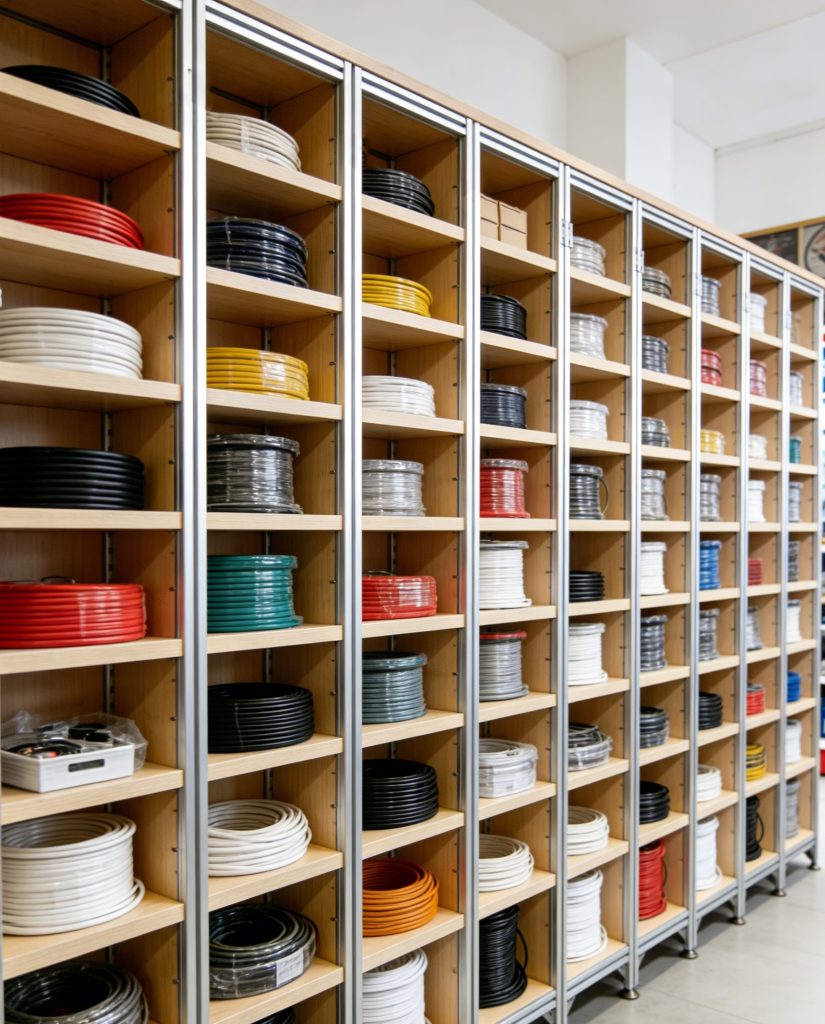
Confirm whether the supplier offers the required H07V-U sizes, colours, packaging formats, and technical specifications.
Request a product catalogue or datasheet for the exact product.
If your business needs several wire sizes, confirm whether the supplier can quote each item separately.
Verify the Supplier’s Business Role
Not every company selling electrical wire is the actual manufacturer.
A supplier may be a factory, a manufacturer with its own production lines, a trading company, or an export distributor.
Buyers should understand who is responsible for production, quality control, documentation, and order fulfilment.
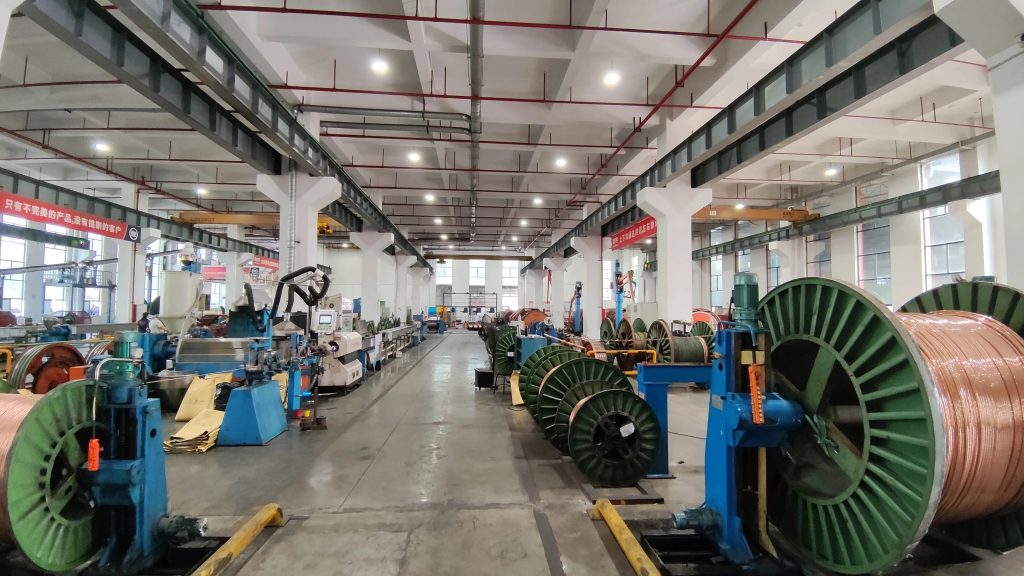
If factory-direct sourcing is important to your purchasing strategy, ask for relevant business information and confirm the manufacturing arrangement before placing a large order.
Request Technical Documentation
Ask the supplier for the technical datasheet and relevant product documentation.
Depending on the product and destination market, the documents may include:
- Conductor construction
- Nominal cross-sectional area
- Conductor resistance
- Insulation specifications
- Rated voltage
- Applicable standard
- Product marking
- Relevant test reports
- Applicable certificates
Check that the documents match the product being quoted.
Check Quality-Control Procedures
Ask how the supplier verifies product conformity.
Depending on the specification, relevant checks may include conductor resistance, insulation dimensions, visual inspection, marking, and finished-coil length.
For a new supplier or a high-value order, consider sample evaluation or independent pre-shipment inspection.
Agree on the inspection scope and acceptance criteria before production begins.
Evaluate Communication
The supplier should be able to answer technical and commercial questions clearly.
Important questions include product availability, specification differences, packaging, documentation, quotation validity, and estimated production time.
Clear communication helps prevent misunderstandings during purchasing and production.
8. What Information Should You Include in a Wholesale RFQ?
A complete request for quotation helps the supplier understand the exact product and prepare a relevant offer.
Include the following information where applicable:
Product Type: H07V-U wire
Conductor Material: Copper
Conductor Construction: Solid conductor
Cross-Sectional Area: List the required sizes in mm²
Rated Voltage: Specify the required rating
Insulation: PVC or another specified material
Applicable Standard: State the required standard
Colour: List the required colours
Quantity: Required length for each size and colour
Packaging: Coils, reels, drums, or customized packaging
Product Marking: Required designation and marking details
Documentation: Required test reports and certificates
Destination Country: State the destination market
Destination Port: Provide the port if relevant
Trade Term: EXW, FOB, CIF, or another agreed term
Delivery Schedule: State your required delivery timeframe
Payment Terms: State your preferred arrangement if known
If you are unsure about the exact specification, explain the intended application and ask the supplier to clarify the available options.
The final product selection should be checked against the project requirements and applicable regulations.
9. OEM and Private-Label H07V-U Wire
Some electrical wholesalers and importers want to sell H07V-U wire under their own brand.
Depending on the supplier’s capabilities and the applicable product requirements, private-label arrangements may include customized printing, labels, coils, reels, or packaging.
Before confirming an OEM order, discuss the following points.
Product Specification
Identify the exact product construction, conductor size, insulation, rated voltage, and applicable standard.
Branding does not replace the technical requirements.
Product Marking
Provide the required marking text and confirm that it accurately represents the product’s specification and conformity status.
Do not request standard or approval marks that the product is not entitled to carry.
Packaging Requirements
Specify coil length, reel or drum requirements, labels, carton markings, and language requirements.
Ask whether customization affects the quotation or MOQ.
Sample and Artwork Approval
Where appropriate, review the product sample and packaging artwork before mass production.
Confirm that the approved marking and packaging match the final purchase specification.
Commercial Agreement
Document the product specification, order quantity, packaging, price, payment terms, inspection requirements, and shipping arrangements in the purchase order or contract.
This provides both parties with a clear reference for the order.
10. Common Mistakes When Buying H07V-U Wire
Mistake 1: Assuming All 450/750 V Wires Are Identical
A similar voltage rating does not mean that two products have the same conductor construction, standard, or conformity status.
Always compare the full technical specification.
Mistake 2: Treating BV and H07V-U as Automatically Interchangeable
The designations belong to different product-classification systems.
Confirm the relevant standard, construction, marking, and documentation before purchasing.
Mistake 3: Accepting Unverified Certification Claims
A certificate may apply only to a specific product, factory, standard, or model.
Check the document’s scope and validity rather than relying only on a general claim.
Mistake 4: Comparing Quotations With Different Trade Terms
EXW and CIF quotations do not include the same costs.
Use a consistent basis when comparing suppliers and calculate the expected total landed cost.
Mistake 5: Ignoring Packaging and Labelling
Packaging and marking requirements can affect the usability and resale of the product.
Confirm these details before production rather than after the goods have been manufactured.
11. Frequently Asked Questions
What is H07V-U wire used for?
H07V-U is commonly associated with single-core, solid copper wire with PVC insulation for specified fixed electrical wiring applications. Its suitability depends on the product specification, installation conditions, and applicable regulations.
What voltage rating is associated with H07V-U?
H07V-U is generally associated with a rated voltage of 450/750 V. Buyers should verify the rating and applicable standard in the manufacturer’s technical documentation.
Is H07V-U a solid or stranded conductor?
H07V-U is associated with a solid conductor construction. Buyers requiring a stranded or flexible conductor should identify the appropriate product designation and verify the relevant specification.
Can I buy H07V-U wire wholesale from China?
Chinese suppliers may offer H07V-U wire for wholesale and project procurement. Availability, sizes, packaging, MOQ, documentation, and delivery terms must be confirmed with the individual supplier.
How can I compare H07V-U suppliers?
Compare the technical specification, conductor resistance requirements, insulation, applicable standard, documentation, quality-control arrangements, quotation, packaging, and trade terms.
Can H07V-U wire be used outdoors or underground?
Standard unsheathed H07V-U wire should not automatically be treated as suitable for direct burial or exposed outdoor use. Confirm the permitted installation method and select a suitable cable construction for the project.
Can I request private-label H07V-U wire?
Some suppliers may offer customized printing or packaging. Confirm the available options, MOQ, costs, and conformity requirements before placing an order.
12. Request an H07V-U Wire Wholesale Quotation
If you are sourcing H07V-U wire from China for electrical distribution, wholesale resale, or project procurement, prepare a clear product specification before contacting suppliers.
Identify the required conductor size, quantity, colour, packaging, applicable standard, documentation, destination, and trade terms.
For further product information, review these related VLEFOOENA guides:
- Wholesale Single Core Copper Wire Factory | BV H07V-U China
- PVC Insulated Building Wire Supplier China | BV, H07V-U, 450/750V
- What Is the Difference Between BV, BVR, H07V-U and H07V-K Wire?
- How to Compare Electrical Wire Suppliers in China: A Practical Buyer’s Guide
Before publishing, confirm that the links open correctly and lead to the intended articles.
A professional inquiry makes it easier for a supplier to understand your requirements and prepare a relevant quotation.
For importers, electrical wholesalers, distributors, and project buyers, the best sourcing decision comes from matching the product specification, checking documentation, comparing equivalent quotations, and evaluating the supplier’s ability to meet the agreed requirements.


No reply content