
M
How to Choose a Fishing Rod for Freshwater vs. Saltwater Fishing
Choosing a fishing rod for freshwater and saltwater applications requires different considerations. Although many fishing rods may look similar, the fishing environment, target species, water conditions, lure or bait, and required equipment can affect the appropriate rod design.
For fishing tackle importers, wholesalers, distributors, retailers, and private-label brands, understanding these differences is important when building a product range or requesting quotations from a China fishing rod supplier.
This guide explains the main factors buyers should consider when sourcing fishing rods for freshwater and saltwater markets.
1. What Is Freshwater Fishing?
Freshwater fishing takes place in bodies of water with relatively low salinity, such as:
- Lakes
- Rivers
- Ponds
- Reservoirs
- Streams
- Canals
Freshwater fishing covers many different techniques and target species.
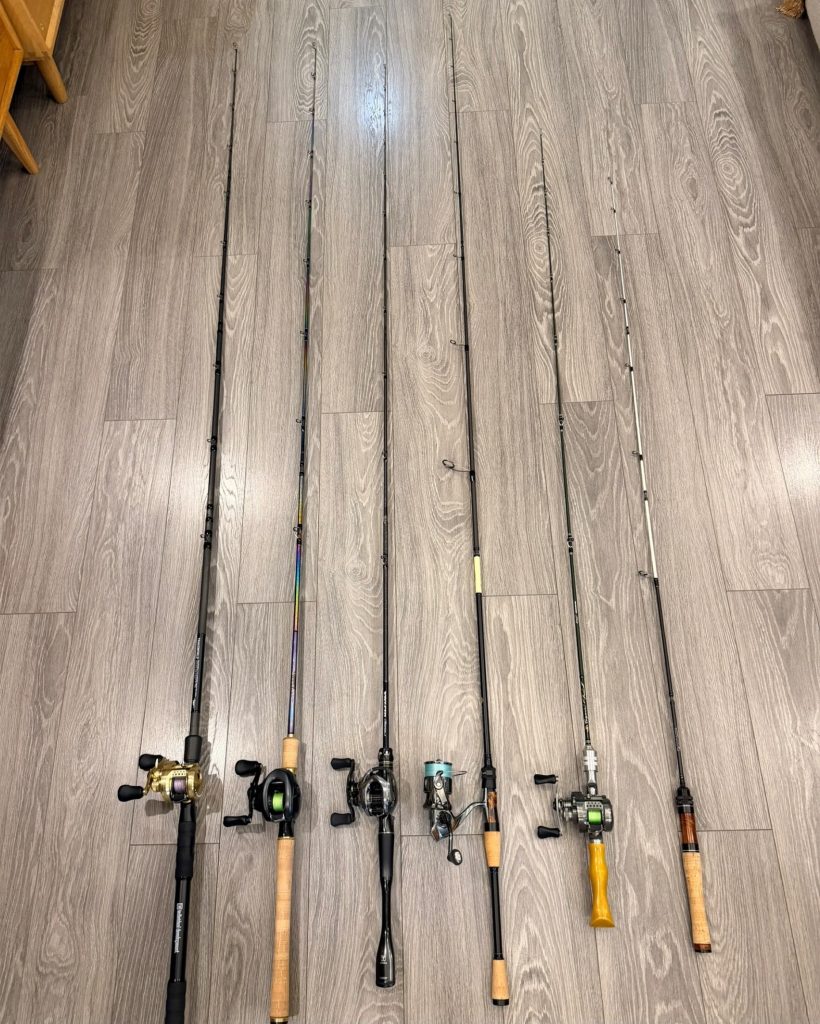
A freshwater fishing rod may therefore be designed for light lure fishing, general-purpose fishing, bass fishing, trout fishing, carp fishing, or other applications.
For wholesale buyers, the term “freshwater fishing rod” is not enough to define a product.
The buyer should also specify the target application, rod length, power, action, lure range, line range, material, and reel configuration where applicable.
2. What Is Saltwater Fishing?
Saltwater fishing takes place in marine environments such as:
- Oceans
- Coastal waters
- Bays
- Estuaries
- Offshore fishing areas
Saltwater fishing can involve larger fish, heavier tackle, stronger environmental exposure, and different fishing techniques.
Depending on the application, saltwater rods may be designed for:
- Shore fishing
- Surf fishing
- Boat fishing
- Offshore fishing
- Coastal lure fishing
- Other specialized applications
The appropriate specification depends heavily on the target fish and fishing method.
3. Freshwater vs. Saltwater Fishing Rods
There is no single specification that separates every freshwater rod from every saltwater rod.
However, buyers can compare the intended application using factors such as:
| Factor | Freshwater Application | Saltwater Application |
|---|---|---|
| Typical environment | Lakes, rivers, ponds, reservoirs | Coastal, ocean, offshore |
| Target species | Often smaller or medium-sized species, depending on fishery | Can include larger and stronger species |
| Typical equipment | Light to medium tackle is common | Light to heavy tackle depending on application |
| Corrosion exposure | Generally lower | Generally higher |
| Rod designs | Many specialized freshwater models | Many specialized marine models |
| Buyer priority | Technique and target species | Target species, environment and corrosion resistance |
These are general comparisons. The exact rod should always be selected according to the intended fishing method.
4. Consider the Target Fish
The target fish is one of the most important factors when selecting a fishing rod.
For example, a rod designed for small freshwater species may require very different specifications from a rod intended for larger saltwater species.
Before ordering fishing rods in bulk, buyers should provide:
- Target fish
- Fishing environment
- Fishing method
- Typical lure or bait
- Expected line range
- Required rod power
- Preferred rod action
The more specific the application, the easier it is for a manufacturer to recommend an appropriate model.
5. Rod Power for Freshwater and Saltwater
Rod power describes the amount of force required to bend a rod.
Common classifications include:
- Ultralight
- Light
- Medium Light
- Medium
- Medium Heavy
- Heavy
- Extra Heavy
The appropriate power depends on the target fish, lure or bait, line, and fishing technique.
For example, an ultralight rod may be appropriate for certain light freshwater applications, while heavier saltwater applications may require a stronger rod.
However, buyers should not select power solely based on whether the rod is labelled “freshwater” or “saltwater.”
The complete product specification should be considered.
6. Rod Action
Action describes where the rod primarily bends when pressure is applied.
Common descriptions include:
- Fast
- Moderate Fast
- Moderate
- Slow
Action can influence casting characteristics, lure control, sensitivity, and how the rod responds under load.
For wholesale procurement, action should be specified together with:
- Rod length
- Power
- Lure range
- Line range
- Target fishing method
This prevents misunderstandings between the buyer and manufacturer.
7. Rod Length
Rod length can affect casting distance, handling, storage, and suitability for different environments.
Freshwater rods may be available in many lengths depending on the fishing technique.
Saltwater rods can also vary significantly because shore, surf, boat, and offshore fishing may require different designs.
When preparing a wholesale order, specify:
- Total rod length
- Measurement unit
- Number of sections
- Collapsed length, if applicable
- Intended application
This is particularly important for international buyers because different suppliers may describe rod dimensions differently.
8. Material Selection
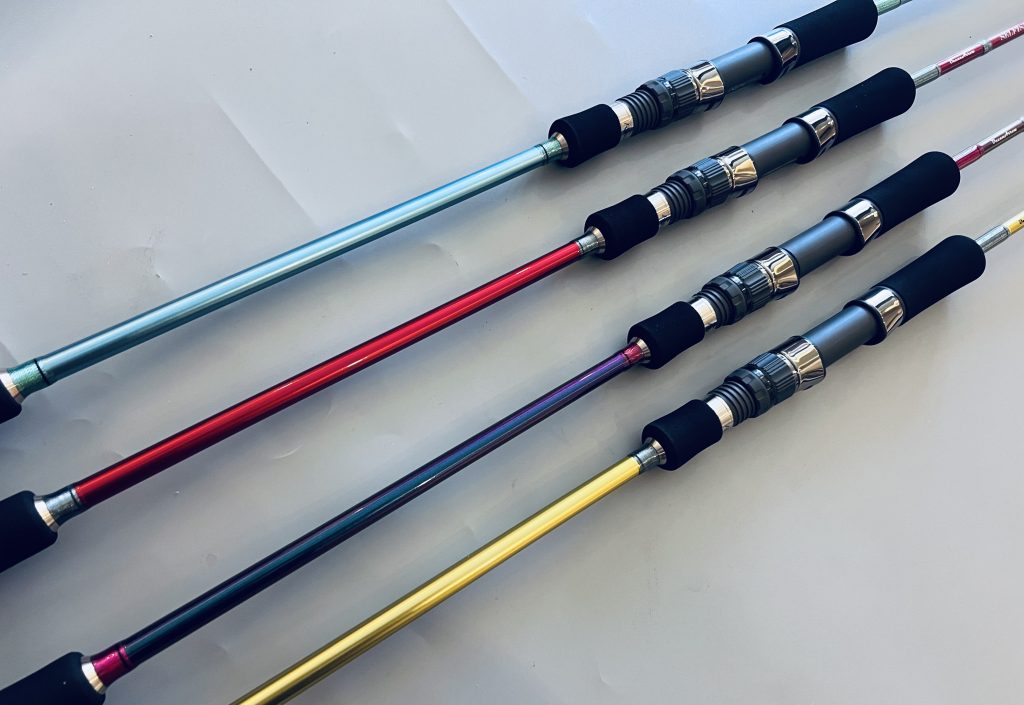
Fishing rods can be manufactured using different materials and material combinations.
Common options include:
- Carbon fiber
- Fiberglass
- Composite materials
Carbon fiber rods can provide characteristics that make them suitable for many lightweight and performance-oriented fishing applications.
Fiberglass rods can also be used for applications where different durability, flexibility, or cost characteristics are preferred.
For buyers, material should not be considered independently from blank construction and the intended application.
Ask the supplier for the actual material specification of the model being quoted.
9. Saltwater Buyers Should Consider Corrosion Exposure
Saltwater environments can expose fishing equipment to salt and moisture.
For this reason, buyers sourcing saltwater fishing rods should pay attention to the components as well as the blank.
Important components can include:
- Guides
- Guide frames
- Reel seat
- Metal fittings
- Handle components
- Other exposed hardware
The appropriate material and finish depend on the product design and intended application.
Buyers should ask the manufacturer which components are specified for the intended saltwater environment.
10. Fishing Rod Guides
Guides control the fishing line as it moves along the rod.
When sourcing rods for saltwater applications, buyers should pay attention to the guide configuration and component specifications.
Questions to ask the supplier include:
- What guide type is used?
- What is the guide frame material?
- What insert material is used?
- How many guides are installed?
- Is the guide configuration designed for the intended fishing application?
- How are the guides attached and finished?
For freshwater rods, guide requirements may differ depending on the target technique and product positioning.
The correct configuration should be confirmed for the specific model.
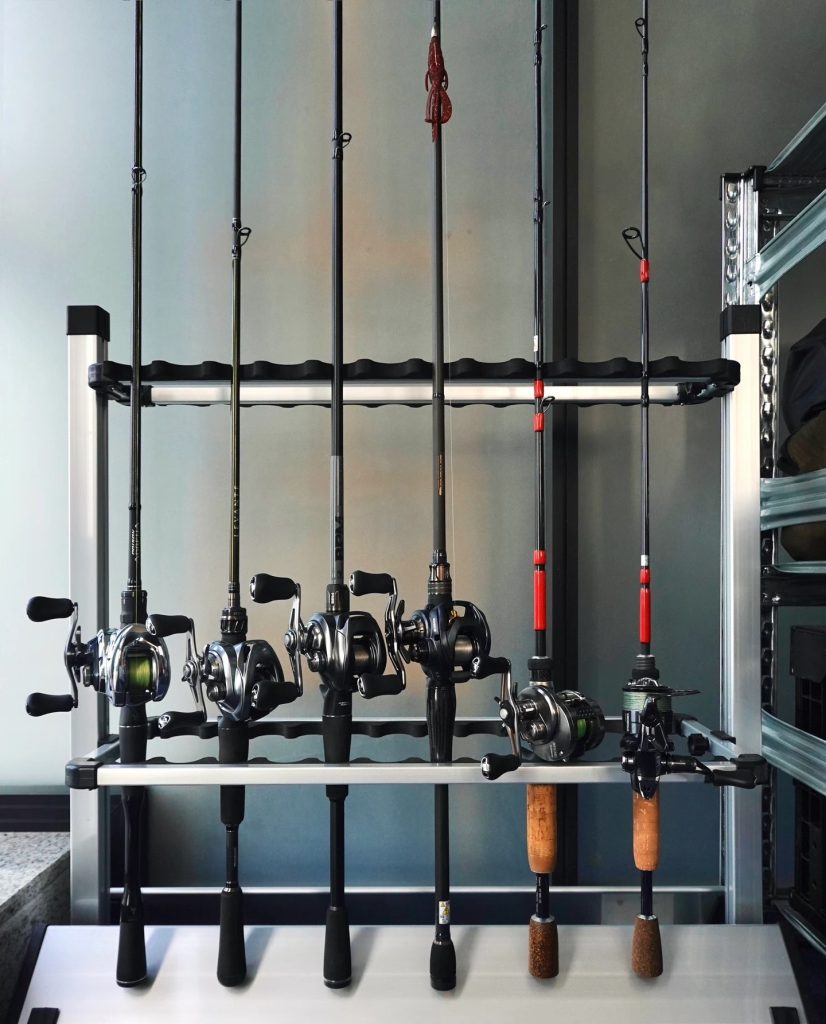
11. Reel Seat Selection
The reel seat secures the reel to the fishing rod.
Buyers should confirm that the reel seat matches the intended rod type.
For example:
- Spinning rod → compatible spinning reel configuration
- Casting rod → compatible casting reel configuration
The reel seat should also be evaluated for:
- Fit
- Locking mechanism
- Material
- Finish
- Weight
- Overall assembly quality
For OEM projects, buyers may also specify the desired appearance and components.
12. Freshwater Rod Applications
Freshwater fishing covers a large number of techniques.
Depending on the target market, a wholesale buyer may consider:
Bass Fishing
Bass fishing can require specific combinations of rod power, action, length, and reel configuration.
Trout Fishing
Some trout applications may favor lighter tackle and more sensitive rod configurations.
Carp Fishing
Carp fishing can require different rod designs and specifications depending on the fishing method.
General Freshwater Fishing
Retailers may also want versatile models for customers who fish in different freshwater environments.
The product range should be built around the target customers rather than using one rod specification for every application.
13. Saltwater Rod Applications
Saltwater fishing is similarly diverse.
Potential product categories include:
Surf Fishing
Surf rods may need specifications suitable for casting from beaches or shorelines.
Boat Fishing
Boat fishing rods can have different requirements depending on the target species and fishing technique.
Offshore Fishing
Offshore applications may require specialized equipment designed for heavier loads.
Coastal Lure Fishing
Some coastal lure fishing applications may use relatively lightweight tackle.
Therefore, simply asking a supplier for a “saltwater fishing rod” is usually not enough.
Describe the fishing application and target species.
14. How Wholesale Buyers Should Specify the Product
A good RFQ should contain enough information for the supplier to understand the intended product.
For example:
| Specification | Buyer Information |
|---|---|
| Application | Freshwater or saltwater |
| Fishing method | Target technique |
| Target species | Target fish |
| Rod type | Spinning or casting |
| Length | Required length |
| Power | Required power |
| Action | Required action |
| Material | Carbon fiber, fiberglass, etc. |
| Sections | Number of sections |
| Line range | Required range where applicable |
| Lure range | Required range where applicable |
| Quantity | Estimated order quantity |
| OEM | Logo, color, packaging, etc. |
| Destination | Importing country |
This gives the manufacturer a much clearer basis for recommending products.
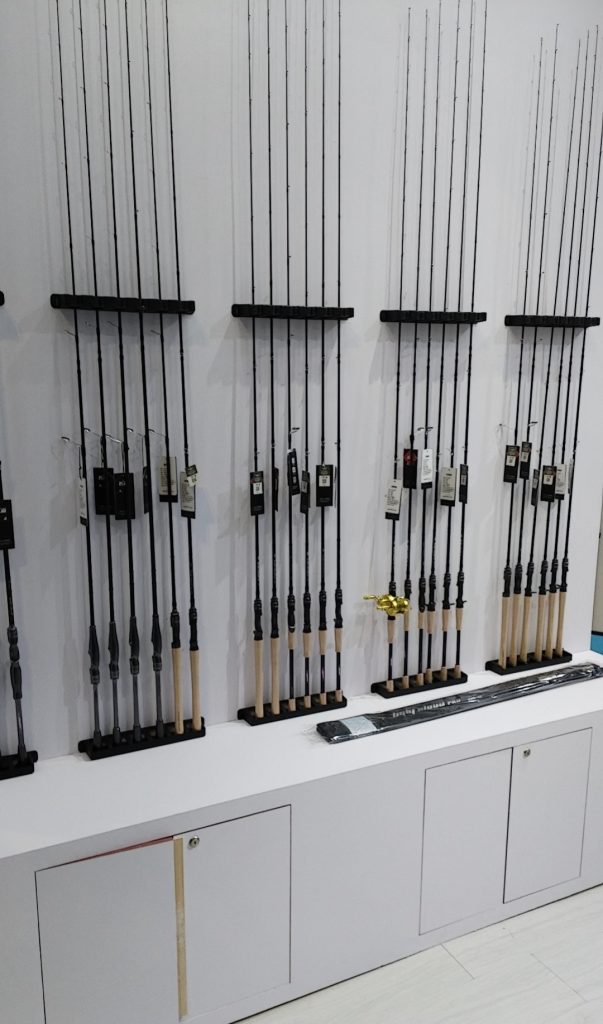
15. Freshwater or Saltwater: Which Product Should a Retailer Stock?
For retailers and distributors, the answer depends on the target market.
A general fishing tackle retailer may want a combination of:
- Light freshwater rods
- Medium freshwater rods
- Casting rods
- Spinning rods
- Saltwater rods
- Surf rods
- Travel rods
A specialist retailer may focus on a smaller number of fishing techniques.
When building an inventory, buyers should consider local fishing habits and customer demand rather than simply purchasing the largest possible product range.
16. Should One Rod Be Used for Both Freshwater and Saltwater?
Some fishing rods may be suitable for multiple applications, but buyers should not assume that every freshwater rod is appropriate for saltwater use.
The decision depends on:
- Target species
- Fishing environment
- Rod power
- Rod action
- Components
- Reel configuration
- Corrosion exposure
- Manufacturer’s stated application
If a buyer wants a versatile product, the supplier should be told this requirement before selecting the model.
17. How to Compare China Fishing Rod Suppliers
When sourcing fishing rods from China, request equivalent specifications from several suppliers.
Compare:
- Rod type
- Material
- Length
- Power
- Action
- Sections
- Guides
- Reel seat
- Handle
- Line range
- Lure range
- Product weight
- OEM capability
- Packaging
- Sample availability
- Lead time
- Warranty or after-sales terms
Do not compare suppliers using only the product title.
Two rods with the same title can have substantially different specifications.
18. Order a Sample Before a Large Purchase
For a new supplier, a sample can help buyers evaluate the actual product.
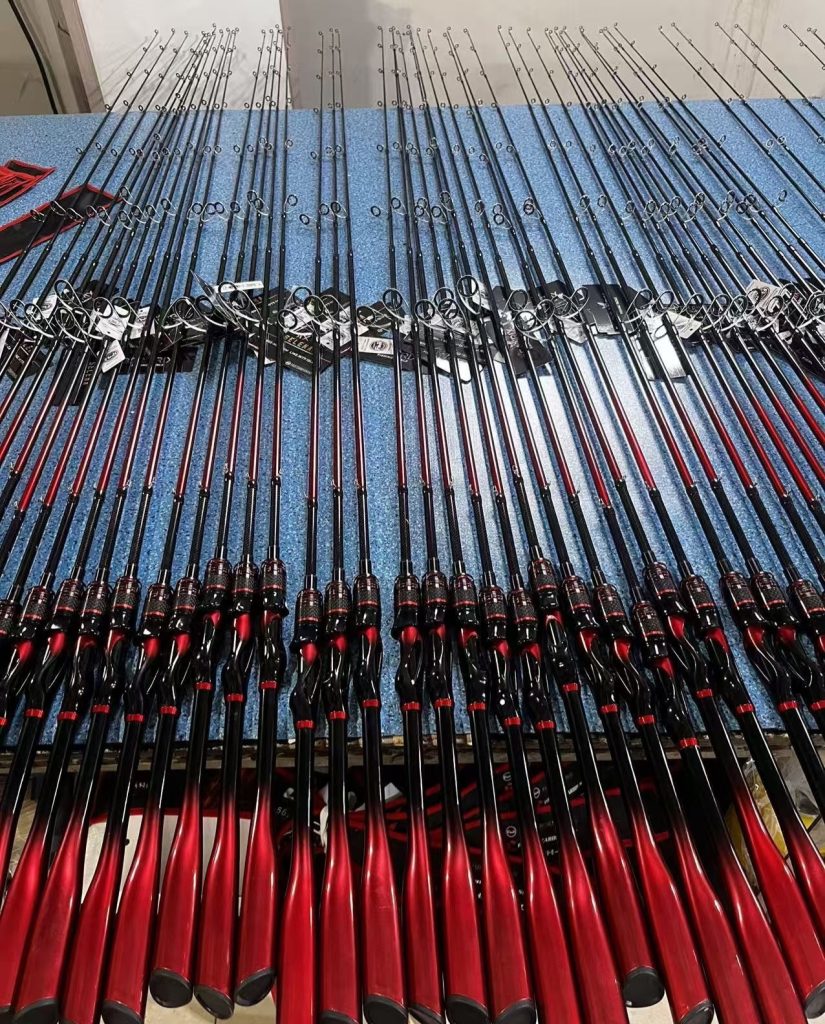
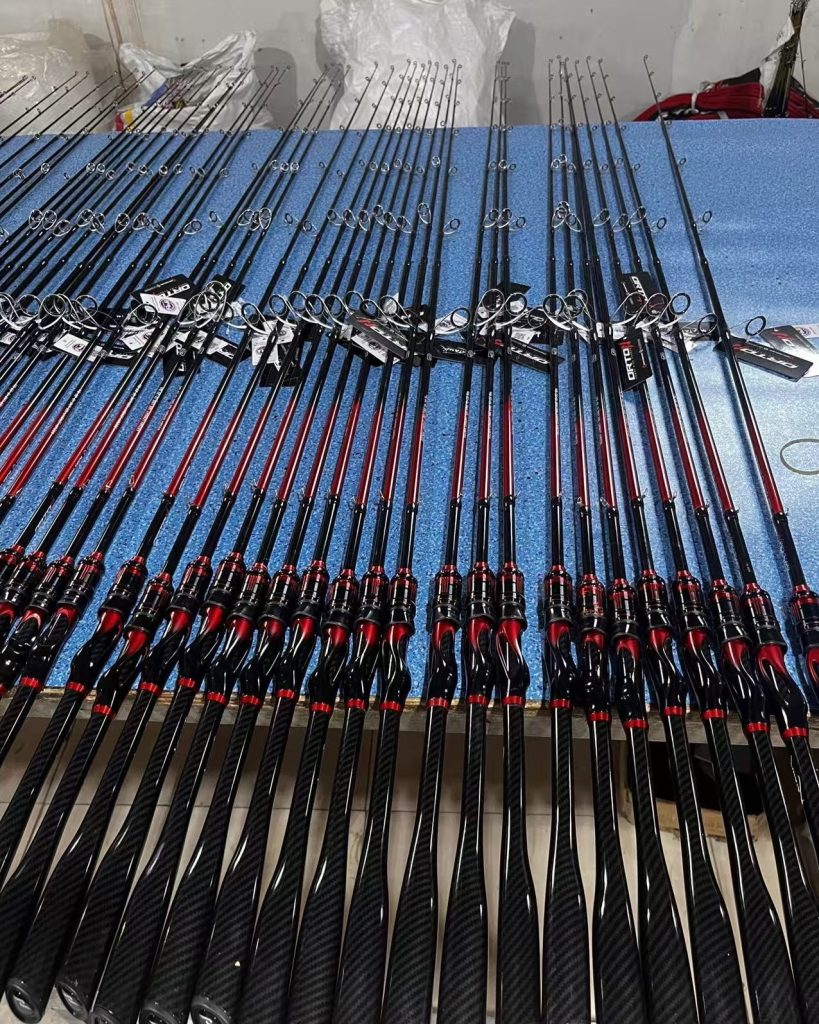
Check:
- Blank appearance
- Finish
- Straightness
- Guide alignment
- Reel-seat fit
- Handle quality
- Connections between sections
- Product markings
- Packaging
For saltwater products, buyers should pay particular attention to the components specified for marine exposure.
After the sample is approved, the final specifications should be recorded before mass production.
19. OEM and Private-Label Fishing Rods
Both freshwater and saltwater fishing rods can potentially be developed for private-label brands.
Depending on the supplier, customization may include:
- Brand logo
- Rod color
- Decorative graphics
- Handle design
- Packaging
- Product labels
- Components
- Product specifications
OEM buyers should approve a final sample before mass production.
The approved sample should be clearly identified so that the bulk order matches the agreed product configuration.
Frequently Asked Questions
Can a freshwater fishing rod be used in saltwater?
Some rods may be used in both environments depending on their design and components, but buyers should not assume that every freshwater model is suitable for saltwater. The intended application and component specifications should be confirmed with the manufacturer.
Are saltwater fishing rods stronger than freshwater rods?
Not necessarily. Strength depends on the specific rod design, power, materials, construction, and intended application. Saltwater fishing covers many techniques, from light coastal fishing to heavy offshore fishing.
What is the most important specification when choosing a fishing rod?
There is no single specification that is always the most important. Buyers should consider rod type, length, power, action, material, line and lure ratings, components, and intended fishing application together.
Should wholesalers buy spinning or casting rods?
The choice depends on the target market and fishing techniques. Many retailers may carry both types because they serve different reel configurations and customer preferences.
What should I tell a China fishing rod manufacturer when requesting a quotation?
Provide the intended application, freshwater or saltwater environment, target species, rod type, length, power, action, material, section count, quantity, OEM requirements, and destination market.
Can a fishing rod factory customize freshwater and saltwater rods?
Many fishing rod suppliers can offer OEM or private-label customization, but the exact capabilities vary. Buyers should confirm the available materials, components, designs, packaging, and production requirements with the supplier.
Conclusion
Freshwater and saltwater fishing require different product considerations, but neither category has one universal fishing rod specification.
For wholesale and OEM buyers, the better approach is to define the actual fishing application first and then select the appropriate:
- Rod type
- Length
- Power
- Action
- Material
- Sections
- Guides
- Reel seat
- Handle
- Line range
- Lure range
- Other components
When sourcing fishing rods from China, provide these requirements to the manufacturer before requesting a quotation. This makes it easier to compare suppliers and avoid receiving products that do not match the intended market.
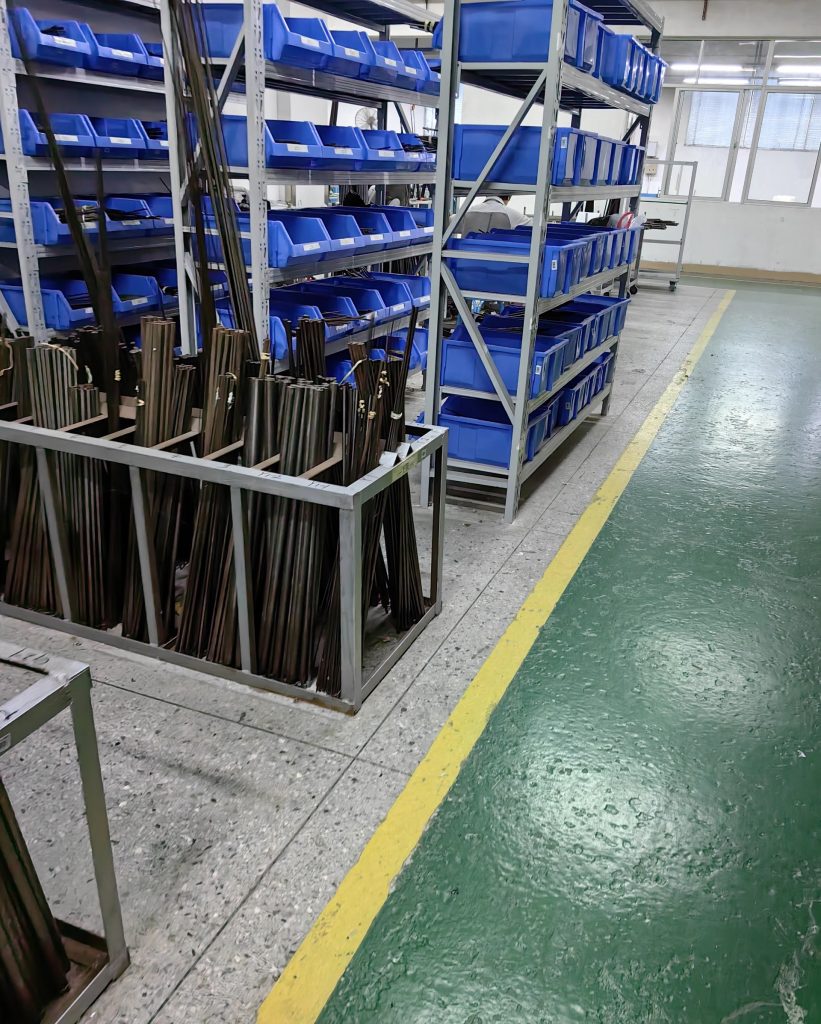
VLEFOOENA provides a B2B sourcing platform where international buyers can discover China-based fishing tackle suppliers and discuss wholesale or OEM requirements.
For more fishing rod purchasing information, see:
How to Choose the Right Fishing Rod Power and Action for Wholesale Buyers
How to Choose the Right Fishing Rod Length for Different Fishing Markets
Fishing Rod Materials Explained: Carbon Fiber vs. Fiberglass for Wholesale Buyers
How Fishing Rod Guides, Reel Seats, and Handles Affect Product Quality
How to Evaluate a Fishing Rod Sample Before Placing a Bulk Order
How to Prepare a Fishing Rod Specification Sheet for a China Supplier


No reply content