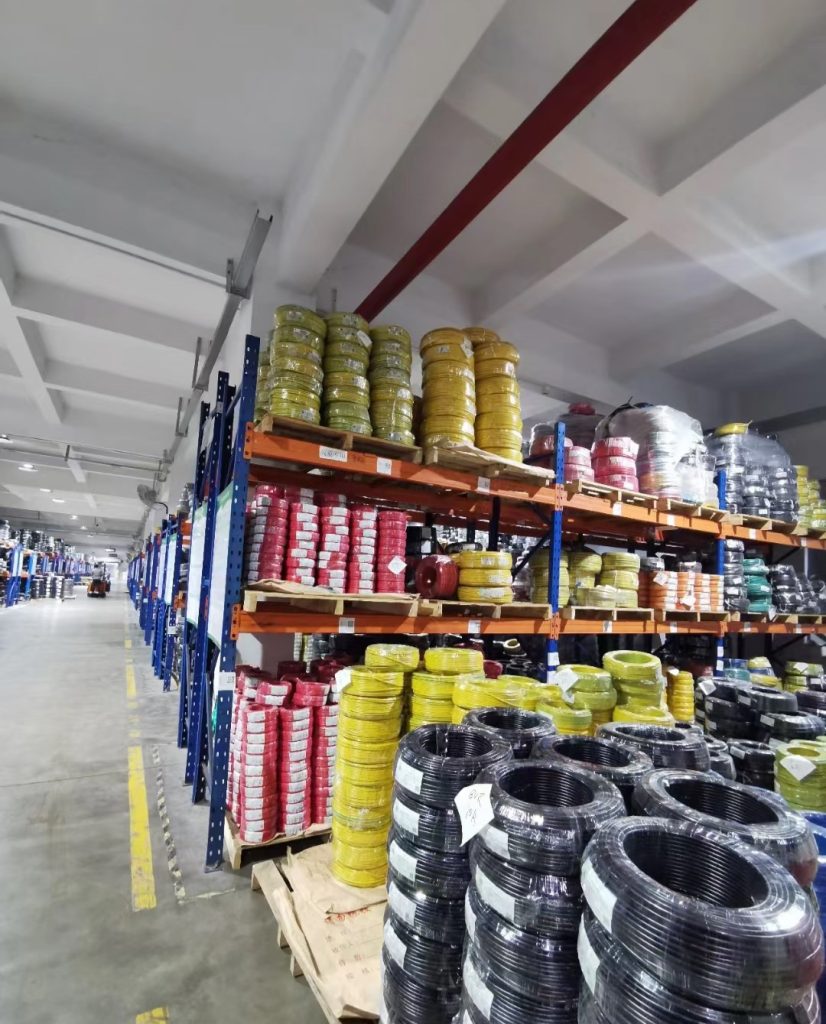
How to Request an Electrical Wire Quotation from a Chinese Manufacturer
When buying electrical wire from China, sending a simple message such as “Please give me your best price” usually does not produce a useful quotation.
A professional electrical wire manufacturer needs to know exactly what product you need, including the conductor material, wire size, insulation, voltage rating, applicable standard, color, packaging, quantity, destination, and whether you require private labeling or customized production.
If these details are missing, different suppliers may quote completely different products. A lower price may simply mean a smaller conductor, different insulation thickness, different packaging, or a different specification.
For importers, wholesalers, distributors, contractors, and electrical-product buyers, the goal of an RFQ is not simply to obtain the lowest number. The goal is to obtain comparable quotations for the same specification.
This guide explains how to prepare an electrical wire RFQ for a Chinese manufacturer and what information you should request before making a purchasing decision.
1. Start With the Exact Electrical Wire Specification
Before contacting a manufacturer, define the product as clearly as possible.
For example, instead of writing:
“I need copper wire. Please send price.”
A better RFQ would specify:
- Product: PVC insulated single-core building wire
- Conductor: copper
- Conductor type: solid or stranded
- Cross-sectional area: 2.5 mm²
- Rated voltage: 450/750V
- Insulation: PVC
- Standard: IEC 60227 or the required local standard
- Color: blue
- Quantity: 5,000 meters
- Packaging: roll or coil
- Destination: buyer’s country and port
- Required delivery time
- Private label requirement, if applicable
This gives the manufacturer enough information to calculate a meaningful quotation.
If you are not sure about the specification, first understand the difference between common products. For example, the guide on BV Wire vs H07V-U can help buyers understand how similar-looking building wires may have different designations and requirements.
2. Tell the Manufacturer Where the Wire Will Be Used
Application information can be surprisingly important.
Tell the supplier whether the wire is intended for:
- Residential construction
- Commercial buildings
- Industrial installations
- Electrical panels
- Lighting systems
- General building wiring
- OEM equipment
- Distribution and wholesale
- A specific construction project
The manufacturer may recommend a different product depending on the application.
For example, a wire intended for ordinary building installation may have different requirements from a cable designed for industrial equipment.
Providing the application also helps prevent a supplier from quoting a technically unsuitable product simply because it has a lower price.
3. Specify the Conductor Material
Do not assume that every quotation described as “copper wire” is identical.
Your RFQ should clearly state whether you require:
- Bare copper
- Annealed copper
- Tinned copper
- Aluminum
- Copper-clad aluminum, if applicable
For standard building wire, copper conductor specifications can have a significant impact on both performance and cost.
You should also specify whether you need:
- Solid conductor
- Stranded conductor
- Number of strands
- Conductor diameter
- Cross-sectional area
If you are comparing solid and stranded products, do not compare their prices without confirming that the electrical and mechanical specifications are equivalent.
The H07V-U solid copper cable guide provides a useful example of why the conductor construction needs to be clearly defined before comparing quotations.
4. Specify the Wire Size
Wire size is one of the most important elements in an RFQ.
Common sizes may include:
- 1.5 mm²
- 2.5 mm²
- 4 mm²
- 6 mm²
- 10 mm²
- 16 mm²
- 25 mm²
- Larger sizes for specific applications
However, simply stating “10 gauge” or “large copper wire” may not be sufficient.
Different markets use different sizing systems, so provide the exact specification used in your project.
If your buyer’s specification is based on metric cross-sectional area, state the value in mm².
For example:
Required conductor size: 10 mm²
rather than:
Large copper wire
This prevents misunderstandings during quotation.
5. Include the Voltage Rating
The voltage rating should also be included in the RFQ.
For example:
Rated voltage: 450/750V
This is particularly important when requesting building wire such as BV or 60227 IEC 01.
If you are buying 60227 IEC 01 cable, it is useful to understand its specification before requesting quotations. The 60227 IEC 01 cable buying guide explains the product in more detail.
Do not let suppliers assume the voltage requirement unless the application is extremely standardized.
6. Specify the Insulation Material
For many building wires, PVC insulation is common, but the exact insulation requirements can vary.
Your RFQ should identify:
- Insulation material
- Insulation color
- Insulation thickness, if specified
- Temperature rating
- Flame-retardant requirement
- Special environmental requirements
If you need PVC insulated wire, state it directly.
For example:
Insulation: PVC
You can also request the manufacturer to provide the proposed insulation thickness and technical data in the quotation.
This makes supplier comparison much easier.
7. State the Required Standard
One of the biggest mistakes buyers make is asking several suppliers for “the same wire” without specifying the standard.
Your RFQ should identify the required standard whenever possible.
Depending on your market and application, the requirement may involve:
- IEC standards
- National standards
- Project-specific specifications
- Customer specifications
- Certification requirements
If you need IEC 60227-related products, say so clearly.
A supplier quoting a product made to one standard should not automatically be considered equivalent to another supplier quoting a product made to a different standard.
The standard should therefore be part of the quotation comparison.
8. Tell the Supplier Your Required Quantity
Quantity has a direct effect on the quotation.
Instead of saying:
“I need a good price for electrical wire.”
Provide an estimated order quantity.
For example:
Trial order: 5,000 meters
or:
Initial order: 50,000 meters
or:
Annual demand: approximately 500,000 meters
If your expected volume is uncertain, you can ask for several price levels:
- 5,000 meters
- 20,000 meters
- 50,000 meters
- 100,000 meters
This allows you to understand how the manufacturer’s price changes with volume.
9. Ask for MOQ Separately
MOQ is different from your intended order quantity.
A supplier may quote an attractive unit price but require a large minimum order.
Therefore, ask:
What is your MOQ for this specification?
You can also ask whether MOQ changes for:
- Different colors
- Different sizes
- Different packaging
- Private labels
- Customized printing
- Custom cable construction
If you are purchasing several sizes, ask for the MOQ for each specification instead of assuming one MOQ applies to the entire order.
10. Ask for the Price on a Clear Unit Basis
Electrical wire can be quoted in different units.
A supplier might quote:
- USD per meter
- USD per roll
- USD per coil
- USD per drum
- USD per kilogram
Do not compare these figures directly.
Your RFQ should specify the preferred quotation basis.
For example:
Please quote the price in USD per meter.
If the supplier also provides weight-based pricing, ask them to provide both the unit price and the estimated weight.
This makes supplier comparison more transparent.
11. Ask What Is Included in the Price
A quotation should clearly explain what is included.
Ask whether the price includes:
- Product cost
- Packaging
- Printing
- Labeling
- Export packing
- Documentation
- Loading
- Inland transportation
- Other applicable charges
If you are requesting a factory quotation, you should also specify the preferred trade term.
For example:
- EXW
- FOB
- CIF
- CFR
- Other agreed Incoterms
Do not compare an EXW quotation with a CIF quotation and assume the lower number is automatically cheaper.
12. Ask About Copper Pricing
Copper is one of the most important cost components for many electrical wires.
Because copper prices can change, ask the manufacturer whether the quoted price is:
- Fixed
- Valid for a specific period
- Based on a copper reference price
- Adjustable according to the copper market
For larger or long-term orders, this question becomes particularly important.
You can also ask:
How long is this quotation valid?
A quotation that is valid for seven days should not be treated the same as one that is fixed for thirty days.
For additional background, see the practical BV wire pricing guide.
13. Ask for Technical Documents With the Quotation
A professional RFQ should not request price alone.
Ask the manufacturer to provide relevant technical information, such as:
- Product datasheet
- Conductor specification
- Insulation specification
- Rated voltage
- Applicable standard
- Product dimensions
- Weight
- Packaging information
- Test information
- Available certifications
The purpose is simple:
You need to know exactly what you are buying before comparing the price.
A $0.10 difference per meter means very little if the two suppliers are offering different products.
14. Request a Sample Before a Large Order
If the order is commercially important, consider requesting a sample.
A sample allows you to check:
- Conductor construction
- Outer diameter
- Insulation appearance
- Printing
- Flexibility
- Packaging
- Labeling
- Color
- General manufacturing quality
You can also ask whether the sample is free and whether you need to pay the shipping cost.
For larger orders, the sample should ideally be approved before mass production.
15. Ask About Packaging
Packaging is often overlooked in electrical wire purchasing.
Tell the manufacturer how you want the wire packed.
Possible requirements include:
- Coil
- Roll
- Plastic reel
- Wooden drum
- Carton
- Pallet
- Export packaging
You should also ask:
How many meters are packed in each roll?
and:
How many rolls are loaded into one carton or pallet?
Packaging affects warehouse handling, shipping volume, and final landed cost.
16. Ask About Private Label and OEM
If you are a distributor or importer building your own brand, mention this in the first RFQ.
Ask whether the manufacturer can provide:
- Custom cable printing
- Private-label packaging
- Custom labels
- Custom cartons
- Brand printing
- Customized colors
- OEM production
- ODM support
Do not wait until after receiving the quotation to mention private-label requirements.
Customization may affect MOQ, tooling, packaging costs, and production time.
17. Ask for Production and Delivery Time
Your RFQ should include the required delivery schedule.
Ask the supplier to separate:
Sample lead time
from
Mass-production lead time
For example:
- Sample: 5–10 days
- Production: 20–30 days after deposit and specification confirmation
Actual lead time depends on the product, quantity, production schedule, raw materials, packaging, and customization.
For this reason, ask the supplier to confirm the lead time specifically for your order rather than relying on a general statement such as “fast delivery.”
18. Ask About Factory Capacity
If your order is large, supplier capacity becomes important.
Ask:
- What is your monthly production capacity?
- How many production lines are available?
- Can you handle repeat orders?
- What is your normal production schedule?
- Can you support large-volume orders?
- How do you handle peak-season demand?
Capacity does not automatically mean quality, but it helps you evaluate whether a supplier can support your business over time.
19. Ask for a Complete Quotation Instead of a Single Price
A useful quotation should ideally contain more than one number.
Ask the supplier to provide:
| Item | Information Required |
|---|---|
| Product | Exact product name |
| Specification | Conductor, size, insulation, voltage |
| Standard | Applicable standard |
| Quantity | Your required quantity |
| Unit price | USD/m or agreed unit |
| MOQ | Minimum order quantity |
| Packaging | Roll, coil, drum, etc. |
| Trade term | EXW, FOB, CIF, etc. |
| Sample | Availability and cost |
| Lead time | Sample and mass production |
| Payment | Available payment terms |
| Quotation validity | Validity period |
| Certification | Available documents |
| OEM | Customization options |
This format makes quotations much easier to compare.
20. Do Not Ask “Best Price” Too Early
“Best price” sounds normal, but it is not a very useful first question.
A supplier cannot accurately determine the best price without knowing:
- Specification
- Quantity
- Packaging
- Trade term
- Customization
- Delivery destination
- Payment requirements
A better approach is:
Please provide your best quotation based on the specifications below and clearly state MOQ, packaging, lead time, trade term, and quotation validity.
This tells the supplier that you are a serious buyer and gives them the information needed to prepare a realistic offer.
21. Send the Same RFQ to Multiple Suppliers
If you are comparing Chinese electrical wire manufacturers, use the same RFQ format for each supplier.
Do not send:
Supplier A: “Please quote 10mm wire.”
and then send:
Supplier B: “Please quote 10mm copper PVC building wire, 450/750V, IEC standard, 50,000 meters, FOB price.”
The resulting quotations will not be comparable.
Use the same product specification, quantity, packaging, standard, and trade term for every supplier.
This is one of the most important principles when sourcing electrical wire from China.
You can also read the guide on how to buy electrical wires from China for the broader sourcing process.
22. Compare the Quotation Line by Line
Once you receive several quotations, create a comparison sheet.
Do not look only at the final unit price.
Compare:
- Product specification
- Conductor material
- Conductor construction
- Cross-sectional area
- Insulation material
- Insulation thickness
- Voltage rating
- Standard
- Certification
- Packaging
- MOQ
- Lead time
- Payment terms
- Trade term
- Quotation validity
- OEM capability
- Quality documentation
- Sample availability
Only after these factors match should you compare the unit price.
23. Why the Cheapest Quotation May Not Be the Best
Suppose three suppliers quote:
- Supplier A: $0.72/m
- Supplier B: $0.76/m
- Supplier C: $0.82/m
At first glance, Supplier A appears to be the best option.
But suppose Supplier A uses a different conductor specification, while Supplier B provides the exact specification requested and Supplier C includes upgraded packaging and additional documentation.
The prices are no longer directly comparable.
A buyer should therefore ask:
What exactly is included in each quotation?
This question is more valuable than simply asking:
Who has the lowest price?
24. Consider the Total Landed Cost
The factory quotation is only one part of the purchasing cost.
Your final cost may include:
Product cost + packaging + inland transportation + export-related costs + freight + insurance + import duties + destination charges + other applicable costs
For this reason, the cheapest factory price may not produce the lowest total landed cost.
This becomes especially important when comparing suppliers from different locations or when the product requires special packaging.
25. Use a Professional RFQ Template
A simple RFQ template can save considerable time.
You can send something like this to a Chinese electrical wire manufacturer:
Subject: RFQ for PVC Insulated Copper Building Wire
Dear Sales Team,
We are looking for a supplier of PVC insulated copper building wire for our market.
Please provide your quotation based on the following requirements:
Product: PVC insulated single-core copper building wire
Conductor: Copper
Construction: Solid/Stranded
Size: [XX] mm²
Rated Voltage: 450/750V
Insulation: PVC
Standard: [Required Standard]
Color: [Required Color]
Quantity: [XX,XXX] meters
Packaging: [Roll/Coil/Drum]
Destination: [Country/Port]
Trade Term: [FOB/CIF/EXW]
OEM/Private Label: [Yes/No]
Please also provide:
- Unit price
- MOQ
- Sample availability and cost
- Production lead time
- Packaging details
- Product datasheet
- Applicable certifications
- Payment terms
- Quotation validity
- Monthly production capacity
Please quote according to the exact specifications above so that we can compare your offer with other manufacturers.
Best regards,
[Buyer Name]
[Company Name]
[Country]
26. Follow Up When the Quotation Is Incomplete
Sometimes a supplier will reply with only:
“Price is USD X per meter.”
Do not immediately accept or reject the quotation.
Ask for the missing information.
For example:
Thank you for your quotation. Could you please confirm the conductor specification, applicable standard, MOQ, packaging, lead time, trade term, quotation validity, and available technical documents?
This creates a clearer purchasing record.
It also helps you determine whether the supplier understood your original RFQ.
27. A Good RFQ Can Improve Supplier Response Quality
A detailed RFQ does more than help you obtain a price.
It also gives you an early indication of how a supplier works.
Pay attention to whether the supplier:
- Reads your specifications carefully
- Answers each question
- Identifies unclear requirements
- Provides technical documentation
- Explains price differences
- Confirms lead time
- States MOQ clearly
- Communicates professionally
- Admits when a specification is unavailable
A supplier who cannot provide a clear quotation may create more problems later during production, inspection, and shipping.
28. Use the Supplier’s Product Range to Check Capability
Before placing an order, review the manufacturer’s actual product range.
For example, if you are buying single-core copper building wire, check whether the supplier regularly produces products in the required sizes and specifications.
You can review the wholesale single-core copper wire factory information to understand the type of information that should be available when evaluating a supplier.
You can also compare the supplier’s PVC insulated building wire range through the PVC insulated building wire supplier guide.
29. Check Whether the Supplier Can Support Your Exact Product
A manufacturer may advertise a broad range of electrical wires, but that does not necessarily mean every specification is produced regularly.
Ask:
- Is this an existing production specification?
- Is special tooling required?
- Is the requested conductor size standard for your factory?
- Can you manufacture the requested color?
- Can you provide the required packaging?
- Can you produce under our brand?
- Can you provide samples before mass production?
These questions are particularly important for customized orders.
30. Keep the RFQ and Final Specification Consistent
One common purchasing problem occurs when the quotation is based on one specification but the purchase order uses another.
For example:
RFQ: 10 mm² copper wire
but later:
Purchase order: 10 mm² building cable with a different standard and insulation requirement.
This can create disputes.
Once the specification is confirmed, keep the same information across:
- RFQ
- Quotation
- Sample
- Purchase order
- Sales contract
- Production confirmation
- Inspection
- Shipping documents
Consistency reduces avoidable mistakes.
Frequently Asked Questions
What information should I include when requesting an electrical wire quotation?
At minimum, provide the product type, conductor material, conductor construction, wire size, voltage rating, insulation material, applicable standard, color, quantity, packaging, destination, and required trade term.
Should I ask several Chinese suppliers for quotations?
Yes. Comparing several suppliers can help you understand the market price and identify differences in specifications, MOQ, lead time, quality documentation, and production capability.
Why are quotations from Chinese wire manufacturers sometimes very different?
The products may not actually have identical specifications. Differences in copper content, conductor construction, insulation, standards, packaging, quantity, trade terms, and customization can all affect the quotation.
Should I request samples before placing a large order?
For important or customized purchases, requesting and approving a sample is a sensible step before mass production.
How should I compare electrical wire prices?
First make sure the specifications are identical. Then compare unit price, MOQ, packaging, trade term, lead time, payment terms, quality documentation, shipping cost, and other expenses that contribute to total landed cost.
Can I request private-label electrical wire from a Chinese manufacturer?
Many manufacturers can support private-label production, but the available options, MOQ, packaging requirements, printing, and production conditions should be confirmed before ordering.
How long is an electrical wire quotation usually valid?
There is no universal validity period. Ask the supplier to state the quotation validity because raw-material costs, especially copper-related costs, can change.
What should I do if a supplier only sends me a unit price?
Ask the supplier to confirm the exact product specification, MOQ, packaging, standard, lead time, trade term, payment terms, quotation validity, and technical documentation before comparing the offer with other suppliers.
Final Thoughts
A good electrical wire quotation starts with a good RFQ.
The more clearly you define the product, the easier it becomes for a Chinese manufacturer to provide an accurate quotation. More importantly, a detailed RFQ allows you to compare different suppliers on the same technical and commercial basis.
Do not choose an electrical wire supplier simply because the first quotation has the lowest price.
Instead, compare the same specification, same quantity, same standard, same packaging basis, same trade term, and same quality requirements.
Then evaluate the supplier’s technical capability, production capacity, documentation, communication, lead time, and ability to support repeat orders.
For buyers sourcing electrical wires from China, this approach can reduce misunderstandings, improve quotation accuracy, and make supplier selection much more objective.


No reply content