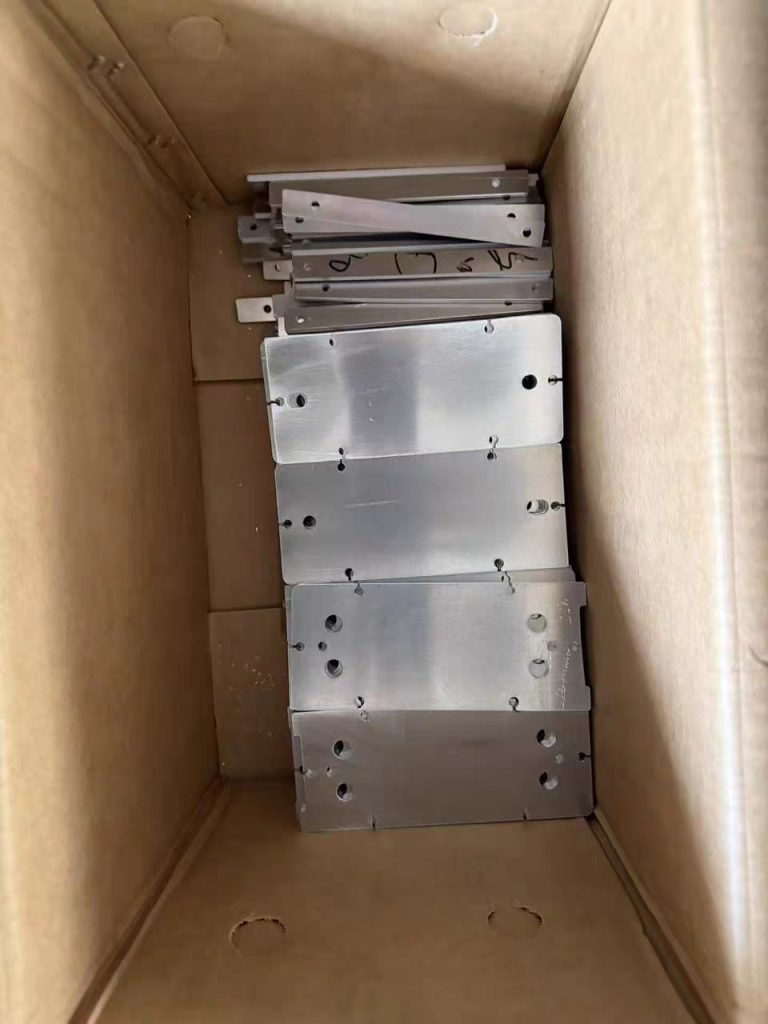
When ordering custom CNC machined parts, the machining process is only part of the final result. Surface finish can affect the appearance, corrosion resistance, friction, wear resistance, dimensional performance, and service life of a component.
A CNC machined part may look acceptable on a screen or in a drawing, but the wrong surface treatment can create problems after production. For example, a component exposed to moisture may require additional corrosion protection, while a precision assembly may need a controlled finish that does not significantly change critical dimensions.
For buyers sourcing custom CNC machining parts from China, choosing the right surface finish should therefore be part of the engineering and purchasing process—not something decided after machining is complete.
This guide explains common CNC machining surface finishes, when they are used, how they affect cost and lead time, and what information buyers should provide when requesting a quotation.
What Does CNC Machining Surface Finish Mean?
Surface finish describes the condition and characteristics of the external surface of a machined component.
After CNC milling or turning, a part normally has visible machining marks created by the cutting tool, feed rate, spindle speed, tool geometry, and machining strategy.
The final surface can be left as-machined or modified through additional processes.
Common options include:
- As-machined
- Bead blasting
- Sandblasting
- Polishing
- Brushing
- Anodizing
- Powder coating
- Plating
- Passivation
- Black oxide
- Other application-specific treatments
The correct choice depends on the material, application, appearance requirements, operating environment, tolerances, and budget.
If you are still deciding which material to use, it is useful to review this guide on what materials Chinese CNC parts manufacturers can machine before selecting a surface treatment.
Why Does Surface Finish Matter for Custom CNC Parts?
Surface treatment is not simply about making a part look better.
It can serve several practical purposes.
1. Appearance
Consumer products, visible equipment components, housings, handles, brackets, and prototypes may require a specific visual appearance.
A machined aluminum component can have a very different appearance from the same component after anodizing, bead blasting, or polishing.
2. Corrosion Resistance
Parts exposed to humidity, chemicals, outdoor environments, or other corrosive conditions may require additional protection.
The appropriate treatment depends heavily on the base material and operating environment.
3. Wear Resistance
Components that repeatedly contact other components may need a surface treatment that improves resistance to wear.
This is particularly important for moving parts, mechanical interfaces, shafts, fixtures, and components exposed to repeated friction.
4. Friction and Sliding Performance
Some applications require controlled surface characteristics to reduce friction or improve contact between components.
A highly polished surface is not automatically the correct choice for every mechanical application.
5. Coating Adhesion
Some treatments prepare the surface for a subsequent coating or finishing process.
The surface must be properly prepared so that the final treatment performs as expected.
6. Product Consistency
For production orders, the surface finish should be defined clearly enough that different batches can be inspected against the same requirements.
This becomes especially important when a buyer expects hundreds or thousands of identical components.
As-Machined Finish
As-machined is one of the simplest options.
The part is supplied directly after CNC machining without an additional decorative or protective finishing process, apart from normal cleaning and processing requirements.
The surface normally retains visible tool marks.
As-machined parts can be appropriate when:
- Appearance is not the primary concern
- The component will be installed inside equipment
- The part does not require additional corrosion protection
- The machined surface already meets the functional requirement
- The buyer wants to control cost
- Additional finishing is unnecessary
However, buyers should not assume that “as-machined” means every visible surface will look identical.
Different machining directions, tools, features, and production conditions can create differences in surface appearance.
For critical applications, the drawing or RFQ should clearly identify important surface requirements.
Bead Blasting
Bead blasting uses small abrasive media to create a more uniform and less reflective surface.
It can remove or reduce the visual effect of machining marks and create a matte appearance.
Bead blasting is commonly considered for:
- Aluminum components
- Equipment housings
- Product enclosures
- Prototypes
- Visible mechanical components
- Parts where a matte appearance is preferred
However, bead blasting is not simply a cosmetic decision.
The process can affect the visual texture and may influence dimensional characteristics on certain features.
Critical dimensions, sealing surfaces, threads, bearing fits, and other functional areas should therefore be considered separately.
If a part has precision features, tell the manufacturer which surfaces should not receive the same treatment.
Polishing
Polishing is used when a smoother or more reflective surface is required.
It can be used for components where appearance is important or where a smoother surface is beneficial for the application.
Typical applications can include:
- Decorative components
- Visible hardware
- Certain medical or laboratory components
- Components requiring a smooth appearance
- Selected mechanical surfaces
Polishing should not automatically be specified for the entire part.
Removing material during polishing can affect edges, corners, dimensions, and surface geometry.
If a component contains precision fits, sealing surfaces, or critical dimensions, these areas should be identified on the drawing.
Brushing
Brushed finishes create directional surface lines that can provide a consistent industrial or decorative appearance.
Brushing is commonly used for visible metal components where a uniform directional texture is preferred.
It can be suitable for:
- Equipment panels
- Enclosures
- Decorative metal components
- Consumer product parts
- Visible hardware
When specifying a brushed finish, buyers should clarify whether the brushing direction matters.
For assembled products, inconsistent brushing directions between components can become visually noticeable.
Anodizing
Anodizing is widely associated with aluminum components.
It can improve surface characteristics and provide a range of appearance options, including different colors depending on the process.
Common reasons for anodizing aluminum parts include:
- Improved surface protection
- Enhanced appearance
- Color identification
- Better resistance to certain environmental conditions
- More consistent cosmetic appearance
However, anodizing is not simply “adding paint” to aluminum.
The process changes the surface of the material, and the final appearance can depend on the aluminum alloy, surface preparation, anodizing process, color, and batch conditions.
If color consistency is important, buyers should define the required color and acceptance criteria before production.
For precision components, it is also important to discuss whether dimensional changes caused by the finishing process need to be considered.
Powder Coating
Powder coating applies a dry powder coating that is cured to create a protective and decorative layer.
It can be used on many metal components when a thicker, durable coating and a specific appearance are required.
Typical applications include:
- Equipment frames
- Metal housings
- Brackets
- Industrial components
- Outdoor equipment
- Structural or semi-structural metal parts
Powder coating creates a coating layer, so buyers should consider its thickness when the component contains:
- Tight-fitting holes
- Threads
- Sliding interfaces
- Bearing seats
- Precision mating surfaces
These areas may require masking or a different finishing approach.
Plating
Plating involves depositing another material onto the surface of a component.
Depending on the material and application, different plating processes can be used to provide specific functional or appearance characteristics.
Possible reasons for plating include:
- Corrosion protection
- Wear resistance
- Electrical performance
- Improved appearance
- Surface hardness
- Specific engineering requirements
Because plating processes vary significantly, simply writing “plated” on an RFQ is usually not enough.
The drawing or purchase specification should identify the required plating type, applicable material, thickness or standard where relevant, color or appearance requirement, and any areas that must remain untreated.
Passivation for Stainless Steel
Passivation is commonly associated with stainless steel components.
It is used to improve the corrosion resistance characteristics of the stainless-steel surface by removing contaminants and promoting a more stable passive surface condition.
It can be useful for components used in environments where corrosion resistance is important.
Examples include:
- Industrial equipment
- Laboratory equipment
- Food-related equipment
- Certain medical components
- Outdoor applications
- Corrosion-sensitive mechanical components
Passivation is different from applying a decorative coating.
If your stainless-steel component has specific cleanliness, corrosion resistance, or surface requirements, these should be clearly documented in the technical specification.
Black Oxide
Black oxide is commonly used for ferrous steel components.
It can provide a dark appearance and a degree of corrosion protection, particularly when combined with an appropriate post-treatment such as oil or another protective layer.
It can be considered for:
- Steel machine components
- Fasteners
- Tools
- Mechanical parts
- Fixtures
Black oxide is not equivalent to a heavy protective coating.
For parts exposed to severe outdoor or corrosive environments, buyers should discuss whether additional corrosion protection is required.
How to Choose the Right Finish for Your Application
There is no single surface finish that is best for every CNC machined part.
Start with the actual operating requirements.
For Internal Mechanical Components
If the component is hidden inside equipment and appearance is not important, an as-machined finish may be sufficient.
This can reduce unnecessary processing and help control production costs.
For Visible Aluminum Parts
Anodizing, bead blasting, brushing, or polishing may be considered depending on the required appearance and function.
The correct choice depends on whether the priority is color, texture, smoothness, protection, or a combination of these factors.
For Stainless Steel Components
Passivation may be appropriate when corrosion resistance and surface condition are important.
Polishing or other finishing methods may be added when appearance or smoothness is also required.
For Steel Mechanical Parts
Black oxide or plating may be considered depending on the required corrosion resistance, appearance, wear characteristics, and application.
For Industrial Housings
Bead blasting, powder coating, anodizing, or other finishes may be considered depending on the material and required appearance.
The most important point is to match the finish to the actual operating environment rather than selecting a finish only because it looks attractive.
How Surface Finish Affects CNC Machining Cost
Surface finishing is an additional manufacturing step, so it can affect the total cost of a CNC machined part.
The final price may depend on:
- Type of finishing process
- Part size
- Surface area
- Quantity
- Material
- Required preparation
- Masking requirements
- Color requirements
- Quality requirements
- Packaging requirements
- Whether the process is performed internally or by a specialized finishing supplier
For example, a simple as-machined aluminum component generally requires fewer processing steps than a component that needs machining, blasting, anodizing, masking, inspection, and special packaging.
When comparing quotations, it is better to compare the complete manufacturing specification rather than comparing only the CNC machining price.
You can also review how much CNC machining costs in China to understand the other factors that can influence the total project cost.
How Surface Finish Affects Lead Time
Additional finishing can also add time to a production schedule.
A typical workflow may involve:
CNC machining → cleaning → inspection → surface treatment → final inspection → packaging
If the finishing process is performed by another facility, transportation and scheduling can add additional time.
For urgent projects, buyers should ask the manufacturer whether the quoted lead time includes the complete finishing process.
Do not compare one supplier’s “machining lead time” with another supplier’s “finished-part delivery time” without checking what is included.
Surface Finish and Critical Dimensions
One of the most important issues for CNC buyers is the relationship between surface treatment and dimensional requirements.
A coating or finishing process can change the condition of the surface.
This matters for:
- Bearing seats
- Shafts
- Threaded holes
- Precision holes
- Mating surfaces
- Sealing surfaces
- Sliding surfaces
- Tight-tolerance components
For these areas, the manufacturer may need to machine certain dimensions differently or mask selected surfaces during finishing.
Your drawing should clearly identify critical dimensions and surfaces.
For more information, see what CNC machining tolerances Chinese manufacturers can achieve.
What Should You Put on Your CNC Drawing?
A good technical drawing should make the surface finish requirement clear.
Depending on the project, include:
- Required surface finish
- Applicable surfaces
- Color
- Texture
- Roughness requirement where applicable
- Coating or treatment type
- Coating thickness where applicable
- Areas that must remain untreated
- Critical dimensions
- Thread requirements
- Inspection requirements
- Applicable standards or specifications
- Part number
- Revision number
Avoid vague instructions such as:
“Make it smooth.”
Instead, define what “smooth” means for the specific application.
If appearance is important, provide photographs or reference samples where appropriate.
Should the Entire Part Have the Same Finish?
Not necessarily.
Many CNC machined components require different surface conditions on different areas.
For example, one part might require:
- Anodizing on the exterior
- No coating on a precision bore
- Special treatment on a threaded area
- Controlled surface roughness on a sealing face
This is why surface treatment should be connected to the technical drawing rather than communicated only through a general message.
A manufacturer can then identify which surfaces need masking, additional machining, or special inspection.
Common Surface Finish Mistakes Made by Buyers
Mistake 1: Choosing a Finish Only for Appearance
A finish that looks good may not provide the required functional characteristics.
Start with the operating environment and engineering requirements.
Mistake 2: Not Considering Material Compatibility
Not every finishing process is suitable for every material.
Always confirm that the selected treatment is compatible with the base material.
Mistake 3: Ignoring Critical Dimensions
Adding a coating without considering precision interfaces can create assembly problems.
Mistake 4: Using Vague Descriptions
Terms such as “high quality,” “smooth,” or “nice finish” are difficult to measure.
Use a defined process and measurable requirements whenever possible.
Mistake 5: Not Specifying Color
If color matters, identify the required color and acceptable variation.
Mistake 6: Forgetting Masking Requirements
Threads, holes, bearing seats, and mating surfaces may require protection during finishing.
Mistake 7: Comparing Incomplete Quotes
A quotation for CNC machining without surface treatment is not directly comparable with a quotation that includes machining, finishing, inspection, and packaging.
How to Request a CNC Surface Finish Quotation
When sending an RFQ to a CNC machining manufacturer, provide as much relevant information as possible.
A useful RFQ package may include:
- 3D CAD file
- 2D technical drawing
- Material specification
- Required quantity
- Surface finish
- Color, if applicable
- Critical dimensions
- Tolerance requirements
- Special inspection requirements
- Delivery requirements
- Packaging requirements
For a detailed guide to preparing CNC files, see what drawings and files CNC manufacturers need for custom parts.
The clearer the RFQ, the easier it is for a manufacturer to calculate the actual production requirements.
CNC Surface Finish Buyer Checklist
Before approving production, check the following:
- [ ] Material is clearly specified
- [ ] Surface finish is clearly identified
- [ ] Required finish applies to specific surfaces where necessary
- [ ] Color is specified if required
- [ ] Critical dimensions are identified
- [ ] Threads and holes have been reviewed
- [ ] Masking requirements are clear
- [ ] Surface roughness requirements are defined where necessary
- [ ] Inspection requirements are documented
- [ ] Sample approval requirements are confirmed
- [ ] Packaging requirements are confirmed
- [ ] Final quotation includes the required finishing process
This simple checklist can prevent many misunderstandings between the buyer and manufacturer.
Frequently Asked Questions
What is the most common finish for CNC machined parts?
As-machined is a common option when additional cosmetic or protective treatment is not required. Other finishes such as anodizing, bead blasting, polishing, powder coating, plating, passivation, and black oxide are selected according to the material and application.
Does surface finishing increase CNC machining cost?
Usually, additional finishing adds processing costs because it introduces extra manufacturing steps. The actual impact depends on the finish, part size, quantity, material, masking requirements, and inspection requirements.
Can surface finishing affect dimensions?
Yes. Some finishing processes add material or alter the surface. Precision areas such as holes, threads, bearing seats, and mating surfaces should be reviewed before production.
Can aluminum CNC parts be anodized?
Yes, anodizing is commonly used for aluminum components. However, the final appearance and performance depend on the aluminum alloy, surface preparation, anodizing process, and specified requirements.
Is bead blasting the same as anodizing?
No. Bead blasting is a surface preparation or texturing process, while anodizing is an electrochemical surface treatment commonly used for aluminum and certain other suitable materials.
Should I specify surface finish on the drawing?
Yes. If surface finish affects appearance, function, corrosion resistance, assembly, or inspection, it should be clearly documented in the technical drawing or purchase specification.
Can different areas of the same CNC part have different finishes?
Yes. A single component can have different finishing requirements on different surfaces. Precision or mating areas may need to remain untreated or receive a different treatment.
How can I reduce unnecessary finishing costs?
Start with the actual functional requirement. If a hidden internal component does not require a cosmetic finish, an additional treatment may not provide meaningful value. Discuss the application with the manufacturer before selecting a finishing process.
Final Thoughts
Choosing a CNC machining surface finish should be based on the actual requirements of the component rather than appearance alone.
Material, operating environment, corrosion exposure, friction, wear, dimensions, assembly requirements, appearance, quantity, cost, and lead time should all be considered together.
A clear technical drawing and RFQ can make the process much easier. When buyers specify the material, finishing process, critical surfaces, dimensions, color, and inspection requirements in advance, manufacturers can provide more accurate quotations and reduce the risk of misunderstandings during production.
If you are looking for custom CNC machining parts and need help selecting a suitable manufacturing and finishing process, you can review the Custom CNC Machining Parts Manufacturer in Dongguan China supplier profile and discuss your drawings, materials, quantities, surface treatment, and production requirements directly with the supplier.


No reply content