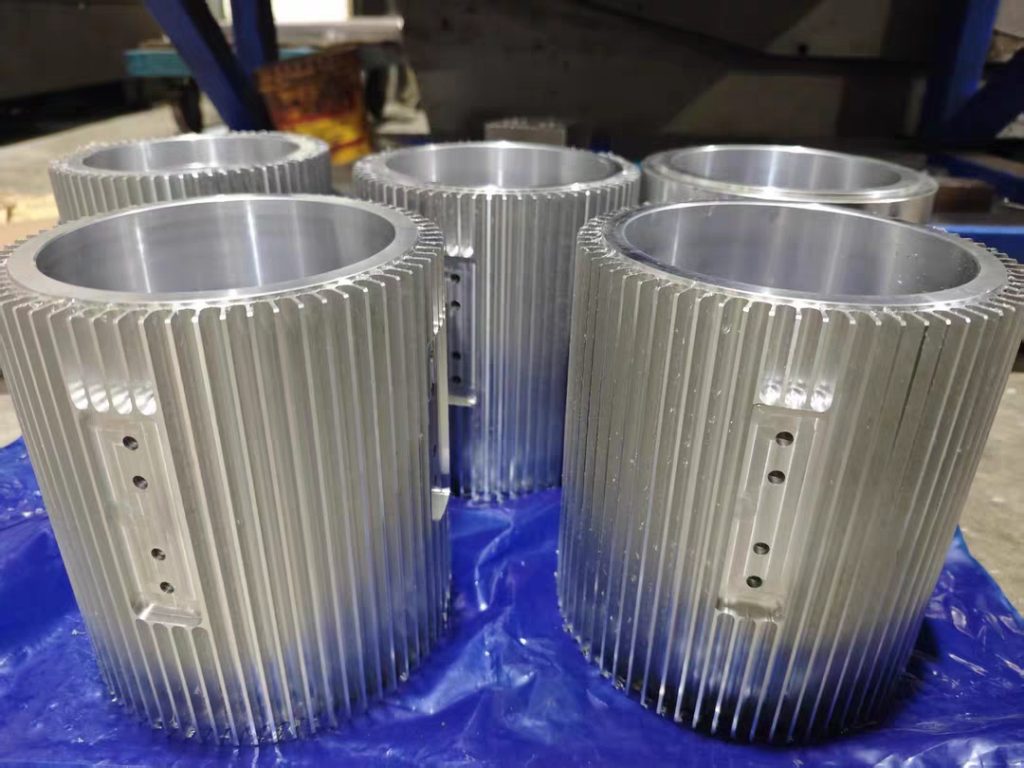
When ordering custom CNC machined parts, one of the first manufacturing decisions is choosing the right machining process.
CNC milling and CNC turning are both widely used for precision components, but they work in different ways and are better suited to different part geometries.
For buyers sourcing custom CNC machining parts from China, understanding the difference between CNC milling and CNC turning can make it easier to prepare drawings, communicate with manufacturers, compare quotations, and avoid choosing an unsuitable production process.
The key question is not simply which process is “better.”
The better question is:
Which machining process matches the geometry, dimensions, material, quantity, tolerance, and functional requirements of your part?
This guide explains the main differences between CNC milling and CNC turning and how buyers can determine which process is appropriate for a custom component.
What Is CNC Milling?
CNC milling is a machining process in which a rotating cutting tool removes material from a stationary workpiece.
The cutting tool can move along different axes to create complex shapes, pockets, holes, slots, steps, contours, and other features.
Depending on the machine configuration, CNC milling can support relatively complex geometries.
Typical CNC milled components include:
- Machine brackets
- Housings
- Plates
- Mounting blocks
- Structural components
- Fixtures
- Aluminum enclosures
- Mechanical brackets
- Custom industrial components
- Prototype parts
Milling is particularly useful when a component has multiple flat surfaces, pockets, holes, or irregular external geometry.
What Is CNC Turning?
CNC turning works differently.
In a conventional turning operation, the workpiece rotates while a cutting tool removes material from its outer or inner surfaces.
This makes turning particularly suitable for parts with rotational symmetry.
Typical CNC turned components include:
- Shafts
- Pins
- Bushings
- Spacers
- Sleeves
- Cylindrical connectors
- Threaded components
- Rollers
- Circular mechanical components
Turning can efficiently produce cylindrical and round features with controlled diameters and lengths.
CNC Milling vs CNC Turning: The Main Difference
The simplest distinction is:
CNC milling: the cutting tool rotates around a stationary workpiece.
CNC turning: the workpiece rotates while the cutting tool removes material.
However, modern CNC machines can combine multiple machining operations.
Some CNC turning centers can include live tooling, while CNC machining centers can perform multiple operations in one setup.
This means that the actual production process for a custom component may involve more than one machining method.
When Should You Choose CNC Milling?
CNC milling is generally worth considering when the part has a complex or non-round geometry.
For example, a component may have:
- Multiple flat faces
- Internal pockets
- Side holes
- Slots
- Irregular contours
- Mounting holes
- Different thicknesses
- Complex three-dimensional surfaces
A rectangular aluminum housing with multiple holes and internal pockets would typically be a more natural candidate for CNC milling than conventional CNC turning.
Example: Aluminum Mounting Bracket
Imagine you need a custom aluminum bracket with:
- Four mounting holes
- A central pocket
- Two side slots
- Several different thicknesses
- A flat mounting surface
This geometry is naturally suited to CNC milling because the machine can access different surfaces and remove material to create the required features.
When Should You Choose CNC Turning?
CNC turning is generally suitable when the main geometry is cylindrical or rotational.
Examples include:
- Shafts
- Bushings
- Pins
- Sleeves
- Cylindrical spacers
- Threaded round parts
- Rotating components
Example: Precision Shaft
Suppose a component consists mainly of several stepped diameters along a central axis.
The drawing may specify:
- Overall length
- Multiple shaft diameters
- Grooves
- Threads
- Chamfers
- Bearing seats
This type of geometry is well suited to CNC turning.
The rotating workpiece allows the cutting tool to efficiently create the required cylindrical features.
Can One Part Require Both Milling and Turning?
Yes.
Some components contain both rotational and non-rotational features.
For example, a custom shaft may have:
- A cylindrical main body
- External threads
- A keyway
- Cross-drilled holes
- Flat sections
- Milled mounting features
A turning operation may create the primary cylindrical geometry, while milling may create the keyway, flats, or other non-round features.
Depending on the machine configuration, multiple operations may be performed on the same CNC machine or through separate machining processes.
This is one reason buyers should provide complete 3D CAD files and technical drawings instead of trying to specify the machining process themselves without enough information.
You can also review what drawings and files CNC manufacturers need for custom parts when preparing an RFQ.
CNC Milling vs CNC Turning for Complex Shapes
Part geometry is one of the most important factors when choosing between the two processes.
Milling Is Often Suitable for:
- Rectangular components
- Irregular shapes
- Pockets
- Slots
- Flat surfaces
- Multi-sided components
- Complex contours
- Components with holes at different angles
Turning Is Often Suitable for:
- Cylinders
- Shafts
- Pins
- Bushings
- Sleeves
- Round spacers
- Rotational components
The important point is that the final geometry determines the process.
Do not select milling or turning simply because one process appears cheaper.
CNC Milling vs CNC Turning for Holes
Both processes can produce holes, but the machining strategy can be different.
CNC milling is useful when holes need to be positioned across flat surfaces or at different locations on a component.
Turning can be particularly efficient for concentric holes or internal bores along the rotational axis of a cylindrical component.
For example:
Milled housing:**
The component may have holes positioned around a rectangular body.
Turned sleeve:
The component may have a central internal bore that runs along its rotational axis.
The geometry and required tolerances should determine the appropriate process.
CNC Milling vs CNC Turning for Threads
Both milling and turning can produce threaded features.
The correct approach depends on the thread location, diameter, geometry, material, and production requirements.
For example:
- External threads on a cylindrical shaft are commonly associated with turning.
- Internal threads in a milled housing may be produced through tapping or thread milling.
- Complex or unusual threads may require a specific machining strategy.
When requesting a quotation, specify the thread size and standard rather than simply writing “threaded hole.”
For critical threaded components, the drawing should also identify the relevant tolerance or inspection requirement.
CNC Milling vs CNC Turning for Tolerances
Tolerance requirements should be based on the actual function of the component.
Not every dimension needs the same tolerance.
For example, a decorative external surface may not require the same dimensional control as:
- Bearing seats
- Mating surfaces
- Precision holes
- Shafts
- Sealing interfaces
- Alignment features
Over-specifying tight tolerances across the entire drawing can increase manufacturing difficulty and cost without necessarily improving the final product.
For more information, see what CNC machining tolerances Chinese manufacturers can achieve.
How Material Affects the Machining Process
Material selection can also influence the appropriate CNC process.
Common CNC machining materials include:
- Aluminum
- Stainless steel
- Carbon steel
- Brass
- Copper
- Titanium
- Engineering plastics
- Other machinable materials
Different materials have different cutting characteristics, hardness, thermal properties, and tool requirements.
For example, an aluminum housing may have very different machining requirements from a stainless-steel shaft.
Before requesting quotations, specify the exact material grade whenever the application requires it.
You can learn more about material selection in what materials Chinese CNC parts manufacturers can machine.
Which Process Is Better for Prototypes?
Both CNC milling and CNC turning can be useful for prototypes.
The correct choice depends on the prototype geometry.
For example:
Prototype A:
A rectangular electronics housing with pockets and mounting holes.
→ CNC milling may be suitable.
Prototype B:
A cylindrical shaft with several diameters and threads.
→ CNC turning may be suitable.
Prototype C:
A cylindrical component with milled flats and cross holes.
→ A combination of turning and milling may be required.
The objective should be to produce a prototype that accurately represents the intended production component.
Which Process Is Better for Small Production Runs?
Both processes can work well for low-volume production.
The economics depend on:
- Part geometry
- Quantity
- Material
- Number of operations
- Setup requirements
- Tooling
- Tolerances
- Surface finish
- Inspection requirements
- Packaging
- Secondary processing
A simple turned shaft may be relatively efficient to produce in a small batch.
A complex milled component may require multiple setups and tools.
However, a high-volume order can change the cost calculation because setup and programming costs can be distributed across more parts.
This is why buyers should compare complete quotations rather than judging a machining process based only on hourly machine rates.
CNC Milling vs CNC Turning: Cost Considerations
The total cost of a custom CNC part is influenced by more than the machine type.
Important factors include:
Part Complexity
More complex geometry generally requires more machining operations and programming.
Material
Material cost and machining difficulty can vary considerably.
Quantity
Larger quantities can spread setup and programming costs across more parts.
Tolerance
Tighter tolerances may require additional machining, measurement, or process control.
Surface Finish
Additional finishing processes can increase both cost and lead time.
Number of Setups
Parts requiring multiple setups may take longer to manufacture.
Inspection
Additional quality-control requirements can add time and cost.
For a broader explanation, see how much CNC machining costs in China.
CNC Milling vs CNC Turning for High-Precision Parts
Precision depends on the machine, tooling, workholding, programming, material, operator experience, process control, and inspection system.
It is therefore not accurate to assume that milling is always more precise than turning, or vice versa.
The correct process should be selected based on the geometry and required features.
For critical parts, buyers should discuss:
- Datum references
- Critical dimensions
- Tolerances
- Surface roughness
- Inspection methods
- Measurement equipment
- Material condition
- Process sequence
The manufacturer should also confirm whether the proposed machining process can consistently meet the required specifications.
What Information Should You Give a CNC Manufacturer?
When requesting a quotation, provide enough information for the manufacturer to evaluate the actual machining requirements.
A good RFQ should include:
- 3D CAD model
- 2D engineering drawing
- Material
- Quantity
- Required tolerances
- Surface finish
- Thread specifications
- Critical dimensions
- Application information when relevant
- Inspection requirements
- Packaging requirements
- Target delivery schedule
Avoid sending only a photograph and asking:
“How much for this part?”
A photograph can show the general appearance, but it normally cannot provide enough information for an accurate manufacturing quotation.
Should Buyers Tell the Manufacturer Which CNC Process to Use?
Usually, buyers should clearly communicate the required part specifications while allowing an experienced manufacturer to recommend the most appropriate production method.
If you have an established manufacturing process, you can specify it.
If you do not, provide:
- Geometry
- Material
- Quantity
- Tolerance
- Surface finish
- Functional requirements
The manufacturer can then review the part and determine an appropriate machining strategy.
This approach can prevent buyers from unnecessarily limiting the production options.
How to Compare CNC Machining Quotations
When comparing quotations from different suppliers, make sure the specifications are equivalent.
Check whether each quotation includes:
- Same material
- Same quantity
- Same tolerances
- Same surface finish
- Same inspection requirements
- Same packaging
- Same delivery terms
- Same secondary operations
A lower CNC machining price does not necessarily represent the same production scope.
One quotation may include only machining, while another may include finishing, inspection, packaging, and other services.
Common Mistakes When Choosing CNC Milling or Turning
Mistake 1: Choosing the Process Based Only on Price
The cheapest process on paper may not produce the required geometry efficiently.
Mistake 2: Ignoring Part Geometry
The shape of the component should be the starting point for process selection.
Mistake 3: Over-Specifying Tolerances
Extremely tight tolerances on non-critical dimensions can increase cost unnecessarily.
Mistake 4: Providing Incomplete Drawings
Missing dimensions, materials, or surface requirements can result in inaccurate quotations.
Mistake 5: Forgetting Secondary Operations
Some parts require anodizing, plating, polishing, heat treatment, grinding, or other processes after CNC machining.
Mistake 6: Comparing Different Production Scopes
Always confirm exactly what is included in each quotation.
A Simple CNC Process Selection Guide
You can use this basic decision process:
Is the main geometry cylindrical or rotational?
→ Consider CNC turning.
Does the part have multiple flat surfaces, pockets, slots, or irregular contours?
→ Consider CNC milling.
Does the part combine cylindrical and non-cylindrical features?
→ A combination of turning and milling may be appropriate.
Does the part have extremely complex geometry?
→ Discuss the component with the manufacturer and determine whether multi-axis CNC machining or another process is appropriate.
The final decision should be based on the complete engineering requirements.
Questions to Ask a CNC Manufacturer
Before placing an order, buyers can ask:
- Which machining process do you recommend for this geometry?
- Can the part be completed in one setup?
- Which dimensions are most difficult to control?
- Are any features likely to require additional operations?
- Can the specified tolerances be maintained consistently?
- Will the surface finish affect critical dimensions?
- Are there any DFM changes you recommend?
- What inspection method will be used?
- Can you provide a first article or prototype?
- What is included in the quoted price?
These questions can reveal potential manufacturing problems before production begins.
Frequently Asked Questions
What is the difference between CNC milling and CNC turning?
CNC milling normally uses a rotating cutting tool to machine a stationary workpiece, while CNC turning normally rotates the workpiece while a cutting tool removes material.
Is CNC milling better than CNC turning?
Neither process is universally better. The appropriate process depends on the geometry and functional requirements of the component.
Which CNC process is best for shafts?
Cylindrical shafts are commonly suited to CNC turning because the main geometry is rotational. Additional milling may be required if the shaft has flats, keyways, cross holes, or other non-round features.
Which CNC process is best for aluminum housings?
Many aluminum housings are suitable for CNC milling because they often contain flat surfaces, pockets, mounting holes, and irregular features.
Can one CNC part use both milling and turning?
Yes. Some components require both turning and milling operations to produce different features.
Does CNC milling cost more than CNC turning?
Not necessarily. Cost depends on geometry, material, quantity, setup requirements, tolerances, surface finish, inspection, and other production factors.
Should I choose the machining process before contacting a supplier?
Not always. If you provide complete technical information, an experienced CNC manufacturer can often recommend an appropriate machining strategy based on the actual geometry and requirements.
Can CNC milling and turning produce precision components?
Yes. Both processes can be used for precision components when the machine, tooling, programming, process control, material, and inspection requirements are properly managed.
Final Thoughts
CNC milling and CNC turning are not competing processes where one is always the better choice.
They solve different manufacturing problems.
CNC milling is commonly suitable for components with flat surfaces, pockets, slots, holes, and complex non-rotational geometry. CNC turning is commonly suitable for shafts, pins, bushings, sleeves, and other rotational components.
Some custom parts require both processes.
For buyers, the most important step is to provide complete and accurate technical information. A detailed CAD model, engineering drawing, material specification, tolerance requirements, surface finish, quantity, and inspection requirements allow the manufacturer to evaluate the project more accurately.
If you are sourcing custom CNC machining parts and need a supplier to review your drawings, geometry, materials, and production requirements, visit the Custom CNC Machining Parts Manufacturer in Dongguan China supplier profile and discuss the project requirements before placing an order.


No reply content