
Guangzhou Fishing Tackle Co., Ltd
China
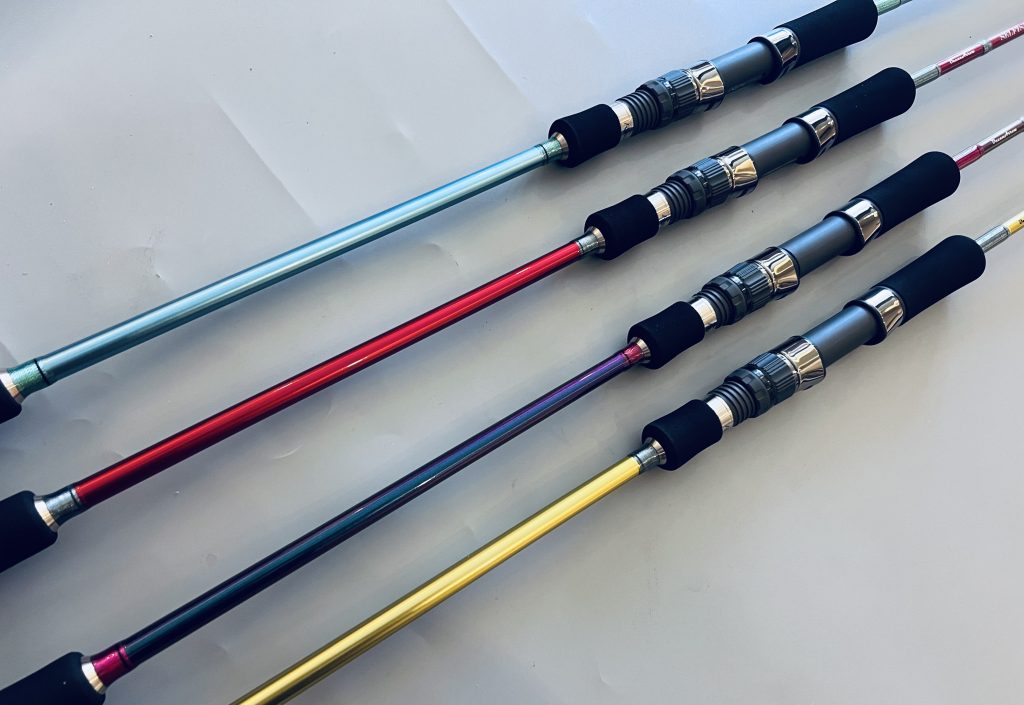
How to Choose a Carbon Fiber Fishing Rod for Wholesale and OEM Projects
Carbon fiber fishing rods are widely used in wholesale, private-label, and OEM fishing tackle projects because buyers can develop products for different fishing applications, price positions, and target markets.
However, choosing a carbon fiber fishing rod for a commercial project requires more than simply asking a supplier for a “high-quality carbon fishing rod.” Buyers need to define the rod type, application, length, construction, power, action, components, finish, branding, packaging, and quality requirements before placing a bulk order.
This guide explains how importers, wholesalers, distributors, retailers, and private-label brands can evaluate carbon fiber fishing rods when sourcing from China.
1. Start With the Intended Fishing Application
The first step is to determine how the fishing rod will be used.
A carbon fiber rod designed for one application may not be suitable for another. Before requesting quotations, buyers should identify:
-
Target fish species
-
Freshwater or saltwater use
-
Fishing method
-
Target customer group
-
Beginner or professional market
-
Retail or professional use
-
Target country or region
-
Expected order quantity
For example, a retailer selling general freshwater fishing equipment may require a different product configuration from a specialist distributor serving experienced anglers.
The intended application should therefore be included in the initial product brief sent to the manufacturer.
2. Choose the Appropriate Carbon Fiber Fishing Rod Type
Carbon fiber can be used in different fishing rod designs.
Depending on the project, buyers may consider:
-
Spinning rods
-
Casting rods
-
Telescopic fishing rods
-
Travel fishing rods
-
Freshwater fishing rods
-
Saltwater fishing rods
-
Other specialized fishing rods
The rod type affects the reel seat, guide arrangement, handle design, blank construction, and other components.
If you are still deciding between spinning and casting rods, review:
Spinning Rod vs Casting Rod: Which Type Should Wholesale Buyers Choose?
The goal is to select the rod configuration according to the intended market rather than choosing a product simply because it is advertised as carbon fiber.
3. Understand What “Carbon Fiber” Means in the Product Specification
“Carbon fiber fishing rod” is a useful product description, but it may not provide enough technical information for an OEM or wholesale project.
Buyers should ask the supplier to clarify the material specification used for the quoted product.
Depending on the project, relevant information may include:
-
Carbon fiber construction
-
Composite construction
-
Blank construction
-
Material specification
-
Product weight
-
Rod length
-
Number of sections
-
Intended application
Buyers should avoid assuming that every carbon fiber fishing rod has the same performance characteristics.
For a comparison between major fishing rod materials, see:
Fishing Rod Materials Explained: Carbon Fiber vs Fiberglass for Wholesale Buyers
The supplier should confirm the actual product specification before a sample is approved.
4. Select the Correct Rod Length
Rod length should be selected according to the intended fishing application and target market.
Common commercial specifications may include different lengths for different fishing methods and customer groups.
When preparing an RFQ, specify the required length using an agreed measurement system, such as feet or meters.
For example:
Specification |
Example |
|---|---|
Rod Type |
Spinning Rod |
Material |
Carbon Fiber |
Length |
7 ft |
Sections |
2 |
Application |
Freshwater |
Quantity |
500 pcs |
The exact specification should be determined by the product application rather than using one length for every market.
For more information about commercial rod length selection, see:
How to Choose the Right Fishing Rod Length for Different Fishing Markets
5. Check Rod Power and Action Separately
Power and action are two different fishing rod specifications.
Power describes how much force is generally required to load the rod, while action describes how the rod bends under load.
When requesting a quotation, buyers should specify:
-
Rod power
-
Rod action
-
Recommended line range
-
Recommended lure range, where applicable
-
Intended fishing application
Do not simply tell a manufacturer that you need a “strong” or “flexible” fishing rod.
Use specific terminology and confirm the meaning with the supplier.
You can also review:
How to Choose the Right Fishing Rod Power and Action for Wholesale Buyers
and:
How to Choose Fishing Rod Action: Fast, Moderate, and Slow Action Explained
6. Evaluate the Guides, Reel Seat, and Handle
A carbon fiber blank is only one part of the finished fishing rod.
Wholesale buyers should also evaluate the components attached to the blank.
Important components include:
-
Fishing rod guides
-
Reel seat
-
Handle
-
Grip
-
Butt section
-
Tip section
-
Section connections
When evaluating a sample, check whether the guides are consistently aligned, whether the reel seat fits the intended reel configuration, and whether the handle has the required appearance and finish.
For a detailed component inspection, see:
How Fishing Rod Guides, Reel Seats, and Handles Affect Product Quality
This is especially important for private-label products because customers can directly see and handle these components.
7. Define the Appearance Before OEM Production
For an OEM or private-label fishing rod, appearance should be confirmed before mass production.
The product specification can include:
-
Main color
-
Secondary color
-
Surface finish
-
Decorative graphics
-
Logo
-
Model number
-
Printing
-
Logo position
-
Other product markings
Whenever possible, provide the manufacturer with artwork or reference images rather than relying only on written descriptions.
This reduces the possibility of misunderstandings during sampling and production.
8. Confirm Packaging Requirements
Fishing rods can require specialized packaging because of their length and shape.
Before placing a bulk order, buyers should confirm:
-
Individual rod bag
-
Protective sleeve
-
Retail box
-
Inner protection
-
Master carton
-
Barcode
-
Brand labels
-
Shipping marks
Packaging should be considered together with the product specification because it can affect both purchasing cost and shipping dimensions.
For international buyers, the final packing method should be confirmed before calculating the complete landed cost.
9. Prepare a Complete Specification Sheet
A professional RFQ should give the manufacturer enough information to understand the product being requested.
A useful carbon fiber fishing rod specification sheet can include:
Item |
Buyer Requirement |
|---|---|
Rod Type |
Spinning / Casting / Other |
Material |
Carbon Fiber |
Length |
Required length |
Sections |
1 / 2 / 3 / Other |
Power |
Required power |
Action |
Required action |
Line Range |
Required range |
Lure Range |
Required range, if applicable |
Guides |
Required configuration |
Reel Seat |
Required configuration |
Handle |
Material and design |
Color |
Required color |
Logo |
OEM / Private Label |
Packaging |
Required packaging |
Quantity |
Expected order quantity |
Target Market |
Country or region |
Sample |
Required / Not required |
For a more detailed specification-sheet process, see:
How to Prepare a Fishing Rod Specification Sheet for a China Supplier
The more clearly the product is defined, the easier it becomes to compare quotations from different manufacturers.
10. Request Samples Before a Large Order
For a new OEM or wholesale project, buyers should consider requesting a sample before committing to mass production.
The sample can be used to evaluate:
-
Rod appearance
-
Length
-
Weight
-
Sections
-
Blank construction
-
Power and action
-
Guide alignment
-
Reel seat
-
Handle
-
Logo
-
Surface finish
-
Packaging
If changes are required, record them clearly before approving the final production specification.
You can also review:
How to Evaluate a Fishing Rod Sample Before Placing a Bulk Order
A sample should not be treated as a separate product from the bulk order. It should represent the product that the buyer expects to receive during mass production.
11. Check Quality During Mass Production
Sample approval does not automatically guarantee that every bulk-order unit will be identical to the approved sample.
For larger orders, buyers should establish quality requirements before production.
Possible inspection points include:
-
Rod length
-
Section connections
-
Guide alignment
-
Reel seat installation
-
Handle finish
-
Surface condition
-
Logo quality
-
Product quantity
-
Packaging
-
Visible defects
For a practical inspection framework, see:
Fishing Rod Quality Inspection During Mass Production: A Practical Guide for Buyers
The inspection requirements should be based on the approved product specification rather than informal expectations.
12. Compare Suppliers Using the Same Requirements
When sourcing from multiple Chinese manufacturers, buyers should send substantially the same specification to each supplier.
This makes the quotations easier to compare.
Instead of comparing only the unit price, evaluate:
-
Product specification
-
Material information
-
Components
-
Customization capability
-
Sample process
-
Packaging
-
MOQ
-
Production requirements
-
Quality control
-
Delivery terms
-
Communication
-
Relevant OEM experience
A lower quotation may not represent a lower total purchasing cost if the specification, packaging, quality requirements, or customization are different.
13. Consider the Complete Import Cost
The product unit price is only one part of the purchasing cost.
International buyers may also need to consider:
-
Product cost
-
Packaging
-
Sample cost
-
Customization
-
Inland transportation
-
Export-related charges
-
International freight
-
Destination charges
-
Import duties and taxes
-
Customs clearance
-
Other applicable logistics costs
For a detailed framework, see:
How to Calculate the Total Cost of Importing Fishing Rods from China
The final cost should be calculated according to the buyer’s destination, shipment method, trade terms, product requirements, and actual quotation.
14. Use an Approved Product Specification for Repeat Orders
Once the sample has been approved, keep a final version of the product specification.
It should record the agreed:
-
Model
-
Length
-
Material
-
Power
-
Action
-
Components
-
Color
-
Logo
-
Packaging
-
Quantity
-
Quality requirements
-
Approved sample
-
Revision date
This document can become the reference for future orders.
If the buyer changes a specification, the change should be recorded and confirmed before production.
This is particularly important for private-label brands that expect to reorder the same product.
Carbon Fiber Fishing Rod Buyer Checklist
Before placing a wholesale or OEM order, confirm the following:
Item |
Check |
|---|---|
Fishing application |
✓ |
Rod type |
✓ |
Carbon fiber specification |
✓ |
Length |
✓ |
Number of sections |
✓ |
Power |
✓ |
Action |
✓ |
Line range |
✓ |
Lure range |
✓ |
Guides |
✓ |
Reel seat |
✓ |
Handle and grip |
✓ |
Color and finish |
✓ |
Logo |
✓ |
Packaging |
✓ |
Quantity |
✓ |
Sample |
Recommended |
Quality requirements |
Recommended |
Target market |
✓ |


No reply content