
Guangzhou Fishing Tackle Co., Ltd
China
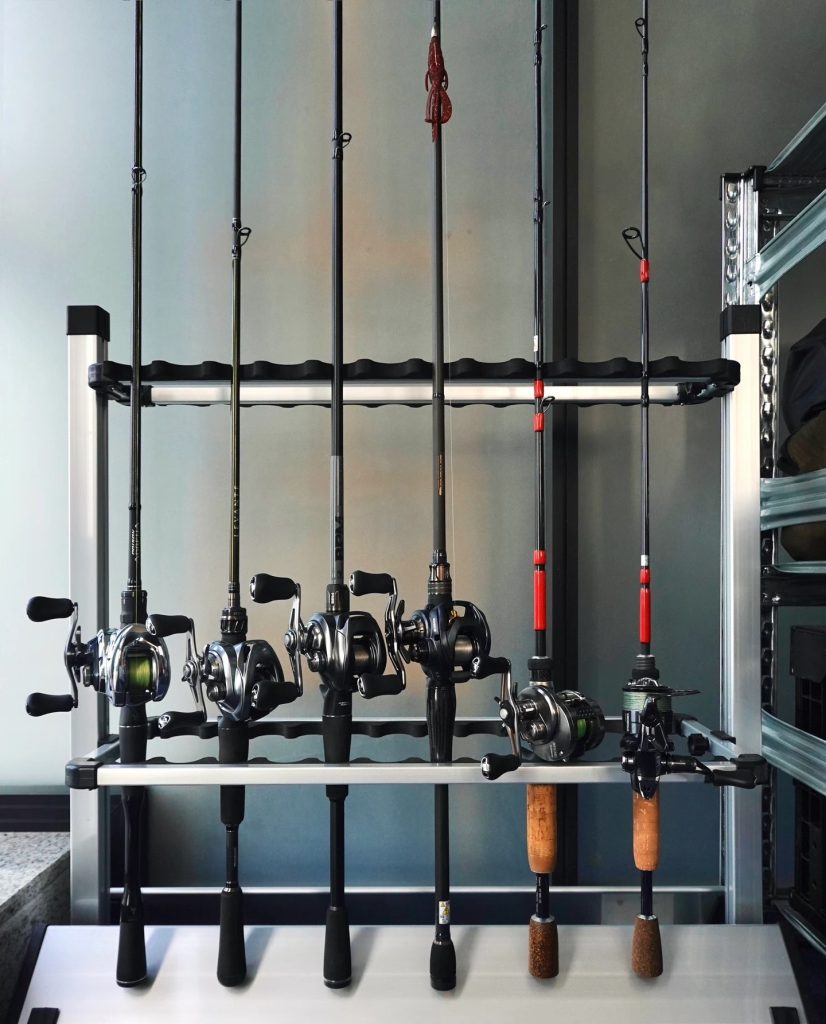
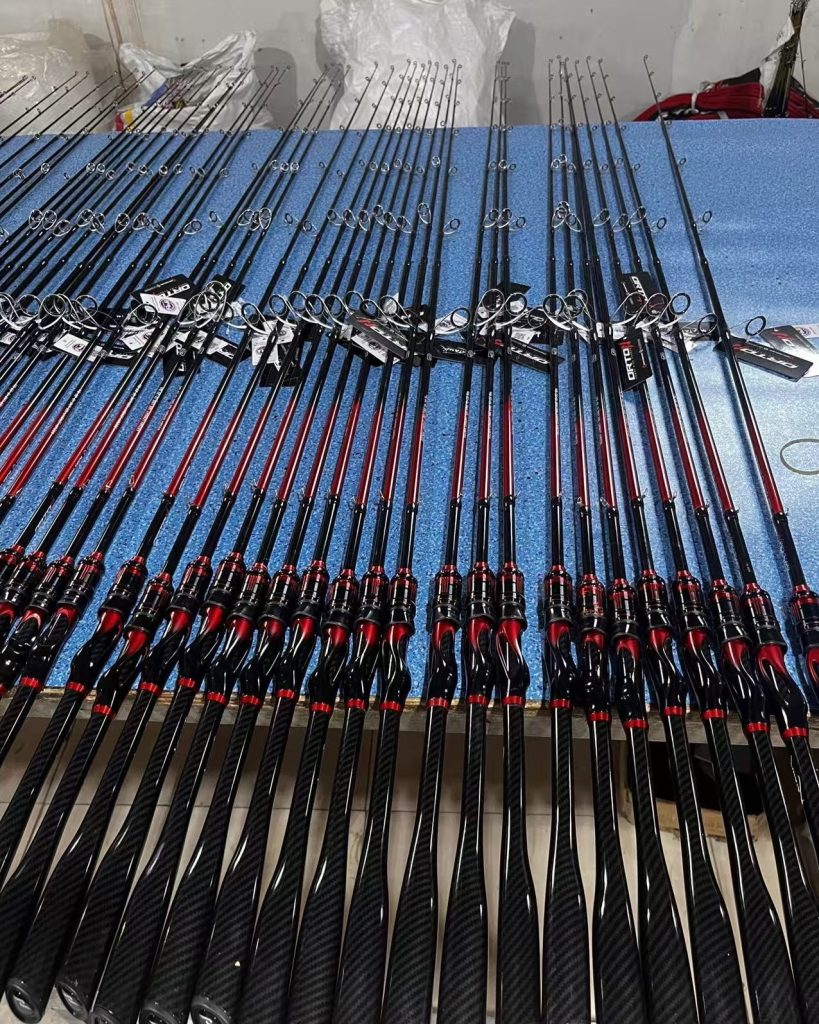
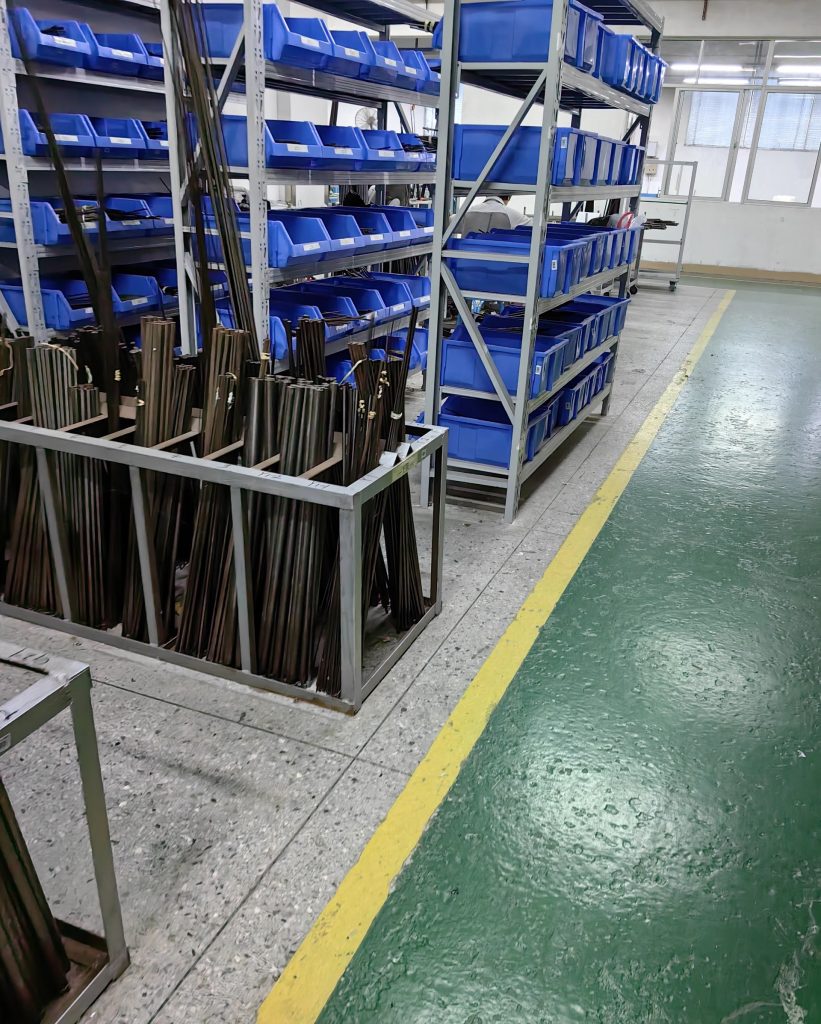
How to Choose a Carbon Fiber Fishing Rod for Wholesale and OEM Projects
Carbon fiber fishing rods are widely used in fishing tackle markets because carbon fiber can provide a combination of low weight, stiffness, sensitivity, and strength when properly designed.
For wholesalers, distributors, fishing tackle brands, and private-label buyers, however, choosing a carbon fiber fishing rod is not simply a matter of asking whether the rod is “100% carbon fiber.”
The blank construction, material specification, rod length, power, action, guides, reel seat, handle, finish, and intended fishing application all affect the final product.
This guide explains what buyers should consider when sourcing carbon fiber fishing rods from China for wholesale and OEM projects.
1. What Is a Carbon Fiber Fishing Rod?
A carbon fiber fishing rod uses carbon fiber material in the rod blank or other structural components.
Carbon fiber is valued for properties such as:
-
Low weight
-
High stiffness
-
Sensitivity
-
Strength-to-weight performance
-
Design flexibility
The actual performance of a fishing rod depends on the complete blank construction and manufacturing process rather than the material name alone.
For this reason, buyers should evaluate the complete specification instead of choosing a rod based only on the phrase “carbon fiber.”
2. Carbon Fiber vs. Fiberglass Fishing Rods
Carbon fiber and fiberglass are both used in fishing rod manufacturing, but they have different characteristics.
Factor |
Carbon Fiber |
Fiberglass |
|---|---|---|
Weight |
Often lighter for comparable designs |
Often heavier |
Stiffness |
Generally higher |
Generally more flexible |
Sensitivity |
Often higher |
Generally lower |
Design applications |
Performance-oriented rods |
Durable and flexible applications |
Product positioning |
Often premium/performance |
Often value-oriented or specialized |
These are general characteristics. Actual performance depends on the rod’s construction, material composition, design, and manufacturing process.
3. Do Not Choose a Rod Based Only on “100% Carbon”
The phrase “100% carbon” does not by itself tell a buyer everything about the rod.
A professional RFQ should clarify:
-
Carbon fiber material specification
-
Blank construction
-
Rod length
-
Rod power
-
Rod action
-
Sections
-
Weight
-
Lure rating
-
Line rating
-
Guide configuration
-
Reel seat
-
Handle material
-
Finish
Two products both described as carbon fiber fishing rods can have substantially different performance and prices.
For wholesale purchasing, specifications should therefore be recorded in detail.
4. Choose the Right Rod Length
Rod length affects casting, handling, transportation, and fishing technique.
A shorter rod may be easier to handle in confined spaces.
A longer rod may provide advantages for certain casting or shore applications.
When ordering carbon fiber fishing rods, buyers should specify:
-
Total length
-
Measurement unit
-
Number of sections
-
Collapsed length
-
Handle length where relevant
For international OEM projects, it is particularly important to make sure all dimensions are clearly defined.
5. Choose the Correct Rod Power
Rod power indicates the amount of force required to bend the rod.
Common categories include:
-
Ultralight
-
Light
-
Medium Light
-
Medium
-
Medium Heavy
-
Heavy
-
Extra Heavy
The appropriate power depends on:
-
Target species
-
Lure weight
-
Line strength
-
Fishing environment
-
Fishing technique
A lightweight carbon fiber blank does not automatically mean that the rod should have ultralight power.
Material and power describe different aspects of the product.
6. Choose the Right Rod Action
Action describes where the rod primarily bends when pressure is applied.
Common categories include:
-
Fast
-
Moderate Fast
-
Moderate
-
Slow
Fast-action rods generally bend closer to the upper section, while slower actions distribute bending farther down the blank.
For OEM buyers, rod action should be confirmed together with the target fishing technique.
For example, a buyer should not simply request “a fast carbon fiber rod” without also specifying the intended length, power, lure range, and target market.
7. Check the Lure and Line Ratings
Lure and line ratings help define the intended operating range of the fishing rod.
A wholesale buyer should ask the manufacturer to provide the appropriate:
-
Lure weight range
-
Line range
-
Recommended application
These specifications can help retailers and end users understand which fishing situations the rod is designed for.
For private-label products, these values should be checked carefully before printing them on packaging or product labels.
8. Evaluate the Carbon Fiber Blank
The blank is the main structural part of the fishing rod.
Buyers should examine:
-
Blank diameter
-
Wall construction
-
Taper
-
Finish
-
Straightness
-
Weight
-
Flex characteristics
-
Section connections
For a new supplier, requesting a physical sample is often more useful than evaluating the blank only through photographs.
The buyer can compare the sample against the agreed specifications before approving mass production.
9. Check the Guide Configuration
Guides influence how the fishing line travels along the rod.
When evaluating a carbon fiber rod, buyers should consider:
-
Number of guides
-
Guide size
-
Guide frame
-
Insert material
-
Guide alignment
-
Attachment quality
-
Finish
For saltwater applications, the buyer should also consider the exposure to salt and moisture.
If the rod is intended for a specific fishing technique, the guide configuration should be appropriate for that application.
10. Check the Reel Seat
The reel seat connects the reel to the rod.
Depending on the product, the rod may be designed for:
-
Spinning reels
-
Casting reels
-
Other specialized configurations
The reel seat should be checked for:
-
Fit
-
Locking mechanism
-
Material
-
Finish
-
Alignment
-
Overall assembly
For OEM projects, buyers can also specify the preferred appearance and branding.
11. Choose the Handle Material
Fishing rod handles can be made using different materials and designs.
Depending on the product, options may include:
-
EVA
-
Cork
-
Carbon components
-
Composite materials
-
Other specialized materials
The appropriate handle depends on the product positioning, fishing technique, target market, and price level.
For private-label products, handle design can also become part of the visual identity of the brand.
12. Consider the Intended Fishing Application
A carbon fiber fishing rod should be selected according to its intended use.
Potential applications include:
-
Bass fishing
-
Trout fishing
-
General freshwater fishing
-
Lure fishing
-
Saltwater fishing
-
Surf fishing
-
Boat fishing
-
Travel fishing
-
Specialty fishing
Each application may require a different combination of:
-
Length
-
Power
-
Action
-
Lure range
-
Line range
-
Guide configuration
-
Handle
-
Reel seat
Therefore, buyers should tell the manufacturer the intended fishing application before selecting a model.
13. Carbon Fiber Fishing Rods for Wholesale
Wholesale buyers usually need products that can be clearly specified and consistently reproduced.
Before ordering, confirm:
-
Exact model
-
Material
-
Length
-
Power
-
Action
-
Lure range
-
Line range
-
Sections
-
Components
-
Product weight
-
Packaging
-
Quantity
-
Lead time
The specifications should be recorded in the purchase order or product documentation.
This helps reduce the possibility of receiving a product that differs from the approved sample.
14. Carbon Fiber Fishing Rods for OEM Brands
OEM projects require additional attention because the buyer may sell the product under its own brand.
Possible customization options include:
-
Logo
-
Blank graphics
-
Product color
-
Decorative pattern
-
Handle design
-
Reel seat
-
Guide configuration
-
Packaging
-
Product label
-
User instructions
Not every manufacturer offers the same level of customization.
Before starting an OEM project, ask the supplier which parts can be customized and whether any minimum order quantity applies.
15. Ask About the Manufacturing Process
For larger orders, buyers may want to understand how the carbon fiber blank is manufactured and inspected.
Questions can include:
-
How is the blank formed?
-
How are sections joined?
-
How is the blank finished?
-
How are guides aligned?
-
How is the reel seat installed?
-
What final inspection is performed?
-
How are defective products identified?
The exact process varies between factories and product designs.
The purpose of asking these questions is to understand whether the manufacturer can consistently reproduce the approved product.
16. Sample Inspection Checklist
Before approving a carbon fiber fishing rod sample, inspect:
Blank
-
Straightness
-
Surface finish
-
Visible defects
-
Section fit
-
Overall weight
Guides
-
Alignment
-
Attachment
-
Insert condition
-
Spacing
Reel Seat
-
Fit
-
Locking function
-
Alignment
-
Finish
Handle
-
Surface quality
-
Grip
-
Alignment
-
Bonding
Product Information
-
Model number
-
Length
-
Power
-
Action
-
Lure rating
-
Line rating
A sample inspection checklist can then be used as the reference for the bulk order.
17. How to Compare Carbon Fiber Fishing Rod Suppliers
When comparing Chinese manufacturers, request the same specification from each supplier.
For example:
Specification |
Supplier A |
Supplier B |
Supplier C |
|---|---|---|---|
Material |
|||
Length |
|||
Power |
|||
Action |
|||
Sections |
|||
Lure rating |
|||
Line rating |
|||
Guides |
|||
Reel seat |
|||
Handle |
|||
Weight |
|||
OEM |
|||
Packaging |
|||
Lead time |
This makes the comparison more meaningful than comparing product names or photographs.
18. Do Not Compare Prices Before Comparing Specifications
A low-priced carbon fiber fishing rod may have different:
-
Blank construction
-
Components
-
Finish
-
Guide configuration
-
Reel seat
-
Handle
-
Packaging
-
OEM requirements
Therefore, the cheapest quotation may not represent the cheapest equivalent product.
Ask suppliers to quote against the same technical specification.
19. Request a Sample Before Mass Production
For OEM and wholesale orders, a sample should ideally be approved before bulk production.
The buyer can verify:
-
Appearance
-
Dimensions
-
Weight
-
Blank finish
-
Guide alignment
-
Reel seat
-
Handle
-
Product markings
-
Packaging
For OEM products, the approved sample can become the reference standard for production.
Any changes should be confirmed with the buyer before mass production.
20. Prepare a Carbon Fiber Fishing Rod RFQ
A useful RFQ can include:
Product: Carbon fiber fishing rod
Application: Freshwater / saltwater / specific technique
Rod type: Spinning / casting / other
Length: Required length
Power: Required power
Action: Required action
Material: Required carbon fiber specification
Sections: Number of sections
Lure range: Required range
Line range: Required range
Guides: Required configuration
Reel seat: Required configuration
Handle: EVA / cork / other
Quantity: Expected order quantity
OEM: Logo, graphics, packaging, etc.
Destination: Target market
Sample: Required before bulk production
This gives the manufacturer a clear basis for preparing a quotation.
Frequently Asked Questions
Are carbon fiber fishing rods better than fiberglass rods?
Neither material is universally better. Carbon fiber can provide advantages in weight, stiffness, and sensitivity, while fiberglass can be useful for applications requiring different flexibility, durability, or cost characteristics.
What does 100% carbon fiber mean on a fishing rod?
The phrase generally describes the material composition claimed for the rod, but it does not by itself explain the complete blank construction or performance. Buyers should request detailed specifications from the manufacturer.
Are carbon fiber fishing rods suitable for saltwater fishing?
Some carbon fiber fishing rods are designed for saltwater applications. However, buyers should also evaluate the guides, reel seat, fittings, finish, and other components for the intended marine environment.
What specifications should I request from a carbon fiber fishing rod factory?
At minimum, request material information, length, power, action, sections, lure range, line range, weight, guide configuration, reel seat, handle, packaging, OEM options, and lead time.
Can Chinese fishing rod manufacturers produce private-label carbon fiber rods?
Many manufacturers offer OEM or private-label services, but capabilities vary. Buyers should confirm customization options, sample procedures, minimum order requirements, and production capabilities with the specific supplier.
Should I order a sample before placing a bulk order?
Yes. A sample allows the buyer to evaluate the actual product and confirm that the design and specifications meet the requirements before mass production.
Conclusion
Choosing a carbon fiber fishing rod for wholesale or OEM production requires more than selecting a material.
Buyers should evaluate the complete product, including:
-
Carbon fiber blank
-
Rod length
-
Power
-
Action
-
Lure range
-
Line range
-
Sections
-
Guides
-
Reel seat
-
Handle
-
Intended fishing application
-
Product finish
-
Packaging
-
OEM requirements


No reply content