
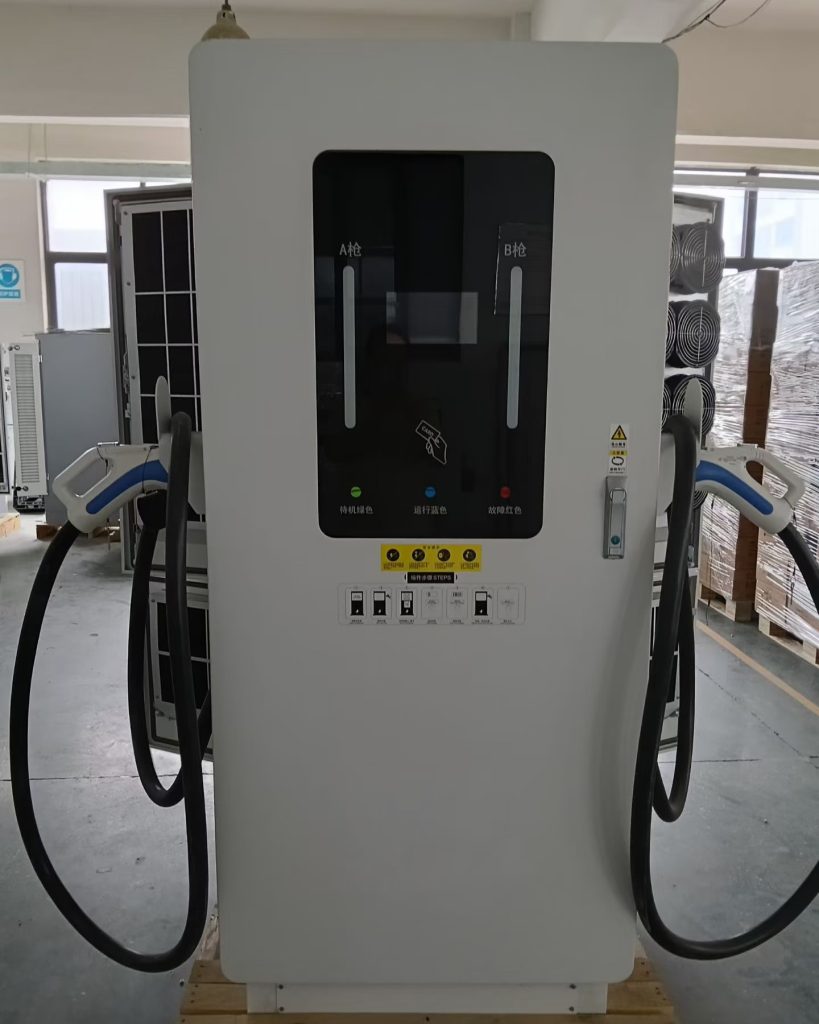
How to Choose an EV Charger for Commercial Projects: Power, Connector, OCPP and Installation Guide
Choosing an EV charger for a commercial project requires more than comparing product prices. Charging operators, distributors, property developers, fleet companies, contractors, and EV infrastructure businesses need to consider charging power, vehicle compatibility, electrical capacity, connector type, communication functions, installation conditions, and the requirements of the target market.
For buyers sourcing EV chargers from China, defining these requirements before requesting quotations can make it easier to compare manufacturers and avoid ordering equipment that does not match the project.
This guide explains the main factors to consider when selecting EV chargers for commercial projects.
1. Define the Commercial Charging Application
The first step is to understand where the chargers will be installed and how they will be used.
Commercial EV chargers may be used for:
- Shopping centers
- Hotels
- Office buildings
- Apartment complexes
- Public parking facilities
- Fleet depots
- Logistics facilities
- Automotive dealerships
- Highway service areas
- Workplace charging
- EV charging stations
Different applications can require different charging speeds and equipment configurations.
For example, a hotel may prefer AC chargers because vehicles can remain parked for several hours. A highway charging station may require DC fast chargers because drivers generally want shorter charging times.
Before contacting an EV charger manufacturer, buyers should define the intended application and expected daily charging demand.
2. Choose AC or DC Charging
Commercial projects normally start by deciding whether they need AC chargers, DC fast chargers, or a combination of both.
AC chargers are commonly used where vehicles remain parked for longer periods. Common commercial AC configurations include 7kW, 11kW, and 22kW.
DC fast chargers are designed for applications where faster charging is required. Depending on the project, buyers may consider equipment from approximately 30kW to 360kW or other available configurations.
The correct choice depends on:
- Vehicle types
- Expected parking time
- Daily charging demand
- Available electrical capacity
- Project budget
- Installation conditions
- Required charging speed
For larger commercial projects, using both AC and DC chargers may provide more flexibility.
3. Select the Appropriate Charging Power
Charging power should be selected according to the actual project rather than simply choosing the highest available rating.
AC EV Charger
Common AC power options include:
- 7kW
- 11kW
- 22kW
A 7kW charger may be suitable for long-duration parking and many residential or workplace applications.
An 11kW charger can be useful for commercial locations where three-phase electrical supply is available.
A 22kW charger can provide higher AC charging power, but both the vehicle and the electrical installation must support the required configuration.
The actual charging speed is also affected by the vehicle’s onboard charger.
DC Fast Charger
Commercial DC chargers may be available in configurations such as:
- 30kW
- 60kW
- 120kW
- 180kW
- 240kW
- 360kW
A higher-rated charger can provide greater potential charging capacity, but it also normally requires greater electrical infrastructure.
For example, a fleet depot with a large number of vehicles may have different requirements from a hotel with vehicles parked overnight.
The charger should therefore be matched to the vehicles, charging schedule, and available grid capacity.
4. Check the Vehicle Charging Capability
One common mistake when purchasing EV chargers is assuming that a higher-rated charger will automatically charge every vehicle at the same power.
This is not the case.
Actual charging performance can depend on:
- Vehicle maximum charging power
- Battery capacity
- Battery temperature
- State of charge
- Charging voltage
- Charging current
- Vehicle charging protocol
- Charger output capability
For example, installing a 120kW DC charger does not mean that a vehicle limited to a lower DC charging power will receive 120kW.
Before placing an order, commercial buyers should identify the main vehicle models that will use the charging infrastructure.
5. Confirm the Charging Connector
Connector compatibility is another important specification.
Depending on the target market and vehicle types, buyers may need different connector configurations, such as:
- CCS1
- CCS2
- CHAdeMO
- GB/T
- Type 2
The required connector should be confirmed before production.
For commercial projects, buyers should also clarify:
- Connector quantity
- Cable length
- Connector arrangement
- Socket or fixed-cable configuration
- Single-connector or dual-connector design
- Whether multiple vehicles can charge simultaneously
Distributors and importers should provide the destination market and target vehicle information to the manufacturer before confirming the final configuration.
6. Check OCPP and Network Functions
For networked commercial charging projects, communication capability can be just as important as charging power.
OCPP allows an EV charger to communicate with a charging management system. Depending on the implementation, it can support functions such as:
- Charging-session management
- Remote monitoring
- Fault information
- User management
- Charging data
- Remote configuration
- Firmware management
Buyers should not simply ask whether a charger supports OCPP.
They should also confirm:
- OCPP version
- Supported functions
- Backend compatibility
- Communication method
- Firmware requirements
- Testing with the intended charging platform
A charger may support a particular OCPP version while still requiring compatibility testing with the buyer’s actual backend platform.
For larger commercial networks, this should be confirmed before mass production.
7. Consider the Electrical Installation
Commercial EV chargers can place a significant load on the electrical system.
Before ordering, buyers should provide the manufacturer with information such as:
- Input voltage
- Single-phase or three-phase supply
- Frequency
- Available electrical capacity
- Maximum current
- Installation location
- Number of charging stations
- Expected simultaneous charging
For DC fast-charging projects, electrical infrastructure requirements can be considerably higher than for typical AC wallbox installations.
The project should therefore be evaluated together with the local electrical contractor or qualified engineer.
Do not select a high-power charger before confirming that the planned site can support it.
8. Check Outdoor Installation Requirements
Many commercial chargers are installed outdoors.
In this situation, buyers should check the equipment’s environmental specifications, including:
- IP protection rating
- Operating temperature
- Cooling method
- Weather resistance
- Enclosure design
- Cable management
- Emergency stop requirements
- Surge protection
- Overcurrent protection
- Overvoltage protection
The actual requirements depend on the charger design and installation environment.
If the project is located in a hot, cold, humid, dusty, or coastal environment, the manufacturer should know the destination conditions before recommending the final configuration.
9. Ask About Certifications and Documentation
Certification requirements depend on the destination market and product configuration.
Commercial buyers should ask the manufacturer which certifications and test documents are available for the specific model being purchased.
Depending on the market, buyers may need documentation related to:
- Electrical safety
- Electromagnetic compatibility
- Charging standards
- Product testing
- Factory quality control
- User manuals
- Installation instructions
- Technical datasheets
Do not rely only on a general statement such as “international certification available.”
Ask for the actual documentation applicable to the model and target market.
10. Consider OEM and Private-Label Requirements
Distributors and EV charging brands may require customized products rather than standard factory models.
Potential OEM requirements can include:
- Brand logo
- Product color
- Housing design
- Display configuration
- Packaging
- User interface
- Cable configuration
- Communication functions
- Software integration
- Product labels
- User manuals
If OEM or private-label production is required, buyers should discuss the requirements before requesting a final quotation.
It is also important to confirm whether the manufacturer can support the required production quantity and customization level.
11. Compare Manufacturers by More Than Price
Price is important, but it should not be the only factor when comparing EV charger manufacturers.
A commercial buyer should compare:
- Product specifications
- Charging power
- Connector configuration
- Certifications
- Production capability
- Quality-control procedures
- OEM/ODM capability
- Communication functions
- OCPP compatibility
- Warranty
- Lead time
- Packaging
- Technical support
- Export experience
A lower unit price may not represent a lower total project cost if the equipment requires additional modifications or does not integrate with the intended charging platform.
For buyers looking for a China EV charger manufacturer, the supplier’s actual product range and technical capabilities should be evaluated against the project requirements.
12. Prepare a Detailed RFQ Before Contacting the Factory
A detailed RFQ can make supplier comparison much easier.
The inquiry should ideally include:
Product: AC EV charger or DC fast charger
Power: 7kW / 11kW / 22kW / 60kW / 120kW / etc.
Quantity: Required number of chargers
Connector: CCS1 / CCS2 / CHAdeMO / GB/T / Type 2 / other
Installation: Indoor or outdoor
Electrical supply: Voltage, phase, frequency, and available capacity
Communication: OCPP version and backend requirements
OEM: Logo, color, packaging, software, or other customization
Destination: Target country and market
Certification: Required market-specific documentation
Delivery: Preferred shipping method and destination
Providing this information allows the manufacturer to recommend a more appropriate configuration and prepare a more useful quotation.
13. Sample Testing Before Bulk Production
For a large commercial project, testing samples before mass production can reduce the risk of specification problems.
Depending on the project, buyers may evaluate:
- Charging performance
- Connector compatibility
- OCPP communication
- Backend integration
- Display and user interface
- Protection functions
- Cable configuration
- Installation process
- Packaging
- Documentation
If the charger will be connected to an existing charging management platform, compatibility should ideally be tested before ordering a large quantity.
Frequently Asked Questions
What is the best EV charger power for a commercial project?
There is no single best power rating. The appropriate power depends on the vehicles, parking duration, charging demand, electrical capacity, and project budget.
Should a commercial project use AC or DC chargers?
AC chargers are generally suitable for longer parking periods, while DC fast chargers are more suitable when faster charging is required. Some commercial projects may use both.
What OCPP version should I choose?
The appropriate OCPP version depends on the charging management platform and project requirements. Buyers should confirm compatibility between the specific charger and backend system rather than selecting a version based only on its number.
Which EV charging connector should I choose?
The connector should match the target vehicles and destination market. Buyers should confirm whether they require CCS1, CCS2, CHAdeMO, GB/T, Type 2, or another configuration before production.
Can China EV charger manufacturers provide OEM services?
Many manufacturers offer OEM or private-label options, but the exact customization capability varies. Buyers should confirm logo, housing, packaging, software, connector, and other requirements with the manufacturer before placing an order.
What information should I send when requesting an EV charger quotation?
Provide the charger type, power rating, quantity, connector, destination country, electrical requirements, OCPP/backend requirements, certification requirements, OEM specifications, and delivery requirements.
Conclusion
Choosing an EV charger for a commercial project requires a combination of technical and procurement considerations.
The most important factors include:
- Charging application
- AC or DC charging
- Power rating
- Vehicle compatibility
- Charging connector
- OCPP and network functions
- Electrical infrastructure
- Outdoor installation requirements
- Certifications and documentation
- OEM requirements
- Manufacturer capability
- Sample testing before bulk production
For international buyers, the goal should not simply be to find the cheapest EV charger. The better approach is to find a manufacturer whose equipment, technical specifications, communication functions, production capability, and customization options match the actual project.
For buyers sourcing EV charging equipment from China, you can also review our guides on How to Choose an EV Charger Manufacturer in China, How to Choose a 7kW, 11kW, or 22kW AC EV Charger, How to Choose a DC Fast Charger for Commercial EV Charging, and What Is OCPP and Why Is It Important for EV Chargers?.
If you are looking for a China EV charging station manufacturer for a commercial, wholesale, or OEM project, you can also contact the supplier through VLEFOOENA and provide your required power, quantity, connector, destination market, and customization requirements.


No reply content