How to Choose the Right Forklift Manufacturer for Your Business
Choosing the right forklift manufacturer is an important purchasing decision for warehouses, factories, logistics companies, construction operations, distributors, and material handling businesses.
A forklift is not simply a machine that lifts and moves goods. The right equipment affects productivity, workplace safety, operating costs, maintenance requirements, energy consumption, and the long-term reliability of your material handling operation.
For international buyers, selecting a manufacturer can be more complicated because many suppliers may offer similar forklift models, specifications, and prices. A professional-looking website or low quotation does not necessarily mean that a manufacturer is the right partner for your business.
The better approach is to evaluate the manufacturer based on your actual application, required capacity, product configuration, production capability, quality control, customization options, spare parts, warranty, and after-sales support.
This guide explains what buyers should check before choosing a forklift manufacturer.
1. Start With Your Actual Forklift Requirements
Before contacting a forklift manufacturer, define exactly what you need.
Many purchasing problems begin because buyers ask for a price before providing enough technical information.
At a minimum, prepare the following information:
Required lifting capacity
Maximum lifting height
Fork length
Load dimensions
Indoor or outdoor application
Working environment
Operating hours per day
Floor conditions
Required turning radius
Aisle width
Power source
Required attachments
Quantity
Target market
Delivery destination
For example, a warehouse handling standard pallets indoors may have completely different requirements from a construction company moving heavy materials outdoors.
A manufacturer cannot recommend the right forklift if the application is unclear.
2. Choose the Correct Forklift Capacity
Forklift capacity is one of the most important specifications to evaluate.
Common purchasing requirements may include 1.5-ton, 2-ton, 2.5-ton, 3-ton, 5-ton, or higher-capacity forklifts, but the nominal capacity alone should not determine your decision.
The actual lifting capacity can change depending on:
Load center
Lifting height
Mast configuration
Attachment weight
Load dimensions
Operating conditions
Forklift configuration
For example, a forklift rated for a particular capacity under standard conditions may have a lower effective capacity when the load center becomes longer or when a specialized attachment is installed.
Therefore, provide the manufacturer with your actual load information rather than simply asking for a machine based on tonnage.
3. Consider Where the Forklift Will Be Used
The operating environment has a major influence on forklift selection.
Indoor Warehouses
Indoor warehouses often prioritize:
Low noise
Low emissions
Compact dimensions
Tight turning radius
Smooth operation
Battery efficiency
Electric forklifts can be suitable for many indoor applications, especially where low emissions and quiet operation are important.
For more information about selecting electric equipment, buyers can also review the existing Electric Forklift Buying Guide.
Outdoor Applications
Outdoor operations may require different considerations, including:
Ground conditions
Weather exposure
Long operating hours
Heavy loads
Refueling or charging requirements
Tire selection
Internal combustion forklifts can be suitable for certain demanding outdoor applications, depending on the working environment and local requirements.
Mixed Indoor and Outdoor Operations
Some businesses need one forklift to perform several types of work.
In this situation, discuss the complete application with the manufacturer rather than choosing a machine based only on purchase price.
4. Compare Electric and Internal Combustion Forklifts
Power source is another important decision.
Electric forklifts can offer advantages such as low noise, no tailpipe emissions during operation, and suitability for many indoor applications.
Internal combustion forklifts can provide advantages for certain outdoor and heavy-duty applications where long operating periods, rapid refueling, or specific environmental conditions are important.
The correct choice depends on your operation.
You should compare:
Initial purchase cost
Energy cost
Operating hours
Charging or refueling requirements
Maintenance
Noise
Emissions
Indoor/outdoor use
Battery replacement requirements
Expected service life
A manufacturer should be able to explain the practical differences between available configurations.
A supplier’s product catalog does not automatically prove its manufacturing capability.
International buyers should ask practical questions about production.
For example:
Where are the forklifts manufactured?
What models are produced?
What is the production capacity?
Which components are manufactured internally?
Which components are sourced externally?
What production equipment is used?
How is quality controlled?
Can the factory support repeat orders?
Can the manufacturer handle customized specifications?
The purpose is not simply to determine whether a company calls itself a factory.
The more important question is whether the manufacturer has the production capability required for your order.
For large fleet purchases, this becomes especially important because future replacement units may need to maintain consistent specifications.
6. Evaluate the Manufacturer’s Product Range
A good forklift manufacturer should have equipment suitable for different operating requirements.
Depending on the manufacturer, the product range may include:
Electric forklifts
Diesel forklifts
LPG forklifts
Counterbalance forklifts
Reach trucks
Warehouse equipment
Pallet trucks
Specialized material handling equipment
However, a large product catalog is not automatically better.
The important question is whether the manufacturer has strong technical knowledge of the specific equipment you need.
For example, if your business primarily needs electric warehouse forklifts, a manufacturer with strong electric forklift engineering and after-sales support may be more suitable than a company simply listing dozens of unrelated machines.
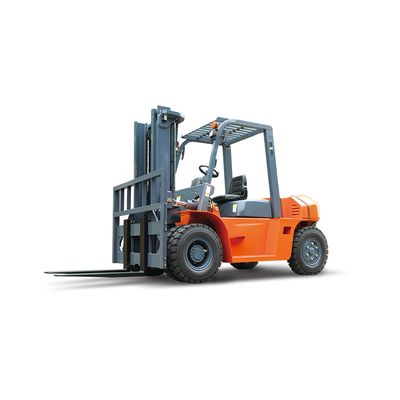
You can review the supplier’s available forklift products and compare the equipment with your application requirements.
7. Check OEM and Customization Capability
OEM capability can be important for distributors, rental companies, fleet operators, and businesses developing their own material handling brand.
Customization may involve:
Company logo
Paint color
Seat configuration
Mast configuration
Fork dimensions
Attachments
Battery configuration
Tires
Dashboard
Warning systems
Packaging
Labels
Documentation
However, buyers should distinguish between simple branding and genuine engineering customization.
Adding a logo to a standard forklift is different from modifying the machine to meet specific operational requirements.
If you require customized equipment, ask the manufacturer what can actually be modified and whether engineering support is available.
If it stays out of service because a relatively small component is unavailable, the resulting business cost can be much higher than the price of the part itself.
Before purchasing, ask:
Which spare parts are normally stocked?
How can replacement parts be ordered?
What is the normal delivery time?
Are wearing parts readily available?
Are technical manuals provided?
Can the manufacturer provide parts identification?
Is remote technical support available?
For distributors purchasing multiple machines, spare-parts support can be especially important.
11. Evaluate Warranty and After-Sales Support
Warranty terms should be clearly understood before the order is placed.
Ask what the warranty covers and what is excluded.
Important points may include:
Warranty duration
Major components covered
Battery warranty
Charger warranty
Wear-part exclusions
Labor coverage
Replacement-part procedures
Technical support
Response process
Do not compare manufacturers based only on the number of warranty months.
A shorter but clearly defined warranty with reliable parts and technical support may be more useful than a longer warranty that is difficult to claim.
12. Compare the Total Cost of Ownership
The lowest purchase price does not necessarily mean the lowest overall cost.
A better evaluation considers total cost of ownership.
This can include:
Purchase price
Shipping
Import costs
Energy consumption
Routine maintenance
Spare parts
Tires
Battery replacement
Operator training
Downtime
Repairs
Resale value
For example, two forklifts may have similar purchase prices but significantly different energy or maintenance costs over several years.
For businesses operating a fleet, these differences can become substantial.
13. Ask for a Detailed Quotation
A professional quotation should make it clear what is included.
Ask the manufacturer to specify:
Forklift model
Rated capacity
Mast height
Fork length
Engine or motor
Battery specification
Charger
Tire type
Attachments
Optional equipment
Packaging
Warranty
Spare parts
Production lead time
Payment terms
Shipping terms
If one supplier quotes a basic configuration and another quotes a more complete configuration, comparing the two prices directly can produce the wrong conclusion.
Always compare equivalent specifications.
14. Evaluate Communication Before Ordering
Communication problems during the quotation stage can become bigger problems during production.
Pay attention to whether the manufacturer:
Answers technical questions clearly
Confirms specifications in writing
Explains limitations
Provides realistic production schedules
Responds to changes accurately
Communicates potential delays
Provides appropriate technical documentation
Good communication does not mean that every message must receive an immediate response.
It means important information is understood and documented correctly.
15. Ask the Manufacturer These Questions
Before placing an order, consider asking:
What forklift model is most suitable for my application?
What is the rated capacity?
What is the maximum lifting height?
What is the load center?
What power source is available?
What battery or engine configuration is used?
What is the normal operating time?
What maintenance is required?
What spare parts are normally available?
What warranty is provided?
Can the forklift be customized?
What OEM options are available?
What certifications apply to my destination market?
What is the MOQ?
What is the production lead time?
What packaging is used for export?
What technical documents are provided?
How are finished machines tested?
Can replacement parts be supplied later?
What after-sales support is available?
The quality of the answers can help you understand whether the manufacturer is suitable for your business.
16. Compare Several Manufacturers
Do not select a manufacturer solely because it provided the first quotation.
For a significant purchase, create a shortlist of several potential manufacturers.
Compare them using the same criteria:
Evaluation Factor
Manufacturer A
Manufacturer B
Manufacturer C
Product suitability
Capacity
Quality control
Price
OEM capability
MOQ
Lead time
Spare parts
Warranty
After-sales service
Export experience
This makes the purchasing decision more objective.
17. Do Not Choose a Forklift Manufacturer Based Only on Price
Price is important, but it should not be the only factor.
An unusually low quotation may reflect differences in:
Forklift configuration
Battery
Engine
Mast
Tires
Attachments
Packaging
Warranty
Testing
Documentation
Before accepting a low quotation, ask why it is lower.
The correct comparison is not:
“Which manufacturer has the lowest price?”
It is:
“Which manufacturer offers the best overall value for the required specification and operating conditions?”
18. Consider Long-Term Cooperation
If you are a distributor, importer, rental company, or fleet operator, you may need forklifts repeatedly over several years.
In that case, evaluate whether the manufacturer can support long-term cooperation.
Consider:
Consistent product quality
Stable specifications
Production capacity
Spare-parts availability
Technical support
OEM development
Product upgrades
Communication
Future order capacity
A manufacturer that performs well on the first order but cannot support future demand may not be the right long-term partner.
19. Build a Complete Procurement Specification
Before placing an order, create a written specification.
It should include:
Forklift Type: Electric / Diesel / LPG / Other
Rated Capacity: Required capacity
Load Center: Required load center
Maximum Lift Height: Required height
Mast Type: Specified configuration
Fork Length: Specified length
Power System: Specified battery, motor, engine, or fuel system
Tires: Specified tire type
Attachments: Required attachments
Color and Branding: OEM requirements
Packaging: Export packaging requirements
Documentation: Manuals, certificates, inspection documents, etc.
Quantity: Required order quantity
Destination: Country and delivery location
This document helps prevent misunderstandings between the buyer and manufacturer.
20. Start With a Controlled Order
Even after researching a manufacturer carefully, actual cooperation provides the most useful evidence.
If appropriate for your purchasing situation, consider starting with a controlled order before committing to a much larger fleet purchase.
Evaluate:
Product quality
Delivery performance
Packaging
Documentation
Communication
Technical support
Spare-parts response
After-sales service
If the manufacturer performs consistently, future orders can be expanded.
Forklift Manufacturer Selection Checklist
Before choosing a forklift manufacturer, make sure you can answer these questions:
Does the manufacturer offer the forklift type I need?
Can it meet my required lifting capacity?
Can it provide the required lifting height?
Is the forklift suitable for my working environment?
Does the manufacturer have suitable production capability?
Can it provide OEM or customization?
How does it control quality?
What certifications apply to my market?
Are spare parts available?
What warranty is provided?
What is the production lead time?
What is the MOQ?
What are the payment terms?
What is included in the quotation?
Can the manufacturer provide technical documentation?
Can it support long-term orders?
If the manufacturer can answer these questions clearly, you have a much stronger basis for making a purchasing decision.
Frequently Asked Questions
What is the most important factor when choosing a forklift manufacturer?
The most important factor is whether the manufacturer can provide equipment that actually matches your application, load requirements, working environment, quality expectations, and long-term operating needs.
Price is important, but it should be evaluated together with specifications, quality, warranty, spare parts, and after-sales support.
How do I know if a forklift manufacturer is suitable for my business?
Start by checking its product range, manufacturing capability, technical specifications, quality-control procedures, customization options, certifications, production capacity, spare-parts support, and export experience.
Then compare several manufacturers using the same requirements.
Should I buy an electric or diesel forklift?
It depends on your operating environment.
Electric forklifts are often suitable for indoor applications where low noise and zero tailpipe emissions are important. Diesel or other internal combustion forklifts may be more suitable for certain outdoor or heavy-duty applications.
The manufacturer should evaluate your actual working conditions before recommending a configuration.
Should I choose a forklift manufacturer based on the lowest price?
No.
A low price may reflect a different specification or fewer included features.
Compare the same configuration and consider the total cost of ownership, including energy, maintenance, spare parts, downtime, and warranty support.
Can a forklift manufacturer provide OEM customization?
Many manufacturers can provide some level of customization, but the available options vary.
Ask specifically about branding, color, attachments, mast configurations, battery systems, packaging, documentation, and engineering modifications.
What information should I send when requesting a forklift quotation?
Provide the required capacity, lifting height, load dimensions, application environment, operating hours, indoor/outdoor conditions, quantity, destination market, and any customization requirements.
The more complete the information, the more meaningful the quotation will be.
Conclusion
Choosing the right forklift manufacturer requires more than comparing product photos and prices.
The right manufacturer should understand your application and provide a forklift configuration that matches your load, lifting height, operating environment, working hours, safety requirements, and budget.
Before placing an order, evaluate manufacturing capability, product specifications, quality control, certifications, OEM options, spare parts, warranty, after-sales service, and total ownership cost.
For international buyers, it is also important to compare several manufacturers using the same specifications rather than choosing the first quotation received.
A reliable forklift purchasing decision starts with a clear requirement and ends with a manufacturer that can consistently deliver the required equipment and support it throughout its working life.
For buyers looking for forklift equipment and manufacturer information, you can also explore the Guangzhou Forklift Manufacturing Factory supplier page and review the available forklift content and product information.


No reply content