
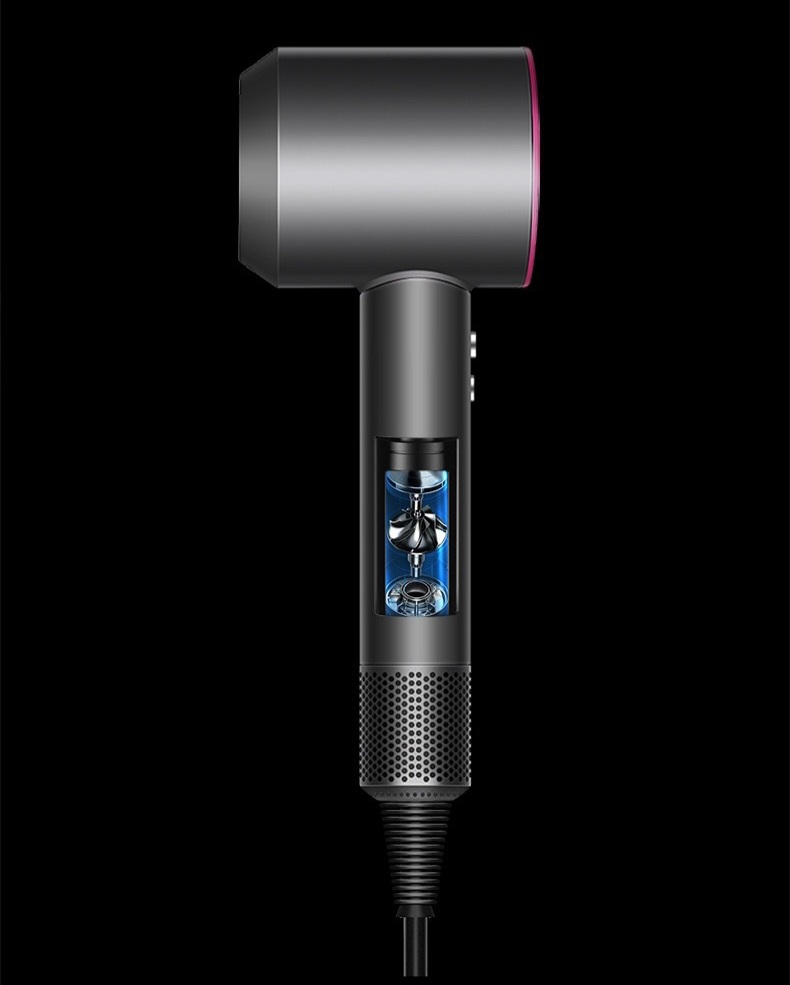
Professional Hair Dryer Manufacturer China: Salon, Hotel and Commercial Models
Professional hair dryers are different from ordinary consumer hair dryers in the way buyers evaluate them.
A salon may run a dryer repeatedly throughout the day. A hotel may need hundreds or thousands of units for guest rooms. A distributor may need a stable product that can be reordered for several years.
For these buyers, the purchasing question is not simply:
How much does the hair dryer cost?
The more useful questions are:
- What motor does it use?
- How stable is the airflow?
- How is heat controlled?
- Is the product designed for frequent use?
- Can the manufacturer provide OEM or ODM?
- What electrical configurations are available?
- Can the factory supply the required certification?
- What is the MOQ?
- Can the same specification be reproduced for repeat orders?
This guide explains what international buyers should consider when sourcing professional hair dryers from a Chinese manufacturer for salons, hotels, distributors and other commercial applications.
What Is a Professional Hair Dryer?
There is no single specification that makes a hair dryer “professional.”
The term is generally used to describe products designed with professional or commercial applications in mind.
Depending on the model, buyers may look for:
- Higher airflow
- Multiple heat settings
- Multiple speed settings
- Cool-shot function
- Professional motor
- Thermal protection
- Longer operating life
- Ergonomic handle
- Concentrator nozzle
- Diffuser
- Ionization function
- Durable housing
- Long power cable
The exact specification should be matched to the application.
A salon and a hotel, for example, may have completely different requirements.
Professional Hair Dryer for Salons
Salon buyers often use hair dryers much more frequently than ordinary household users.
That changes what matters.
A salon may pay particular attention to:
Motor performance
The motor affects airflow, operating characteristics and the overall design of the dryer.
Heat control
Stylists may need different temperatures for different hair types and styling procedures.
Speed control
Multiple airflow settings allow the operator to adjust the dryer during styling.
Weight
A stylist may hold the dryer for many hours during a working day.
Even a small difference in weight can become noticeable during repeated use.
Cable length
A longer cable can make movement around a salon workstation easier, depending on the salon layout.
Noise
Noise can also matter in a professional environment where multiple dryers may operate simultaneously.
Durability
A salon needs equipment that can tolerate repeated daily operation.
For these reasons, a professional salon hair dryer should be evaluated as working equipment rather than simply as a consumer appliance.
Professional Hair Dryer for Hotels
Hotel hair dryers have a different set of priorities.
A hotel may need hundreds or thousands of units, so purchasing managers often consider:
- Unit cost
- Reliability
- Safety
- Appearance
- Wall-mounted options
- Compact storage
- Cable management
- Replacement availability
- Packaging
- Bulk supply
- Electrical configuration
A hotel may not need the same high-performance specification as a professional salon.
Instead, the hotel may prefer a simple, reliable product that is easy for guests to operate.
This is why the buyer should explain the actual application to the Chinese manufacturer before selecting a model.
Professional Hair Dryer for Distributors
Distributors often have a different problem.
They are not buying a few machines for internal use.
They need a product that can be sold repeatedly to different customers.
That means they may care about:
- Stable product quality
- Consistent specifications
- Wholesale pricing
- MOQ
- Packaging
- Private labeling
- Product documentation
- Certification
- Repeat-order capacity
- Lead time
A distributor should also ask whether the manufacturer can continue supplying the same model.
A product that changes significantly between orders can create problems for downstream customers.
What Should You Look for in a Professional Hair Dryer Manufacturer?
A factory should be evaluated according to the product you actually intend to buy.
Important areas include:
Product development
Can the factory modify an existing model?
Engineering
Can it change components, housing or electrical specifications?
Manufacturing
Does it have the production capacity required for your order?
Quality control
How are components and finished products tested?
Testing
Can the manufacturer provide relevant testing and documentation?
OEM/ODM
Can the factory support your branding and customization requirements?
Packaging
Can it produce customized retail or commercial packaging?
After-sales support
Can the manufacturer handle replacement parts, quality issues and repeat production?
For buyers who are specifically evaluating factories, see:
Professional Hair Dryer Factory in China | Custom Hair Dryers
Motor Options for Professional Hair Dryers
The motor is one of the first specifications buyers should discuss with the factory.
Different motor designs can provide different combinations of:
- Airflow
- Speed
- Noise
- Weight
- Energy consumption
- Operating life
- Cost
A buyer should therefore avoid specifying only:
Professional motor.
That description is too broad for an international purchasing contract.
Instead, ask the manufacturer to provide the actual motor specification and explain the available options.
If you are comparing models, ask for:
- Motor type
- Rated voltage
- Rated power
- Operating characteristics
- Expected service life
- Noise information where available
- Replacement availability
The exact specification should be confirmed against the manufacturer’s technical documentation.
Heating System
The heating element is another important component.
A professional dryer needs to provide controlled heat rather than simply maximum heat.
Buyers may therefore compare:
- Heating power
- Temperature settings
- Airflow and heating balance
- Thermal protection
- Cool-shot function
- Temperature stability
A high heating power does not automatically mean a better hair dryer.
The heating system needs to work together with airflow and temperature control.
For salons, the ability to change settings quickly may be more useful than simply having the highest wattage.
Airflow and Hair Dryer Performance
Airflow is one of the specifications that users actually notice.
A dryer with strong airflow can reduce drying time, but airflow should be evaluated together with:
- Motor
- Fan design
- Air inlet
- Air outlet
- Heating system
- Nozzle design
- Product structure
This is why two hair dryers with similar wattage can provide different user experiences.
For a private-label buyer, the best approach is to test samples under comparable conditions instead of relying only on catalogue specifications.
Ionic Hair Dryer Options
Some professional models use ionic technology as part of their product design.
The marketing claims surrounding ionic hair dryers can vary, so buyers should focus on the actual product specification and intended market positioning.
If ionization is required, ask the manufacturer:
- Whether the model includes an ion generator
- How the function is controlled
- Whether it can be switched on/off
- What documentation is available
- Whether the same specification will be maintained in mass production
If you are interested in this product category, you can also create a dedicated product article linking back to this professional-hair-dryer guide.
Professional Hair Dryer With Cool Shot
A cool-shot function allows the user to switch from heated air to cooler airflow.
For salon applications, this can be useful during styling.
When specifying this feature, buyers should clarify:
- Button type
- Momentary or continuous operation
- Airflow behavior
- Temperature behavior
- Control position
These small details can affect the user experience.
A buyer approving an OEM sample should test the actual button rather than relying on a product specification sheet alone.
Hair Dryer Weight and Ergonomics
Professional users may hold the product repeatedly throughout the day.
Weight therefore becomes more important for salon buyers than it may be for occasional household users.
Consider:
- Total weight
- Handle shape
- Button position
- Balance
- Cable position
- Grip
- Nozzle attachment
- Heat around the handle
A hair dryer can have strong technical specifications and still be inconvenient if the ergonomics are poor.
This is one reason why samples are particularly valuable for professional products.
Professional Hair Dryer Attachments
Depending on the target market, a professional model may include:
- Concentrator nozzle
- Diffuser
- Comb attachment
- Storage hook
- Wall holder
- Other accessories
Do not assume that every accessory shown in a supplier photograph is included in the standard quotation.
Write the accessories into the purchase specification.
For example:
1 × concentrator nozzle
1 × diffuser
1 × user manual
This prevents confusion when the final quotation is prepared.
Wall-Mounted Hair Dryers for Hotels
Hotels may prefer wall-mounted hair dryers rather than free-standing models.
A wall-mounted system can provide:
- Fixed location
- Easier guest access
- Reduced risk of the product being misplaced
- Cleaner bathroom organization
- Simplified hotel-room management
However, the mounting system becomes part of the product requirement.
A hotel buyer should therefore ask about:
- Mounting method
- Cable routing
- Safety
- Installation requirements
- Wall holder design
- Replacement process
- Electrical configuration
For a hotel project, do not compare a wall-mounted model directly with an ordinary portable dryer without considering the complete installation.
OEM Professional Hair Dryer
For brands selling professional hair dryers, OEM can involve much more than adding a logo.
Possible OEM requirements include:
- Housing color
- Logo
- Product finish
- Button design
- Motor
- Heating element
- Cable
- Plug
- Nozzle
- Diffuser
- Packaging
- User manual
- Label
- Electrical configuration
The more extensive the customization, the more important the manufacturer’s engineering capability becomes.
For more information, see:
How to Choose the Right Hair Dryer Factory for OEM Production
ODM Professional Hair Dryer
ODM can be useful when a buyer wants to launch a professional model without developing every component from the beginning.
The manufacturer may already have an existing product platform.
The buyer can then customize selected areas such as:
- Logo
- Color
- Packaging
- Accessories
- Plug
- Cable
- Certain product functions
This can shorten the development process compared with creating a completely new product.
However, buyers should confirm exactly which components are standard and which components can be modified.
Electrical Requirements for Different Markets
A professional hair dryer designed for one country may not be suitable for another market without modification.
Before ordering, specify:
- Voltage
- Frequency
- Plug
- Rated power
- Cable
- Required markings
- Applicable certification
For example, the electrical configuration for a US market order can differ from an EU-market order.
The factory should know the destination market before producing the final sample.
For certification questions, see:
What Certifications Should a Hair Dryer Manufacturer Provide?
How to Test a Professional Hair Dryer Sample
When the sample arrives, don’t just turn it on for ten seconds.
Test it like the intended customer would use it.
Test 1: Airflow
Check the different speed settings.
Test 2: Heat
Check each temperature setting.
Test 3: Cool shot
Confirm that the cool-shot function operates as specified.
Test 4: Controls
Check whether the switches are easy to use.
Test 5: Noise
Compare the operating sound with competing products.
Test 6: Weight
Hold the dryer for an extended period.
Test 7: Cable
Check length, flexibility and connection.
Test 8: Accessories
Confirm that every quoted accessory is included.
Test 9: Packaging
Check whether the retail or commercial packaging protects the product.
Test 10: Repeat operation
For a commercial product, repeated operation can reveal issues that a short demonstration does not.
The exact testing program should depend on the product and destination-market requirements.
Professional Hair Dryer MOQ
MOQ depends on the manufacturer and product configuration.
A standard catalogue model may have a different MOQ from:
- Custom color
- Custom logo
- Custom packaging
- Custom mold
- Custom electronics
- Custom accessories
This is why buyers should ask:
What is the MOQ for the standard model?
and:
What is the MOQ for my customized specification?
Those are two different questions.
For more detail:
What MOQ Should You Expect When Buying Hair Dryers from a Chinese Supplier?
How to Compare Professional Hair Dryer Manufacturers
Suppose you have three factory quotations.
Do not create the comparison based only on price.
Build a specification table.
| Item | Factory A | Factory B | Factory C |
|---|---|---|---|
| Model | Confirm | Confirm | Confirm |
| Motor | Confirm | Confirm | Confirm |
| Power | Confirm | Confirm | Confirm |
| Voltage | Confirm | Confirm | Confirm |
| Plug | Confirm | Confirm | Confirm |
| Heat settings | Confirm | Confirm | Confirm |
| Speed settings | Confirm | Confirm | Confirm |
| Cool shot | Confirm | Confirm | Confirm |
| Accessories | Confirm | Confirm | Confirm |
| Certification | Confirm | Confirm | Confirm |
| MOQ | Confirm | Confirm | Confirm |
| OEM | Confirm | Confirm | Confirm |
| Packaging | Confirm | Confirm | Confirm |
| Lead time | Confirm | Confirm | Confirm |
Once the specifications are aligned, the price comparison becomes much more meaningful.
Professional Hair Dryer Manufacturer for Hotel Projects
Hotel procurement is different from salon procurement.
A hotel may need:
Large quantity + consistent specification + easy operation + reliable replacement supply.
The hotel buyer may therefore prefer a simple model with:
- Appropriate power
- Reliable operation
- Easy controls
- Suitable safety features
- Compact design
- Wall holder if required
- Customized hotel packaging
The buyer should also ask whether replacement units can be supplied later.
A hotel project may last for years, while the initial purchase may only cover the first phase.
Professional Hair Dryer Manufacturer for Salons
Salon buyers may place more emphasis on:
- Airflow
- Motor performance
- Heat control
- Speed control
- Weight
- Ergonomics
- Cable length
- Noise
- Durability
- Accessories
A salon distributor may also require several models for different customer segments.
The manufacturer should therefore be able to explain the differences between its models clearly.
How Much Does a Professional Hair Dryer Cost?
There is no single factory price.
The quotation can change depending on:
- Motor
- Power
- Heating system
- Functions
- Housing
- Materials
- Accessories
- Packaging
- Logo
- Certification
- Quantity
- OEM development
- Shipping terms
For buyers importing from China, the factory price is only one part of the total landed cost.
The existing How Much Does It Cost to Import Hair Dryers from China? guide explains the other costs that can affect an import order. (vlefooena.com)
What Should You Ask a Professional Hair Dryer Factory?
Before requesting a final quotation, send the manufacturer a list like this:
Target market:
[Country]
Application:
Salon / Hotel / Retail / Distributor
Quantity:
[Number of units]
Voltage:
[Required voltage]
Frequency:
[Required frequency]
Plug:
[Plug type]
Power:
[Required wattage]
Motor:
[Required specification or supplier proposal]
Functions:
Speed / temperature / cool shot / ionic / other
Accessories:
Nozzle / diffuser / other
Color:
[Color]
Logo:
OEM
Packaging:
Custom retail or commercial packaging
Certification:
[Required documents]
Then ask for:
- Product specification
- Sample price
- MOQ
- Production lead time
- OEM cost
- Packaging cost
- Certification information
- Test reports
- Carton dimensions
- Gross weight
- Net weight
- Payment terms
- Shipping terms
This gives the factory a clear starting point.
Common Mistakes When Buying Professional Hair Dryers
Mistake 1: Choosing by wattage
Wattage alone does not describe the complete performance of a hair dryer.
Mistake 2: Choosing by appearance
A professional-looking housing does not tell you what motor or heating system is inside.
Mistake 3: Skipping the sample
The physical product needs to be tested before mass production whenever practical.
Mistake 4: Not specifying the market
Voltage, frequency, plug and certification requirements need to be confirmed before production.
Mistake 5: Assuming every accessory is included
If you need a diffuser or concentrator, put it in the quotation.
Mistake 6: Changing the specification after approval
Late changes can affect cost, production and testing.
Mistake 7: Ignoring repeat orders
Ask whether the manufacturer can continue supplying the same specification after the first order.
FAQ: Professional Hair Dryer Manufacturer China
What is the difference between a professional and ordinary hair dryer?
The term “professional” does not have one universal technical definition. Professional models are often designed around requirements such as frequent use, airflow, temperature control, ergonomics, durability and salon-oriented functions. Buyers should compare the actual specifications rather than relying on the word “professional.”
Are professional hair dryers suitable for hotels?
Some are, but hotel buyers may need a different design from salon users. Hotels often prioritize reliability, simple operation, safety, compact design, wall mounting and bulk supply.
What motor should I choose for a professional hair dryer?
There is no single motor that is correct for every application. The appropriate motor depends on the desired airflow, noise, weight, operating life, power and target price. Ask the manufacturer to provide the actual motor specification.
Does a higher wattage mean stronger airflow?
Not necessarily. Airflow depends on the motor, fan, air path and overall product design. Wattage should be evaluated together with actual performance specifications.
Can a Chinese factory manufacture my own professional hair dryer brand?
Many manufacturers offer OEM or ODM services, including logo, packaging, colors and other product customization. The available options and MOQ should be confirmed with the specific factory.
What MOQ is normal for professional hair dryers?
There is no universal MOQ. Standard products and customized products can have very different minimum quantities. Logo, packaging, custom colors, components and new molds can all affect MOQ.
Should I order a sample for a hotel project?
A sample is useful for checking the actual product before a large order. Hotel buyers should test operation, controls, weight, cable, mounting system if applicable, packaging and electrical configuration.
What certifications do I need?
The required certification depends on the destination country, exact model and electrical configuration. Ask the manufacturer for documentation applicable to the exact product you intend to import.
Can the same professional hair dryer be sold worldwide?
Not necessarily. Electrical specifications, plugs, labeling and regulatory requirements can differ between markets. A model may need different configurations for different countries.
Can I customize the color and packaging?
OEM manufacturers may offer custom colors and packaging, but MOQ and additional costs depend on the specific customization.
How do I know whether a factory can handle a large salon or hotel order?
Ask about production capacity, lead time, quality-control procedures, previous commercial projects where available, sample approval, testing and repeat-order capability. A large catalogue alone does not establish production capacity.
How should I compare two professional hair dryer factories?
First make sure both factories are quoting the same technical specification. Compare motor, power, voltage, plug, functions, accessories, certification, packaging, MOQ, lead time and other requirements before comparing the unit price.
Sourcing Professional Hair Dryers From China
For salon, hotel and commercial buyers, choosing a professional hair dryer manufacturer starts with the application.
A salon may prioritize airflow, motor performance, ergonomics and repeated daily use.
A hotel may prioritize reliability, simple operation, installation and bulk supply.
A distributor may prioritize consistent quality, pricing, packaging, certification and repeat orders.
An OEM brand may need all of these plus product and packaging customization.
Author 89’s related resources can be used together when evaluating a supplier:
- Professional Hair Dryer Factory in China | Custom Hair Dryers
- How to Choose the Right Hair Dryer Factory for OEM Production
- What MOQ Should You Expect When Buying Hair Dryers from a Chinese Supplier?
- What Certifications Should a Hair Dryer Manufacturer Provide?
- What Should You Check Before Importing Hair Dryers from China?
- How Much Does It Cost to Import Hair Dryers from China?
A professional hair dryer should therefore be purchased according to its actual application and technical specification, not simply according to its wattage, appearance or advertised price.


No reply content