
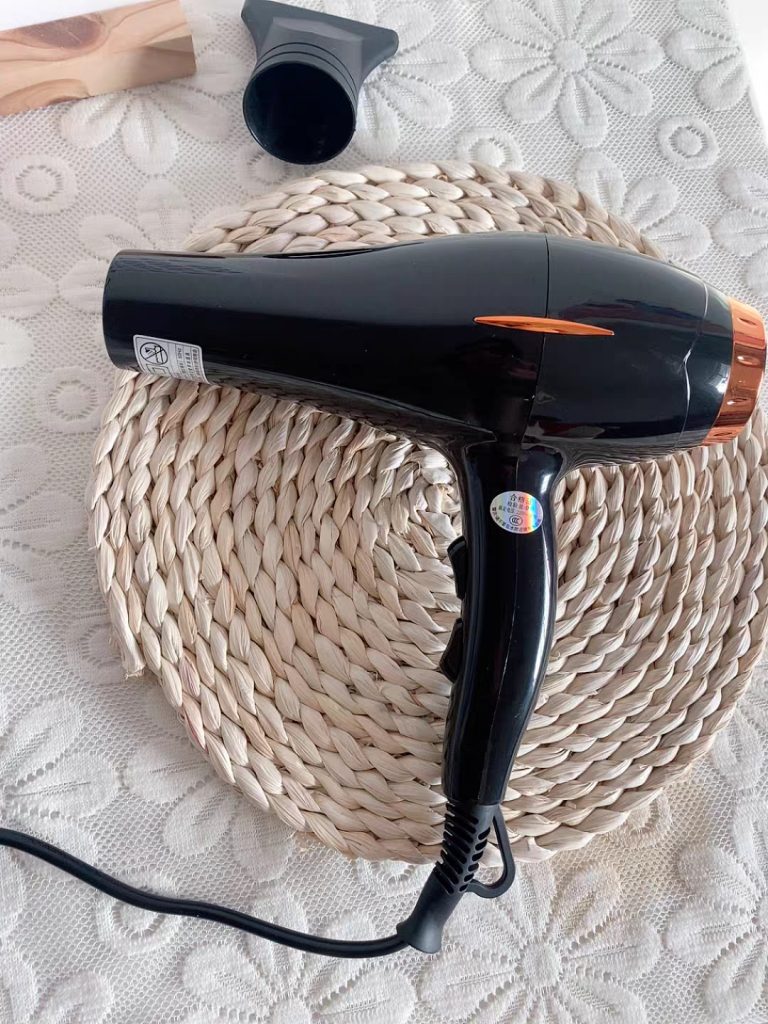
Ionic hair dryers have become a popular product category for beauty brands, salon suppliers, retailers, and private-label businesses.
For buyers sourcing an ionic hair dryer from China, however, the product should not be evaluated only by the word “ionic” on the packaging.
The ion-generation system is just one part of the complete hair dryer.
Motor performance, airflow, heating control, temperature management, product weight, noise, electrical configuration, accessories, certification, and manufacturing consistency can all affect the final product.
For international buyers, the more important question is:
Can the manufacturer produce an ionic hair dryer with the exact performance, configuration, branding, and quality required for the target market?
This guide explains what buyers should know when sourcing an ionic hair dryer manufacturer in China for OEM, ODM, wholesale, salon, retail, and private-label projects.
What Is an Ionic Hair Dryer?
An ionic hair dryer uses an ion-generation system to introduce ions into the airflow.
Manufacturers commonly market ionic hair dryers around benefits such as reducing static electricity and improving the feel and appearance of hair after drying.
However, buyers should distinguish between:
- The presence of an ion generator
- The actual ion output
- The airflow system
- The heating system
- The overall product performance
Simply adding an ion generator does not automatically make every hair dryer a premium product.
The complete engineering design still matters.
How Does an Ionic Hair Dryer Work?
The basic concept is relatively straightforward.
An ion generator produces ions that are carried through the airflow toward the hair.
The ion-generation system can be integrated into different areas of the hair dryer depending on the product design.
When discussing an OEM product with a manufacturer, ask:
- What type of ion generator is used?
- Where is it installed?
- What is the ion output?
- Is the ion function continuously active?
- Can the function be switched on or off?
- How is the ion generator powered?
- How is its performance tested?
These questions provide much more useful information than simply asking whether the product is “ionic.”
Why Do Buyers Choose Ionic Hair Dryers?
Ionic technology is often used as a selling feature in consumer and professional hair dryers.
It can be particularly attractive for brands targeting customers who care about:
- Hair styling
- Hair appearance
- Static control
- Premium product positioning
- Advanced product functions
For a private-label brand, ionic functionality can also help differentiate a product from a basic entry-level hair dryer.
However, the manufacturer should be able to explain the actual technology and specification behind the feature.
Ionic Hair Dryer Motor Selection
The motor remains one of the most important components.
An ionic hair dryer can use different motor platforms depending on its positioning.
For example, a manufacturer may offer:
- Standard DC motor
- Professional motor
- High-speed motor
- Brushless DC motor
The motor affects:
- Airflow
- Drying speed
- Noise
- Weight
- Power consumption
- Product size
- Operating life
If you want a high-speed ionic model, the motor and ion-generation system should be evaluated as one complete product.
You can also review the related High Speed Hair Dryer Manufacturer China: OEM and Wholesale Buying Guide when comparing high-speed product configurations.
Ionic Hair Dryer With Brushless Motor
Brushless motors are increasingly used in premium hair dryer designs.
A brushless motor can allow manufacturers to create compact products with high motor speeds and strong airflow.
For buyers considering this type of product, the important specifications include:
- Motor RPM
- Rated power
- Airflow
- Motor controller
- Noise
- Operating life
- Temperature behavior
A high-speed brushless motor can be combined with ionic technology, but the manufacturer needs to design the complete airflow and electronic system accordingly.
For additional information about high-speed motor sourcing, see:
Next-Gen Hair Dryers: Why Sourcing 110,000 RPM Brushless Motors From China Boosts Your Brand
Ion Output and Product Testing
If ionic performance is an important selling point, buyers should ask the manufacturer for technical information about the ion generator.
Depending on the product, this may include:
- Ion output
- Test method
- Test conditions
- Generator specification
- Generator supplier
- Operating voltage
- Expected service life
The testing method is important.
Two suppliers may provide different ion-output numbers while using different testing conditions.
Therefore, do not compare isolated numbers without understanding how they were measured.
For an OEM project, it is useful to establish the approved specification before mass production.
Ionic Hair Dryer Airflow
The ion generator does not replace the need for good airflow.
A professional hair dryer still needs an effective combination of:
- Motor
- Fan
- Air inlet
- Air duct
- Heating element
- Air outlet
- Temperature control
Strong airflow can reduce drying time, while poor airflow design can limit the overall product experience.
This is particularly important when developing an ionic hair dryer for professional users.
Heat and Temperature Control
The heating system needs to be balanced with airflow.
A manufacturer may offer:
- Multiple heat levels
- Multiple speed levels
- Cool shot
- Temperature sensors
- Overheat protection
- Intelligent temperature control
The exact configuration depends on the model.
For an OEM buyer, temperature performance should be tested using the final production configuration.
Changing the motor, fan, heating element or control board after testing can change the behavior of the finished product.
Intelligent Temperature Control
Premium ionic hair dryers may include temperature sensing and automatic control.
The purpose is to monitor operating conditions and regulate heating.
When evaluating such a product, ask the factory:
- What sensor is used?
- Where is the sensor located?
- How is temperature measured?
- How frequently is it monitored?
- What happens when airflow changes?
- What happens if the air inlet is partially blocked?
- How is overheating prevented?
Do not rely only on a product brochure.
A technical explanation and sample testing provide more useful information.
Ionic Hair Dryer for Salons
Salon buyers can have demanding requirements.
A salon may use a hair dryer repeatedly throughout the day, so the product needs to be comfortable and reliable.
Important considerations can include:
Airflow
The dryer should provide sufficient airflow for professional styling.
Heat settings
Stylists may need different temperatures for different hair types and styling processes.
Speed settings
Multiple speed options can make the product more flexible.
Weight
A lighter and well-balanced product can be more comfortable during repeated use.
Cable
Cable length and flexibility can matter in a professional environment.
Noise
Noise becomes more noticeable when several dryers are operating at the same time.
Durability
The product needs to tolerate frequent operation.
For a broader salon-focused evaluation, see:
Professional Hair Dryer Manufacturer China: Salon, Hotel and Commercial Models
Ionic Hair Dryer for Home Users
Consumer products can have different priorities.
A retail customer may care about:
- Appearance
- Product size
- Weight
- Noise
- Ionic function
- Drying speed
- Accessories
- Packaging
- Price
A private-label brand should therefore define its target customer before selecting the factory model.
A product designed for professional salons does not necessarily need to be the same product sold through a consumer retail channel.
Ionic Hair Dryer for Beauty Brands
For a beauty brand, the product itself is only part of the project.
The manufacturer may need to support:
- Logo
- Housing color
- Surface finish
- Packaging
- User manual
- Accessories
- Product labels
- Electrical configuration
- Certification documentation
A premium beauty brand may also request a unique housing or custom user interface.
The earlier you define these requirements, the easier it is for the manufacturer to estimate cost and production time.
OEM Ionic Hair Dryer
OEM buyers can customize different parts of the product depending on the factory’s capabilities.
Potential options include:
- Brand logo
- Color
- Housing
- Buttons
- Motor
- Ion generator
- Heating element
- Cable
- Plug
- Display
- Accessories
- Packaging
Not every manufacturer can modify every component.
Before placing an order, ask the factory for a clear distinction between:
Standard configuration
and
Custom configuration
This prevents misunderstandings later.
For more information about choosing an OEM factory, see:
How to Choose the Right Hair Dryer Factory for OEM Production
ODM Ionic Hair Dryer
ODM can be useful for companies that want to launch an ionic hair dryer quickly.
Instead of designing every component from zero, the buyer can start from an existing manufacturer platform.
Possible customization may include:
- Logo
- Color
- Packaging
- Accessories
- Plug
- Cable
- Product finish
More extensive changes may require engineering work, tooling, and additional testing.
Ask the factory which parts are already developed and which parts require new development.
Private Label Ionic Hair Dryer
Private-label buyers often want a product that looks different from ordinary catalogue models.
However, the buyer does not always need a completely new mold.
A manufacturer may be able to create a different market presentation through:
- Custom colors
- Logo placement
- Packaging
- Accessories
- Product bundles
- User manuals
- Retail presentation
This can provide a practical starting point for a new brand.
Ionic Hair Dryer Packaging
Packaging should be discussed early.
For retail products, packaging may include:
- Product box
- Brand logo
- Product specifications
- User instructions
- Barcode
- Warning information
- Certification marks where applicable
- Accessories list
The packaging must match the actual product.
If the final product has a different plug, power rating, accessory package, or function from the packaging, the buyer can face costly corrections.
Electrical Configuration for Different Markets
An ionic hair dryer designed for one market may require a different electrical configuration for another.
Confirm:
- Voltage
- Frequency
- Plug
- Power
- Cable
- Electrical components
- Product markings
For example, the electrical configuration for an EU order may differ from a US order.
The manufacturer should know the destination market before the final sample is approved.
Certifications for Ionic Hair Dryers
Certification requirements depend on the destination market and exact product configuration.
A buyer should not assume that a certificate from one model automatically applies to another model.
Ask the manufacturer for:
- Applicable certificates
- Test reports
- Electrical safety documentation
- EMC documentation
- Product labeling requirements
- Market-specific requirements
For a detailed explanation, see:
What Certifications Should a Hair Dryer Manufacturer Provide?
How to Test an Ionic Hair Dryer Sample
Sample testing should cover the complete product.
1. Check the motor
Listen for unusual sounds and check startup behavior.
2. Check airflow
Test every speed setting.
3. Check heat
Test every heat setting.
4. Check the ionic function
Confirm that the ion function operates according to the manufacturer’s specification.
5. Check temperature control
Observe temperature behavior during continuous operation.
6. Check cool shot
Make sure the cool-air function works correctly.
7. Check ergonomics
Hold the dryer for an extended period.
8. Check noise
Compare it with competing products under similar conditions.
9. Check accessories
Confirm that every quoted accessory is included.
10. Check packaging
Inspect the finished retail or commercial packaging.
The approved sample should become the reference for mass production.
How to Compare Ionic Hair Dryer Manufacturers
Suppose you receive quotations from three Chinese factories.
Do not compare price first.
Create a specification table.
| Specification | Factory A | Factory B | Factory C |
|---|---|---|---|
| Motor type | Confirm | Confirm | Confirm |
| Motor RPM | Confirm | Confirm | Confirm |
| Power | Confirm | Confirm | Confirm |
| Airflow | Confirm | Confirm | Confirm |
| Ion generator | Confirm | Confirm | Confirm |
| Ion output | Confirm | Confirm | Confirm |
| Heat settings | Confirm | Confirm | Confirm |
| Speed settings | Confirm | Confirm | Confirm |
| Cool shot | Confirm | Confirm | Confirm |
| Temperature control | Confirm | Confirm | Confirm |
| Noise | Confirm | Confirm | Confirm |
| Accessories | Confirm | Confirm | Confirm |
| Certification | Confirm | Confirm | Confirm |
| MOQ | Confirm | Confirm | Confirm |
| OEM | Confirm | Confirm | Confirm |
| Packaging | Confirm | Confirm | Confirm |
Only after the specifications are aligned should the prices be compared.
Ionic Hair Dryer MOQ
MOQ can vary substantially depending on the product.
A standard catalogue model may have a lower MOQ than a heavily customized OEM product.
Factors that can affect MOQ include:
- Logo
- Color
- Packaging
- Motor
- Ion generator
- Electronics
- Accessories
- New mold
- Certification
Before requesting a quotation, tell the manufacturer your expected order quantity.
Then ask for:
Standard model MOQ
and
OEM model MOQ
The existing What MOQ Should You Expect When Buying Hair Dryers from a Chinese Supplier? guide can help buyers understand how customization affects minimum order quantities.
How Much Does an Ionic Hair Dryer Cost?
The factory price depends on the complete specification.
Major cost factors can include:
- Motor
- Ion generator
- Heating element
- Control board
- Housing material
- Display
- Sensors
- Accessories
- Packaging
- Certification
- Quantity
- OEM development
A basic ionic hair dryer and a premium high-speed brushless ionic hair dryer can therefore occupy very different price ranges.
When comparing quotations, make sure the two factories are offering equivalent products.
How to Request an Ionic Hair Dryer Quote
A useful RFQ can contain:
Product: Ionic Hair Dryer
Target Market: [Country]
Application: Retail / Salon / Distributor / Private Label
Quantity: [Units]
Motor: [Specification]
RPM: [If required]
Power: [W]
Voltage: [V]
Frequency: [Hz]
Plug: [Type]
Ion Function: Required
Ion Output: [Requirement if applicable]
Heat Settings: [Number]
Speed Settings: [Number]
Cool Shot: Yes/No
Temperature Control: [Required function]
Color: [Color]
Logo: OEM
Packaging: Custom
Accessories: [List]
Certification: [Market requirements]
Estimated Annual Quantity: [Units]
Then request:
- Product specification
- Sample price
- MOQ
- OEM cost
- Packaging cost
- Production lead time
- Certification information
- Test reports
- Carton dimensions
- Gross weight
- Net weight
- Payment terms
- Shipping terms
How to Verify an Ionic Hair Dryer Manufacturer
A supplier’s product page is not enough to establish manufacturing capability.
Before ordering, ask:
- Does the company manufacture the product?
- What components are produced or assembled in-house?
- Who supplies the motor?
- Who supplies the ion generator?
- What quality-control process is used?
- What testing equipment is available?
- Can the factory support OEM?
- Can the same specification be reproduced?
- Can it supply relevant documentation?
Buyers can also review:
What Should You Check Before Importing Hair Dryers from China?
This can help structure the supplier verification process before placing a larger order.
Common Mistakes When Buying Ionic Hair Dryers
Choosing by the word “ionic”
The presence of an ion generator does not tell you the complete product quality.
Focusing only on ion output
Motor, airflow, heat and temperature control also matter.
Comparing different configurations
A quotation for a basic motor cannot be directly compared with a premium brushless model.
Not testing the sample
The final product should be physically tested before mass production.
Changing components after approval
Changing the motor, ion generator or control board can affect the final performance.
Ignoring certification
The exact destination market and product configuration need to be considered.
Forgetting repeat production
For a private-label brand, consistent repeat orders can be just as important as the first shipment.
FAQ: Ionic Hair Dryer Manufacturer China
What is the main difference between an ionic hair dryer and a standard hair dryer?
An ionic model incorporates an ion-generation system into the product. The overall performance still depends on the motor, airflow, heating system, temperature control and product design.
Does an ionic hair dryer need a high-speed motor?
No. Ionic functionality and motor speed are separate design elements. A manufacturer can potentially combine ionic technology with a standard or high-speed motor depending on the product design.
Can I order a high-speed ionic hair dryer from a Chinese manufacturer?
Yes, manufacturers may offer products combining high-speed motors with ionic functionality. Ask for the actual motor, airflow and ion-generation specifications rather than relying only on marketing terminology.
Can I put my own brand on an ionic hair dryer?
OEM manufacturers may offer logo, color, packaging and other customization. The available options and MOQ depend on the specific factory.
Can the ion generator be customized?
It may be possible depending on the manufacturer’s product platform. Ask whether the ion generator is a standard component or whether alternative configurations are available.
How can I verify the ionic function?
Request the manufacturer’s technical specification and available test documentation, then test the approved sample. If ionic performance is a key selling point, define the relevant specification before mass production.
Is an ionic hair dryer suitable for salons?
It can be, provided the complete product meets the salon’s requirements for airflow, temperature control, ergonomics, durability, noise and operating frequency.
What should I look for in a private-label ionic hair dryer?
Look at the complete package: product performance, motor, ionic system, packaging, branding, accessories, certification, MOQ, production capability and repeat-order consistency.
Can I customize the color and packaging without changing the internal product?
Depending on the factory, yes. Color, logo and packaging can sometimes be customized without changing the core product. However, MOQ and additional costs should be confirmed.
What affects the price of an ionic hair dryer?
Motor, ion generator, electronics, heating system, sensors, housing, accessories, packaging, certification, order quantity and customization can all affect the price.
Do I need certification for an ionic hair dryer?
The applicable requirements depend on the destination market and exact electrical configuration. The manufacturer should provide documentation relevant to the actual model being imported.
How should I compare two ionic hair dryer factories?
First compare the technical specifications. Check motor, RPM, airflow, ion generator, heat, temperature control, noise, power, voltage, accessories, certification, MOQ and packaging before comparing price.
Should I order a sample before a bulk order?
For a new supplier or customized product, a sample allows you to verify the actual product before committing to mass production. The approved sample should be documented as the production reference.
Final Thoughts
An ionic hair dryer should be evaluated as a complete engineered product rather than simply as a hair dryer with an ion function.
For buyers, the key areas are:
Motor + airflow + heating + temperature control + ionic system + safety + manufacturing consistency.
A salon buyer may prioritize professional performance and durability.
A retail brand may focus on appearance, functions and customer experience.
A private-label company may need customized colors, packaging and branding.
A distributor may place greater emphasis on wholesale pricing, MOQ and repeat-order supply.
The right sourcing process is to define the target market first, establish the technical specification, request samples, verify the manufacturer’s documentation, test the actual product, and then approve the final configuration for mass production.
For further supplier research, buyers can also review:
- Hair Dryer Manufacturer in China | OEM & ODM Hair Dryers
- Professional Hair Dryer Factory in China | Custom Hair Dryers
- High Speed Hair Dryer Manufacturer China: OEM and Wholesale Buying Guide
- What Certifications Should a Hair Dryer Manufacturer Provide?
- What MOQ Should You Expect When Buying Hair Dryers from a Chinese Supplier?
The objective is to find a Chinese ionic hair dryer manufacturer that can match your required specification and maintain that specification consistently from the first sample through repeat production.


No reply content